
World
Tensions Rise as China and Japan Clash Over Taiwan Issue

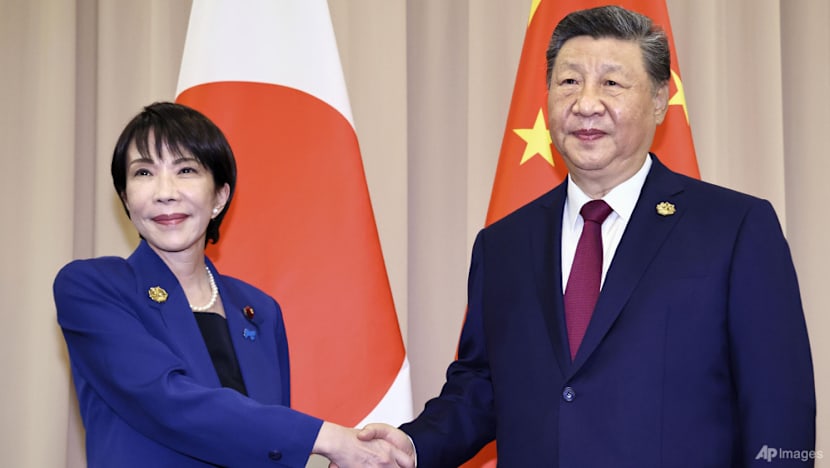
In a significant escalation of tensions, Japanese Prime Minister Sanae Takaichi has issued a stark warning that a Chinese attack on Taiwan would represent an “existential threat” to Japan. Her assertion, made in November, hinted at the possibility of military intervention by Tokyo. In response, Beijing reacted with a blend of diplomatic outrage and economic pressure, underscoring the delicate state of regional relations.
The situation intensified further when U.S. President Donald Trump reportedly urged Takaichi to temper her language after a conversation with Chinese President Xi Jinping. Concerns were raised that heightened tensions over Taiwan could jeopardize ongoing trade negotiations between the United States and China. Although Japanese officials later denied that Trump had made such a request, the sentiment of frustration within Tokyo regarding the lack of robust support from Washington is palpable.
While George Glass, the U.S. Ambassador to Japan, condemned China’s actions as “provocative” and reaffirmed the U.S.-Japan security alliance, this strong rhetoric was not matched at the highest levels of the American administration. This disparity raises unsettling questions about the priorities of major powers, suggesting that both Washington and Beijing are increasingly willing to act in their own interests, potentially at the expense of their allies.
China’s Economic Retaliation
China’s response to Japan’s statements has been swift and multifaceted. The Chinese government has halted group tourism to Japan and reinstated bans on Japanese seafood imports. Additionally, Beijing has lodged complaints with the United Nations. The Chinese media has amplified their stance, accusing Takaichi of steering Japan toward “militarism and war.”
In a particularly incendiary statement, a Chinese diplomat called for the “cutting off” of the “filthy neck” of the Japanese leader, reflecting the heightened tensions. Japan, in turn, has issued safety advisories to its citizens in China due to rising “anti-Japanese sentiment,” particularly as the anniversary of the 1937 Nanjing Massacre approaches.
China’s actions indicate a broader shift in its diplomatic approach, moving from charm to confrontation. Facing criticism over its global economic practices and tightening scrutiny from the West, Beijing appears to be operating on the assumption that it can exert its influence without significant pushback. The country’s economic clout, particularly in critical sectors such as rare earths and pharmaceuticals, allows it to impose severe economic consequences on those who oppose its core interests.
A New Era of Great Power Politics
The American response has been inconsistent. Following his conversation with Xi, Trump’s communications included no support for Japan nor criticism of China, focusing instead on positive aspects of U.S.-China relations, such as upcoming soybean purchases and an anticipated visit to Beijing in April 2026. This lack of clarity raises concerns about Washington’s commitment to its allies, particularly when trade negotiations are at stake.
For Japan, the implications are clear: when the U.S. is faced with a choice between supporting its allies and pursuing transactional gains, it may not always opt for the former. This dynamic not only unsettles Tokyo but also resonates across the region, as many nations begin to reassess their own relationships with both global powers.
The current geopolitical landscape indicates a troubling trend where major powers are increasingly willing to prioritize their interests over established alliances. While this has always been a feature of international relations, the overt manner in which both China and the United States are pursuing their agendas suggests a more volatile environment.
Countries across the Indo-Pacific are likely to reconsider their dependencies on either Washington or Beijing. The dispute between China and Japan serves as a stark reminder of a shifting era characterized by selective reassurance and routine pressure from powerful states. As a result, nations are compelled to diversify their trade relationships, strengthen regional cooperation, and invest in their own security capabilities.
The overarching lesson for Asia is clear: in an era marked by renewed great power assertiveness, reliance on a single major partner has become an inherent strategic risk.

Taiwan Enacts Tougher Penalties for Undersea Cable Damage

Tensions Rise as Analysts See No Resolution for Thai-Cambodian Border Dispute

Balogun’s Goal Guides Monaco to Victory Over Galatasaray

Taiwan Increases Penalties for Undersea Cable Damage to Seven Years

Analyst Highlights Lack of Political Will in Thai-Cambodian Dispute

Ajax Faces Injury Woes Ahead of Crucial Match Against Qarabag

India Mandates IndiGo to Reduce Flights Amid Mass Cancellations

Myanmar’s Rare Earths: A Strategic Battleground for Powers

Global Powers Compete for Rare Earths in Myanmar Amid Turmoil

Humanism Camp Engages 250 Youths in Summer Fest 2025

Kenvue Dismisses CEO Thibaut Mongon as Strategic Review Advances

De Minaur Triumphs at Washington Open After Thrilling Comeback

Tupou and Daugunu Join First Nations Squad for Lions Clash

Colombian Senator Miguel Uribe Shows Signs of Recovery After Attack

ASEAN Gears Up for Historic Joint Meeting of Foreign and Economic Ministers

New Study Challenges Assumptions About Aging and Inflammation

Oil Prices Surge Following New EU Sanctions on Russia

Detaşe-Sabah Violin Ensemble Captivates at Gabala Music Festival
-
 Lifestyle4 months ago
Humanism Camp Engages 250 Youths in Summer Fest 2025
-
 Business5 months ago
Kenvue Dismisses CEO Thibaut Mongon as Strategic Review Advances
-
 Sports4 months ago
De Minaur Triumphs at Washington Open After Thrilling Comeback
-
 Sports5 months ago
Tupou and Daugunu Join First Nations Squad for Lions Clash
-
 Top Stories5 months ago
Colombian Senator Miguel Uribe Shows Signs of Recovery After Attack
-
 World5 months ago
ASEAN Gears Up for Historic Joint Meeting of Foreign and Economic Ministers
-
 Health4 months ago
New Study Challenges Assumptions About Aging and Inflammation
-
 Business5 months ago
Oil Prices Surge Following New EU Sanctions on Russia
-
 Entertainment5 months ago
Detaşe-Sabah Violin Ensemble Captivates at Gabala Music Festival
-

 Entertainment5 months ago
Baku Metro Extends Hours for Justin Timberlake Concert
-

 Business3 months ago
Starling Bank Plans Secondary Share Sale, Targeting $5.4 Billion Valuation
-

 Top Stories5 months ago
Rethinking Singapore’s F&B Regulations Amid Business Closures