
Top Stories
Cross-Border Taxi Drop-Off Changes Welcome, Pricing Concerns Arise

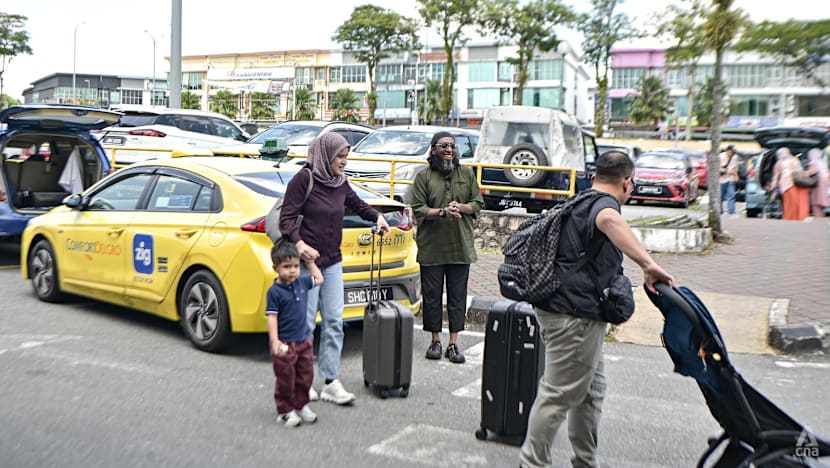
Passengers and taxi drivers in Singapore and Malaysia are responding positively to recent changes in the regulations governing cross-border taxi services. Effective immediately, licensed taxis from both countries will be allowed to drop off passengers at any location within Singapore and Malaysia, a significant shift from the previous requirement of designated drop-off points. This change, announced on December 5, aims to enhance convenience for travelers and expand service coverage.
Taxi driver Ahmad Rashid Ahmad, 60, expressed optimism about the new rules. “If it is indeed true, I think it will be beneficial,” he said, highlighting a common scenario where Singaporean passengers prefer direct drop-offs at their homes rather than being taken to the Ban San Street Terminal. “Because we can’t send them directly, they end up taking Singapore taxis instead,” he added.
Another driver, Ropidah Md Yatim, 55, shared a similar sentiment. “I am thankful that we will finally be allowed to drop off passengers anywhere in Singapore,” she remarked at Larkin Sentral. This change is expected to improve the overall passenger experience, as it allows for more direct and convenient transportation options.
While many drivers and passengers welcome the flexibility, there are concerns regarding fare structures. Currently, the standard one-way fare for cross-border trips is fixed at RM120 (US$29), regardless of traffic conditions. Ropidah pointed out that this fixed pricing can be disadvantageous, especially during traffic jams. “Right now, even if there is a jam and we are stuck for two to three hours, we are still only earning RM120,” she stated.
New Regulations and Industry Implications
The regulatory change also includes an increase in the quota for licensed cross-border taxis from 200 to 500 per country. Jeffrey Siow, Singapore’s Acting Transport Minister, and Anthony Loke, Malaysia’s Transport Minister, announced these reforms during the 12th Singapore-Malaysia Leaders’ Retreat. Currently, cross-border taxis can only drop off passengers at designated terminals: Larkin Sentral for Singaporean taxis and Ban San Street Terminal for Malaysian taxis.
The new rules allow foreign taxis to drop off passengers anywhere outside their home country but restrict them from picking up passengers at other locations to maintain a structured service model. Ban Kum Cheong, a Singaporean taxi driver, emphasized the need for fare adjustments to ensure that both drivers and passengers benefit from the changes. He also noted the importance of enforcing designated pick-up points to prevent competition among drivers from both countries.
Passenger concerns about potential pricing changes are also evident. A traveler known as Ms. Liaw expressed her apprehension about fare increases. “If it’s too expensive, it’s not worth it, and I would rather have my family pick me up,” she remarked while waiting for a taxi. The cost of a one-way trip to Larkin Sentral currently stands at S$60 (US$46) per car or S$15 per passenger.
Impact on the Taxi Industry
The increased competition resulting from a larger quota of licensed taxis has raised concerns among some drivers. They worry that the influx of new taxis could dilute their earnings, especially since the industry had seen improvements following crackdowns on illegal cross-border services. Driver Mr. Aziz Salimon shared that he often waits several hours for a passenger traveling from Singapore to Johor Bahru, highlighting the challenges of maintaining profitability. “It’s a waste of petrol, and sometimes we get caught in a jam,” he said.
Despite these challenges, the National Taxi Association of Singapore has expressed support for the regulatory changes, emphasizing that the expansion of pick-up and drop-off points will enhance convenience for passengers and create more income opportunities for drivers. “We will continue to work closely with the Ministry of Transport to ensure that principles of fair competition and a level playing field are upheld,” the association stated.
As the new regulations take effect, both drivers and passengers will be closely monitoring how these changes impact pricing, service quality, and overall convenience in the cross-border taxi landscape.

Vaccine Makers Alarmed by US Advisory Panel’s Hepatitis B Shift

Favorites Shine in 2026 World Cup Draw; Trump Receives Honor

Taiwan and US Experts Advocate Energy Resilience Strategies

Vaccine Makers Alarmed by US Panel’s Shift on Hepatitis B for Newborns

Draw Unveils Groups for 2026 World Cup in North America

Taiwan and US Collaborate to Enhance Energy Resilience

Politicians Unite in Opposition to Netflix’s $72 Billion Deal

Taiwan Aims to Boost Home Dialysis to 18% by 2035

Johannes Klaebo Celebrates 100th World Cup Victory in Trondheim

Kenvue Dismisses CEO Thibaut Mongon as Strategic Review Advances

Humanism Camp Engages 250 Youths in Summer Fest 2025

De Minaur Triumphs at Washington Open After Thrilling Comeback

Tupou and Daugunu Join First Nations Squad for Lions Clash

Colombian Senator Miguel Uribe Shows Signs of Recovery After Attack

ASEAN Gears Up for Historic Joint Meeting of Foreign and Economic Ministers

New Study Challenges Assumptions About Aging and Inflammation

Oil Prices Surge Following New EU Sanctions on Russia

Detaşe-Sabah Violin Ensemble Captivates at Gabala Music Festival
-
 Business5 months ago
Kenvue Dismisses CEO Thibaut Mongon as Strategic Review Advances
-
 Lifestyle4 months ago
Humanism Camp Engages 250 Youths in Summer Fest 2025
-
 Sports4 months ago
De Minaur Triumphs at Washington Open After Thrilling Comeback
-
 Sports5 months ago
Tupou and Daugunu Join First Nations Squad for Lions Clash
-
 Top Stories5 months ago
Colombian Senator Miguel Uribe Shows Signs of Recovery After Attack
-
 World5 months ago
ASEAN Gears Up for Historic Joint Meeting of Foreign and Economic Ministers
-
 Health4 months ago
New Study Challenges Assumptions About Aging and Inflammation
-
 Business5 months ago
Oil Prices Surge Following New EU Sanctions on Russia
-
 Entertainment4 months ago
Detaşe-Sabah Violin Ensemble Captivates at Gabala Music Festival
-

 Entertainment4 months ago
Baku Metro Extends Hours for Justin Timberlake Concert
-
 Top Stories5 months ago
Rethinking Singapore’s F&B Regulations Amid Business Closures
-

 Business5 months ago
U.S. House Approves Stablecoin Bill, Sends to Trump for Signature