
Science
Singapore Commits S$37 Billion to Research and Innovation Over Five Years

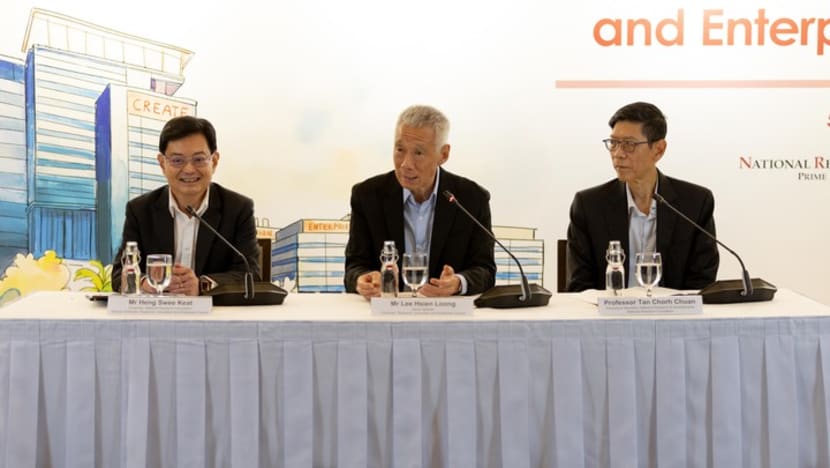
Singapore will invest S$37 billion (approximately US$28.5 billion) in research, innovation, and enterprise over the next five years, representing about 1 per cent of the nation’s economic output. The announcement was made by the National Research Foundation (NRF) on December 5, 2023. This strategic investment underscores Singapore’s commitment to enhancing its research capabilities and fostering innovation, particularly in high-priority sectors.
Of the total investment, S$3 billion, or 8 per cent, will be allocated to initiatives focusing on “grand challenges” and flagship projects, such as advancements in the semiconductor industry and longevity research. Senior Minister Lee Hsien Loong emphasized the importance of maintaining this investment level, stating, “Each national programme will develop a coordinated portfolio of research projects to address major challenges in one single important sector or area.”
The concept of flagships and grand challenges was initially introduced by NRF chairman Heng Swee Keat in February 2023 during his tenure as Deputy Prime Minister. These initiatives aim to drive value creation in essential economic sectors and tackle pressing national priorities. While longevity research and semiconductors are highlighted, additional flagship projects are yet to be announced.
Heng noted that while Singapore’s investment in research is substantial, it constitutes “a small fraction of what the whole world invests.” He stressed the need for strategic collaborations with leading institutions both locally and globally to enhance Singapore’s standing in research and innovation.
The NRF revealed that Singapore has consistently allocated about 1 per cent of its GDP towards these areas. From 2021 to 2025, the country spent S$28 billion, exceeding initial projections by S$3 billion due to a mid-term funding boost.
Strategic Collaborations and New Initiatives
To further strengthen its research ecosystem, Singapore plans to establish the Singapore-Horizon Europe Complementary Fund. This fund is designed to promote partnerships with Horizon Europe, the European Union’s prominent funding programme for research and innovation. It will provide financial support to Singapore-based researchers involved in priority projects eligible for Horizon Europe grants.
The upcoming funding period from 2026 to 2030 will maintain focus on four domains: manufacturing, trade and connectivity, human health and potential, and urban solutions and sustainability. Additionally, it will emphasize enhancing Singapore’s talent pool and leveraging artificial intelligence (AI) as a transformative force. New funding schemes will target the development and attraction of promising young research and entrepreneurial talent, including a postdoctoral award providing S$250,000 in research grants and up to four years of salary support.
A key initiative, the Activate Global-Singapore Fellowship, is set to support Singapore-based scientists and engineers working on early-stage deep tech innovations, with applications opening in 2026. This fellowship aims to cultivate a robust pipeline of talent in deep tech sectors.
Focus Areas for Research and Development
In addressing the semiconductor industry, the NRF aims to position Singapore as a crucial research and development hub. Currently, the nation accounts for 10 per cent of global chip production and 20 per cent of worldwide semiconductor manufacturing equipment production. This strategic focus is intended to anchor high-value manufacturing locally while creating pathways for deep tech startups and competitive enterprises.
The NRF is also prioritizing longevity research, an area of increasing significance as the population ages. By 2030, one in four Singaporeans is projected to be aged 65 and older. The foundation highlighted that about half of adults aged 85 and above currently live with dementia, with projections indicating that over 150,000 Singaporeans will face this condition by 2030. The grand challenge in this area will develop and manage research portfolios aimed at addressing key scientific gaps, focusing on brain health and physical function maintenance as people age.
Furthermore, the NRF reported that Singapore’s investment in research and innovation has led to a more research-intensive economy. Business expenditure on research and development rose to S$8.1 billion in 2022 from S$4.2 billion in 2012. The number of industry researchers increased by 25 per cent during the same period.
In recent years, Singapore’s deep tech startups have attracted over US$1 billion in venture capital funding annually, accounting for 20 per cent of total venture capital investments in the nation. Overall, venture capital investments surged to US$6.1 billion in 2023, up from US$4.1 billion in 2020, reflecting the growing potential of Singapore-based startups.
When asked about the possibility of increasing the GDP percentage dedicated to research, Heng acknowledged the importance of engaging the private sector for additional investments. He emphasized the need for a symbiotic relationship between researchers and companies to maximize impact, stating, “We must seek to not just increase the amount of funding … but to use it really well.”
While Singapore is not currently planning to exceed its commitment of 1 per cent of GDP for research investments, Lee reiterated the importance of stable, long-term funding. “It’s not something where you want feast and famine,” he noted, highlighting the necessity for researchers to have confidence that their funding will remain consistent throughout multi-year projects.
Through this substantial investment in research, innovation, and enterprise, Singapore aims to solidify its position as a leader in technological advancements and address critical societal challenges.

Vaccine Makers Alarmed by US Advisory Panel’s Hepatitis B Shift

Favorites Shine in 2026 World Cup Draw; Trump Receives Honor

Taiwan and US Experts Advocate Energy Resilience Strategies

Vaccine Makers Alarmed by US Panel’s Shift on Hepatitis B for Newborns

Draw Unveils Groups for 2026 World Cup in North America

Taiwan and US Collaborate to Enhance Energy Resilience

Politicians Unite in Opposition to Netflix’s $72 Billion Deal

Taiwan Aims to Boost Home Dialysis to 18% by 2035

Johannes Klaebo Celebrates 100th World Cup Victory in Trondheim

Kenvue Dismisses CEO Thibaut Mongon as Strategic Review Advances

Humanism Camp Engages 250 Youths in Summer Fest 2025

De Minaur Triumphs at Washington Open After Thrilling Comeback

Tupou and Daugunu Join First Nations Squad for Lions Clash

Colombian Senator Miguel Uribe Shows Signs of Recovery After Attack

ASEAN Gears Up for Historic Joint Meeting of Foreign and Economic Ministers

New Study Challenges Assumptions About Aging and Inflammation

Oil Prices Surge Following New EU Sanctions on Russia

Detaşe-Sabah Violin Ensemble Captivates at Gabala Music Festival
-
 Business5 months ago
Kenvue Dismisses CEO Thibaut Mongon as Strategic Review Advances
-
 Lifestyle4 months ago
Humanism Camp Engages 250 Youths in Summer Fest 2025
-
 Sports4 months ago
De Minaur Triumphs at Washington Open After Thrilling Comeback
-
 Sports5 months ago
Tupou and Daugunu Join First Nations Squad for Lions Clash
-
 Top Stories5 months ago
Colombian Senator Miguel Uribe Shows Signs of Recovery After Attack
-
 World5 months ago
ASEAN Gears Up for Historic Joint Meeting of Foreign and Economic Ministers
-
 Health4 months ago
New Study Challenges Assumptions About Aging and Inflammation
-
 Business5 months ago
Oil Prices Surge Following New EU Sanctions on Russia
-
 Entertainment4 months ago
Detaşe-Sabah Violin Ensemble Captivates at Gabala Music Festival
-

 Entertainment4 months ago
Baku Metro Extends Hours for Justin Timberlake Concert
-

 Top Stories5 months ago
Rethinking Singapore’s F&B Regulations Amid Business Closures
-

 Business5 months ago
U.S. House Approves Stablecoin Bill, Sends to Trump for Signature