
Science
Singapore Allocates S$37 Billion for Research and Innovation Over Five Years

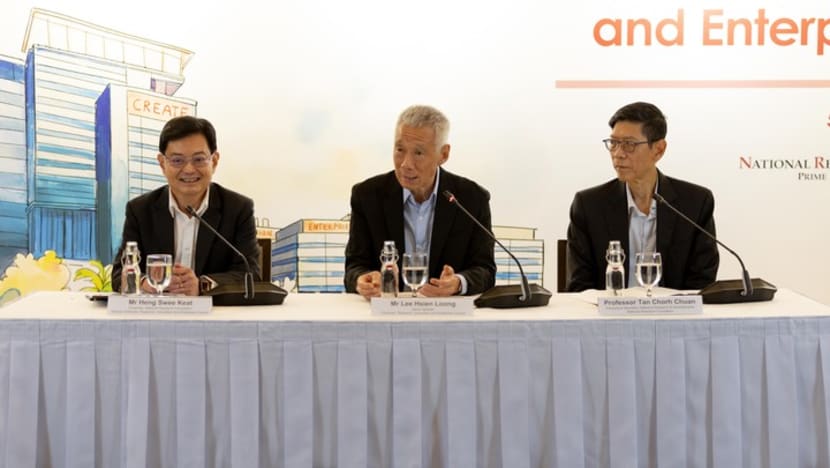
Singapore has announced a significant investment of S$37 billion (approximately US$28.5 billion) over the next five years to enhance its research, innovation, and enterprise sectors. The National Research Foundation (NRF) revealed this plan on December 5, 2023, highlighting that this investment equates to about 1 percent of the nation’s economic output.
Of the total budget, S$3 billion is earmarked for addressing key areas such as the semiconductor industry and longevity research, which are categorized as “flagships” and “grand challenges.” Senior Minister Lee Hsien Loong emphasized that these initiatives are designed to create a focused approach to tackling significant national challenges. He stated, “Each national programme will develop a coordinated portfolio of research projects to address major challenges in one single important sector or area.”
The concept of flagships and grand challenges was initially introduced by former Deputy Prime Minister Heng Swee Keat in February 2023. Although he has since stepped down from his political role, his vision remains integral to Singapore’s research strategy. These programmes aim to foster value creation in crucial economic sectors, while also addressing national priorities.
The NRF reiterated Singapore’s commitment to maintaining its investment at around 1 percent of GDP in research and innovation. This current tranche extends the previous budget period of 2021 to 2025, during which Singapore invested S$28 billion—S$3 billion more than initially projected due to a mid-term top-up. Over the next five years, the NRF plans to boost collaborations with top researchers and institutions globally, as well as establish the Singapore-Horizon Europe Complementary Fund. This fund will support Singapore-based researchers involved in Horizon Europe projects that align with national priorities.
The research budget for 2021 to 2025 encompassed four primary domains: manufacturing, trade and connectivity; human health and potential; urban solutions and sustainability; and the smart nation and digital economy. The upcoming budget for 2026 to 2030 will not only continue to focus on these domains but will also aim to enhance Singapore’s talent pool and leverage artificial intelligence as a pivotal force in research.
To attract promising young talent, the NRF plans to introduce new funding schemes, including a postdoctoral award offering S$250,000 in research grants along with salary support for up to four years. This initiative is intended to give young researchers the opportunity to pursue independent projects while institutions assess their potential for faculty roles.
Singapore’s strategy includes significant focus on the semiconductor sector. Currently, Singapore accounts for 10 percent of global chip production and 20 percent of the global semiconductor manufacturing equipment market. The NRF aims to position Singapore as a key research and development node for this industry, enhancing local manufacturing capabilities and fostering the growth of deep-tech startups.
Longevity research presents another major focus area. The NRF has identified ageing as a pressing challenge, with projections indicating that one in four Singaporeans will be aged 65 or older by 2030. Notably, half of the adults aged 85 and above live with dementia. Through targeted research, the NRF plans to address critical knowledge gaps and develop interventions to promote healthy ageing.
In the last five years, Singapore’s investment in research and innovation has led to a more research-intensive economy and a thriving deep-tech ecosystem. Business expenditure on research and development rose to S$8.1 billion in 2022 from S$4.2 billion in 2012, and the number of industry researchers increased by 25 percent during the same period. Moreover, deep-tech startups in Singapore have attracted over US$1 billion in venture capital funding annually, comprising 20 percent of total venture capital investments in the country.
While discussions about potentially increasing the GDP percentage dedicated to research are ongoing, both Lee Hsien Loong and Heng Swee Keat have indicated that focus should remain on optimizing the current investment and fostering private sector collaboration. As Singapore continues to navigate the complexities of global competition in research and innovation, sustained, long-term investment will be crucial for ensuring impactful advancements in science and technology.

Vaccine Makers Alarmed by US Advisory Panel’s Hepatitis B Shift

Favorites Shine in 2026 World Cup Draw; Trump Receives Honor

Taiwan and US Experts Advocate Energy Resilience Strategies

Vaccine Makers Alarmed by US Panel’s Shift on Hepatitis B for Newborns

Draw Unveils Groups for 2026 World Cup in North America

Taiwan and US Collaborate to Enhance Energy Resilience

Politicians Unite in Opposition to Netflix’s $72 Billion Deal

Taiwan Aims to Boost Home Dialysis to 18% by 2035

Johannes Klaebo Celebrates 100th World Cup Victory in Trondheim

Kenvue Dismisses CEO Thibaut Mongon as Strategic Review Advances

Humanism Camp Engages 250 Youths in Summer Fest 2025

De Minaur Triumphs at Washington Open After Thrilling Comeback

Tupou and Daugunu Join First Nations Squad for Lions Clash

Colombian Senator Miguel Uribe Shows Signs of Recovery After Attack

ASEAN Gears Up for Historic Joint Meeting of Foreign and Economic Ministers

New Study Challenges Assumptions About Aging and Inflammation

Oil Prices Surge Following New EU Sanctions on Russia

Detaşe-Sabah Violin Ensemble Captivates at Gabala Music Festival
-
 Business5 months ago
Kenvue Dismisses CEO Thibaut Mongon as Strategic Review Advances
-
 Lifestyle4 months ago
Humanism Camp Engages 250 Youths in Summer Fest 2025
-
 Sports4 months ago
De Minaur Triumphs at Washington Open After Thrilling Comeback
-
 Sports5 months ago
Tupou and Daugunu Join First Nations Squad for Lions Clash
-
 Top Stories5 months ago
Colombian Senator Miguel Uribe Shows Signs of Recovery After Attack
-
 World5 months ago
ASEAN Gears Up for Historic Joint Meeting of Foreign and Economic Ministers
-
 Health4 months ago
New Study Challenges Assumptions About Aging and Inflammation
-
 Business5 months ago
Oil Prices Surge Following New EU Sanctions on Russia
-
 Entertainment4 months ago
Detaşe-Sabah Violin Ensemble Captivates at Gabala Music Festival
-

 Entertainment4 months ago
Baku Metro Extends Hours for Justin Timberlake Concert
-

 Top Stories5 months ago
Rethinking Singapore’s F&B Regulations Amid Business Closures
-
 Business5 months ago
U.S. House Approves Stablecoin Bill, Sends to Trump for Signature