
Politics
Trump’s Foreign Policy: Analyzing the ‘America First’ Approach

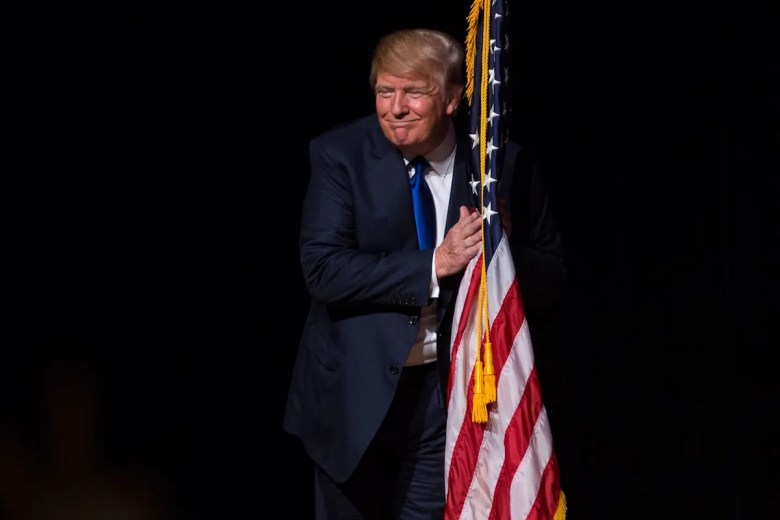
Donald Trump’s “America First” foreign policy has become a focal point of debate as the president seeks a second term in 2024. Initially resonating with Americans weary of military interventions and complex alliances, the slogan claimed a shift towards a more pragmatic approach. However, as his administration progresses, questions arise regarding whether Trump is genuinely adhering to this promise or if it has devolved into a branding exercise for a foreign policy that appears more aggressive and less coherent than anticipated.
Transformation of American Diplomacy
Trump has undeniably changed the dynamics of American diplomacy. The traditional emphasis on promoting democracy and human rights has been replaced by a style that many describe as “transactional diplomacy.” In this framework, relationships are assessed on a cost-benefit basis, treating alliances as service contracts. This approach is not entirely new; historical precedents include Franklin D. Roosevelt’s lend-lease program and Richard Nixon’s diplomatic strategies during détente. What sets Trump’s diplomacy apart is its overt and raw nature, applying the same principles to both allies and adversaries alike.
While this method may seem practical, it often proves problematic in execution. Trump’s belief in striking deals with leaders like Kim Jong Un, Vladimir Putin, and Xi Jinping reflects a similar optimism seen in previous administrations, albeit with a different rhetorical style.
Contradictions and Military Engagement
A notable contradiction in Trump’s foreign policy is his approach towards military involvement. Despite campaigning on a platform to end “forever wars,” Trump has shown a willingness to utilize American military power extensively. His administration has overseen defense budgets nearing US$1 trillion while maintaining troops globally and even escalating military operations in some regions.
For instance, Trump’s withdrawal from the Iran nuclear deal in May 2018 promised a more favorable arrangement but has led to inconsistent military posturing. The reported strikes on Iranian nuclear facilities in mid-2025 illustrate a shift towards military engagement that “America First” was meant to avoid. These actions are preventive efforts aimed at regional dominance rather than defensive measures safeguarding American soil.
Similarly, Trump’s handling of the Ukraine crisis has produced mixed signals. While he initially suggested peace plans involving territorial concessions to Russia, European allies have increased their support for Ukraine under his administration, raising questions about the strategic coherence of his policies.
Trade Policies and Economic Implications
Trump’s trade policy starkly highlights the disparity between “America First” ideology and its practical implications. By initiating a global trade war and imposing tariffs on countries like China, Canada, and the European Union, the administration aimed to rectify perceived economic imbalances. However, the approach complicates relationships with allies and raises costs for American consumers and businesses.
While intended to protect certain industries, the tariffs disrupt supply chains and invite retaliatory measures that can harm U.S. exports. This paradox is further evident as Trump demands that allies like Germany and Japan increase their defense spending while simultaneously imposing tariffs that weaken their economies. Such contradictions jeopardize the very alliances essential for countering global threats.
The disjointed nature of Trump’s foreign policy reveals a lack of a coherent strategy. Decisions appear driven by instinct, personal relationships, and immediate political calculations rather than a consistent framework. This unpredictability can confuse allies and adversaries alike, undermining American diplomatic efforts.
Future Directions for American Foreign Policy
A genuine “America First” approach would prioritize national interests clearly defined by economic prosperity and national security. It would involve defending against actual threats rather than inflating regional conflicts into existential crises. Furthermore, it would focus on maintaining access to key global resources and preventing the rise of a peer competitor, particularly China.
This policy should also involve building a network of capable allies who share mutual interests, treating alliances as strategic partnerships rather than transactional arrangements. By prioritizing these core interests, a more effective foreign policy could emerge.
Trump’s current foreign policy, however, reflects a more activist stance lacking strategic consistency. Troops have not been withdrawn from the Middle East; rather, their deployment has shifted based on current circumstances. The president’s enjoyment of wielding American power through sanctions, tariffs, and deals is evident, but it raises concerns about whether he comprehends the underlying principles that sustain American influence.
Conclusion: Branding Versus Reality
In conclusion, Trump’s pursuit of an “America First” foreign policy is marked by partiality, inconsistency, and contradictions. While he raises valid points about the value of questioning distant military engagements and demanding fair contributions from allies, the execution often falls short. Bluster and impulsive decisions do not constitute a coherent strategy, and the potential for damaging alliances looms large.
The slogan “America First” suggests a clear framework, yet the reality is more chaotic, reflecting a foreign policy shaped by personal instincts and immediate political considerations. Those who hoped for a renewed focus on domestic priorities may find themselves disillusioned by the administration’s approach, which emphasizes American power without the traditional constraints of diplomatic protocol or strategic coherence. Ultimately, whether Trump’s foreign policy truly embodies “America First” remains a matter of significant debate.

Vaccine Makers Alarmed by US Advisory Panel’s Hepatitis B Shift

Favorites Shine in 2026 World Cup Draw; Trump Receives Honor

Taiwan and US Experts Advocate Energy Resilience Strategies

Vaccine Makers Alarmed by US Panel’s Shift on Hepatitis B for Newborns

Draw Unveils Groups for 2026 World Cup in North America

Taiwan and US Collaborate to Enhance Energy Resilience

Politicians Unite in Opposition to Netflix’s $72 Billion Deal

Taiwan Aims to Boost Home Dialysis to 18% by 2035

Johannes Klaebo Celebrates 100th World Cup Victory in Trondheim

Kenvue Dismisses CEO Thibaut Mongon as Strategic Review Advances

Humanism Camp Engages 250 Youths in Summer Fest 2025

De Minaur Triumphs at Washington Open After Thrilling Comeback

Tupou and Daugunu Join First Nations Squad for Lions Clash

Colombian Senator Miguel Uribe Shows Signs of Recovery After Attack

ASEAN Gears Up for Historic Joint Meeting of Foreign and Economic Ministers

New Study Challenges Assumptions About Aging and Inflammation

Oil Prices Surge Following New EU Sanctions on Russia

Detaşe-Sabah Violin Ensemble Captivates at Gabala Music Festival
-
 Business5 months ago
Kenvue Dismisses CEO Thibaut Mongon as Strategic Review Advances
-
 Lifestyle4 months ago
Humanism Camp Engages 250 Youths in Summer Fest 2025
-
 Sports4 months ago
De Minaur Triumphs at Washington Open After Thrilling Comeback
-
 Sports5 months ago
Tupou and Daugunu Join First Nations Squad for Lions Clash
-
 Top Stories5 months ago
Colombian Senator Miguel Uribe Shows Signs of Recovery After Attack
-
 World5 months ago
ASEAN Gears Up for Historic Joint Meeting of Foreign and Economic Ministers
-
 Health4 months ago
New Study Challenges Assumptions About Aging and Inflammation
-
 Business5 months ago
Oil Prices Surge Following New EU Sanctions on Russia
-
 Entertainment4 months ago
Detaşe-Sabah Violin Ensemble Captivates at Gabala Music Festival
-

 Entertainment4 months ago
Baku Metro Extends Hours for Justin Timberlake Concert
-

 Top Stories5 months ago
Rethinking Singapore’s F&B Regulations Amid Business Closures
-
 Business5 months ago
U.S. House Approves Stablecoin Bill, Sends to Trump for Signature