
Business
Taiwan and US Experts Advocate Energy Resilience Strategies

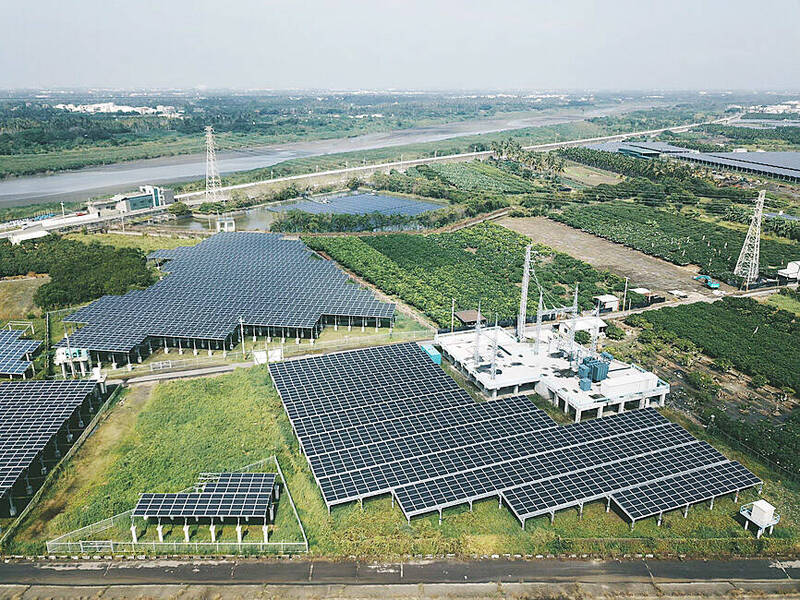
Taiwan is urged to enhance its energy resilience through collaboration with the United States, focusing on supply chain development and increased energy storage capacities. This advice comes from a panel of experts during a seminar hosted by the Atlantic Council in Washington on October 26, 2023. The discussion highlighted the necessity for Taiwan to secure its electricity production and energy supply routes against potential hostile actions.
Panelist and Atlantic Council senior fellow, Joseph Webster, advocated for a dedicated team of US government officials to support Taiwan’s energy resilience efforts. This team could offer guidance on various critical issues, including humanitarian assistance, disaster response, cybersecurity, and physical security. Webster emphasized the importance of operational discretion, suggesting that the task force could involve personnel from the US Department of Energy, the US Nuclear Regulatory Commission, and national laboratories while minimizing public exposure of its activities.
“The US should prefer substantive support for Taiwan over showy displays and emphasis on China policy,” Webster stated. He cautioned, however, that the US should not hesitate to challenge Beijing’s interests when necessary.
Taiwan relies heavily on imported petroleum, with nearly all products transported via established maritime routes. Webster pointed out that the northern region of Taiwan, which houses the government and 40 percent of the population, is particularly vulnerable since it is not energy self-sufficient. To address this issue, he called for diversifying energy sources and enhancing supply capabilities. This strategy would involve increasing energy reserves and investing in various energy forms, such as nuclear, oil, and solar, tailored to the specific needs of each region.
Highlighting the importance of national security, Webster remarked that Taiwan’s defense strategy must extend beyond conventional military capabilities.
Liu Tsai-ying, director of the Energy Resilience Program at the Research Institute for Democracy, Science and Emerging Technology, also addressed the threats posed by China. She noted that Beijing could deploy maritime tactics that might deplete Taiwan’s energy reserves. Liu proposed that Taiwan could alleviate the impact of a potential Chinese blockade by improving logistical flexibility, which might include cargo exchanges with trusted allies like Japan and South Korea.
To bolster its energy infrastructure, Liu recommended building power storage systems and restructuring the energy framework. She suggested that coal and renewable sources could satisfy up to 80 percent of Taiwan’s essential energy needs, provided there are effective conservation and rationing measures in place. Additionally, she pointed out the need to address vulnerabilities related to Taiwan’s centralized power systems by distributing critical cyber and physical nodes more widely.
The seminar underscored the importance of energy resilience as a critical component of national security for Taiwan, emphasizing that proactive measures are necessary to mitigate risks associated with geopolitical tensions. By enhancing cooperation with the United States and diversifying energy strategies, Taiwan aims to fortify its energy independence and security in an increasingly complex regional landscape.

Vaccine Makers Alarmed by US Advisory Panel’s Hepatitis B Shift

Favorites Shine in 2026 World Cup Draw; Trump Receives Honor

Taiwan and US Experts Advocate Energy Resilience Strategies

Vaccine Makers Alarmed by US Panel’s Shift on Hepatitis B for Newborns

Draw Unveils Groups for 2026 World Cup in North America

Taiwan and US Collaborate to Enhance Energy Resilience

Politicians Unite in Opposition to Netflix’s $72 Billion Deal

Taiwan Aims to Boost Home Dialysis to 18% by 2035

Johannes Klaebo Celebrates 100th World Cup Victory in Trondheim

Kenvue Dismisses CEO Thibaut Mongon as Strategic Review Advances

Humanism Camp Engages 250 Youths in Summer Fest 2025

De Minaur Triumphs at Washington Open After Thrilling Comeback

Tupou and Daugunu Join First Nations Squad for Lions Clash

Colombian Senator Miguel Uribe Shows Signs of Recovery After Attack

ASEAN Gears Up for Historic Joint Meeting of Foreign and Economic Ministers

New Study Challenges Assumptions About Aging and Inflammation

Oil Prices Surge Following New EU Sanctions on Russia

Detaşe-Sabah Violin Ensemble Captivates at Gabala Music Festival
-
 Business5 months ago
Kenvue Dismisses CEO Thibaut Mongon as Strategic Review Advances
-
 Lifestyle4 months ago
Humanism Camp Engages 250 Youths in Summer Fest 2025
-
 Sports4 months ago
De Minaur Triumphs at Washington Open After Thrilling Comeback
-
 Sports5 months ago
Tupou and Daugunu Join First Nations Squad for Lions Clash
-
 Top Stories5 months ago
Colombian Senator Miguel Uribe Shows Signs of Recovery After Attack
-
 World5 months ago
ASEAN Gears Up for Historic Joint Meeting of Foreign and Economic Ministers
-
 Health4 months ago
New Study Challenges Assumptions About Aging and Inflammation
-
 Business5 months ago
Oil Prices Surge Following New EU Sanctions on Russia
-
 Entertainment4 months ago
Detaşe-Sabah Violin Ensemble Captivates at Gabala Music Festival
-

 Entertainment4 months ago
Baku Metro Extends Hours for Justin Timberlake Concert
-

 Top Stories5 months ago
Rethinking Singapore’s F&B Regulations Amid Business Closures
-
 Business5 months ago
U.S. House Approves Stablecoin Bill, Sends to Trump for Signature