
Business
Global Powers Compete for Rare Earths in Myanmar Amid Turmoil

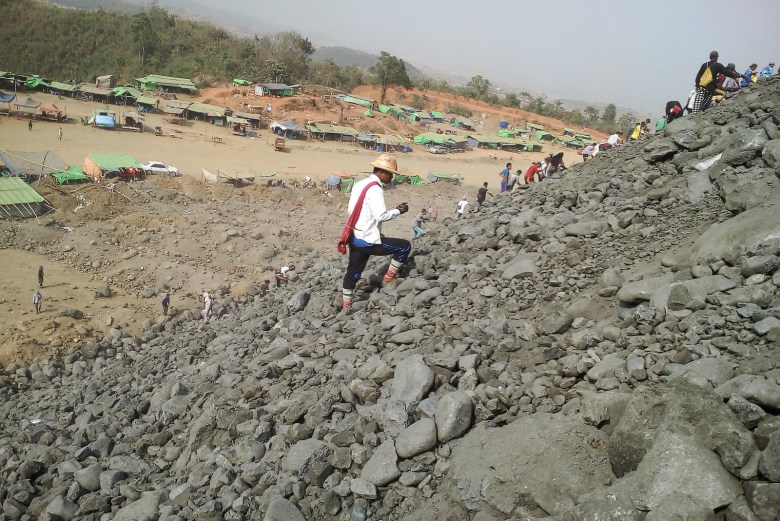
The ongoing competition for rare earth minerals has intensified in Myanmar, a country rich in these vital resources, as the geopolitical landscape shifts with growing tensions between the United States and China. The situation has become a focal point for nations seeking to secure supply chains for critical minerals essential to advanced technologies, including electronics and military applications.
Myanmar, located at the crossroads of India, China, and Southeast Asia, is home to the world’s third-largest deposits of rare earth elements. These critical minerals, particularly dysprosium, are crucial for precision-guided weapons and electric vehicles. Despite the country’s internal conflict, marked by a civil war between the military junta, known as the Tatmadaw, and various armed rebel groups, international interest in Myanmar’s mineral wealth continues to rise.
Historically, China has dominated Myanmar’s mineral extraction and supply networks, accounting for approximately two-thirds of its critical mineral imports since 2017. Following the military coup in March 2021, China further consolidated its control as Western nations distanced themselves and imposed sanctions, boosting Myanmar’s reliance on Chinese investments. By 2024, China’s imports from Myanmar reached unprecedented levels, highlighting the strategic importance of these resources to Beijing’s industrial and military sectors.
Yet recent developments have complicated this landscape. Ethnic rebel groups, notably the Kachin Independence Army (KIA), have made significant military gains against the junta, disrupting Chinese operations and creating a vacuum in Myanmar’s critical minerals sector. The KIA’s suspension of activities involving Chinese firms has provided an opportunity for other nations, particularly the United States and its allies, to reconsider their engagement strategies in Myanmar.
In response, the United States is recalibrating its approach to Myanmar, seeking to gain a foothold in the critical minerals market. Under the previous administration, efforts were made to establish a geoeconomic advantage, albeit with a nuanced stance toward the junta’s legitimacy. The current strategy involves maintaining tariffs, selectively rolling back sanctions on certain junta officials, and enhancing intelligence operations through a new consulate in northern Thailand.
However, the feasibility of deeper US engagement remains limited. The junta’s longstanding ties to China, coupled with the geographical isolation of Myanmar’s mineral-rich northern regions and inadequate transport infrastructure, pose significant challenges. Any attempts by the US to navigate these constraints are likely to be slow and fraught with risks, especially as the conflict dynamics evolve.
This evolving scenario creates a strategic opening for India and its Quad partners—Australia and Japan. India is keen to enhance its position in the rare earths market as part of its broader technological ambitions and to reduce its reliance on Chinese imports. The National Critical Mineral Mission 2025 has been established to explore and acquire foreign mineral assets, with initiatives underway for domestic capacity building in mineral processing.
Khanij Bidesh India Ltd. (KABIL) is already making strides in international collaborations, with exploration initiatives in Argentina and Australia. Furthermore, the Geological Survey of India (GSI) is in talks with Myanmar’s Ministry of Natural Resources and Environment Conservation to explore potential partnerships in the critical mining sector. The Indian Ministry of Mines is also engaging with both public and private firms to advance mining and transportation activities in the Kachin state.
Indian Rare Earths Limited (IREL) is pursuing collaborations with Japan and South Korea to bolster the domestic production of rare-earth magnets, which would enhance India’s strategic capabilities in this domain. Additionally, the establishment of processing units, such as the Morigaon semiconductor plant in Assam, aims to create demand for locally sourced minerals, supporting high-tech production goals.
For Australia and Japan, northeast India presents an alternative to Myanmar for critical mineral processing. Both nations have approached the situation cautiously since the 2021 coup, with Australia focusing on institutional support and Japan emphasizing infrastructure development. The Quad’s Critical Mineral Initiative aims to secure and diversify supply chains, although formal engagement remains in its early stages.
What distinguishes the Quad’s approach from those of the US and China is their commitment to sustainable, community-driven initiatives that respect environmental, social, and governance norms. By fostering collaboration through India’s processing hubs, Quad members can build a resilient and politically viable regional supply chain for rare earths.
In conclusion, the ongoing competition for rare earth minerals in Myanmar highlights the complex interplay of geopolitical interests amid local turmoil. With strategic patience and regional cooperation, India and its Quad partners have the potential to reshape Myanmar’s role in the global rare earth supply chain, fostering development that benefits both the region and their respective technological ambitions.

Taiwan Enacts Tougher Penalties for Undersea Cable Damage

Tensions Rise as Analysts See No Resolution for Thai-Cambodian Border Dispute

Balogun’s Goal Guides Monaco to Victory Over Galatasaray

Taiwan Increases Penalties for Undersea Cable Damage to Seven Years

Analyst Highlights Lack of Political Will in Thai-Cambodian Dispute

Ajax Faces Injury Woes Ahead of Crucial Match Against Qarabag

India Mandates IndiGo to Reduce Flights Amid Mass Cancellations

Myanmar’s Rare Earths: A Strategic Battleground for Powers

Global Powers Compete for Rare Earths in Myanmar Amid Turmoil

Kenvue Dismisses CEO Thibaut Mongon as Strategic Review Advances

Humanism Camp Engages 250 Youths in Summer Fest 2025

De Minaur Triumphs at Washington Open After Thrilling Comeback

Tupou and Daugunu Join First Nations Squad for Lions Clash

Colombian Senator Miguel Uribe Shows Signs of Recovery After Attack

ASEAN Gears Up for Historic Joint Meeting of Foreign and Economic Ministers

New Study Challenges Assumptions About Aging and Inflammation

Oil Prices Surge Following New EU Sanctions on Russia

Detaşe-Sabah Violin Ensemble Captivates at Gabala Music Festival
-
 Business5 months ago
Kenvue Dismisses CEO Thibaut Mongon as Strategic Review Advances
-
 Lifestyle4 months ago
Humanism Camp Engages 250 Youths in Summer Fest 2025
-
 Sports4 months ago
De Minaur Triumphs at Washington Open After Thrilling Comeback
-
 Sports5 months ago
Tupou and Daugunu Join First Nations Squad for Lions Clash
-
 Top Stories5 months ago
Colombian Senator Miguel Uribe Shows Signs of Recovery After Attack
-
 World5 months ago
ASEAN Gears Up for Historic Joint Meeting of Foreign and Economic Ministers
-
 Health4 months ago
New Study Challenges Assumptions About Aging and Inflammation
-
 Business5 months ago
Oil Prices Surge Following New EU Sanctions on Russia
-
 Entertainment5 months ago
Detaşe-Sabah Violin Ensemble Captivates at Gabala Music Festival
-

 Entertainment5 months ago
Baku Metro Extends Hours for Justin Timberlake Concert
-

 Business3 months ago
Starling Bank Plans Secondary Share Sale, Targeting $5.4 Billion Valuation
-

 Business5 months ago
U.S. House Approves Stablecoin Bill, Sends to Trump for Signature