
Business
Taiwan Urged to Expand Its Role in Global Semiconductor Value Chain

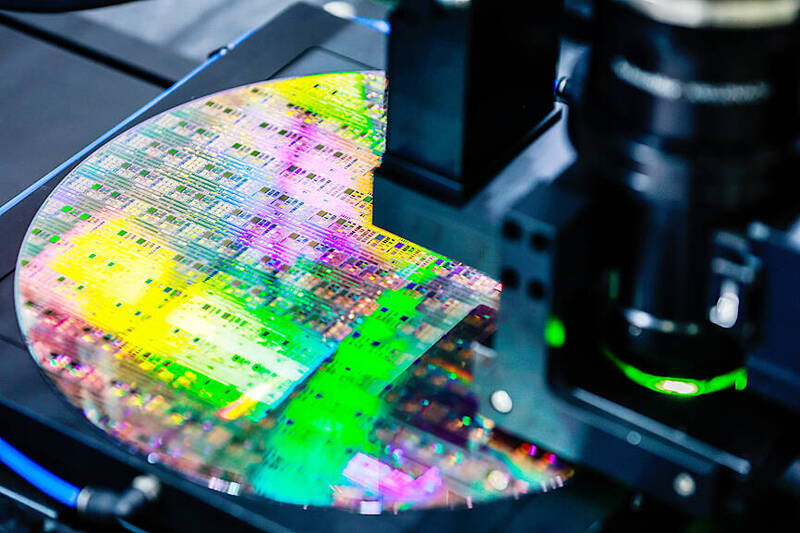
Taiwan must enhance its competitiveness in the global semiconductor industry by engaging with the entire value chain, rather than focusing solely on chip manufacturing. This assertion was made by economic historian Chris Miller, author of the influential book Chip War: The Fight for the World’s Most Critical Technology, during a recent event in San Jose, California.
Speaking at the Robert N. Noyce Award ceremony hosted by the Semiconductor Industry Association, Miller emphasized Taiwan’s significant role in chip production, which has underpinned advancements in artificial intelligence (AI). He noted, “But there’s so much more value that we created across the value chain by artificial intelligence.” Miller identified the need for Taiwan to compete in various stages of the value chain, including software and application layers, beyond its already robust chip manufacturing capabilities.
Miller highlighted AI’s transformative impact on the semiconductor sector, suggesting that software will increasingly become a crucial component of the industry. He stated, “AI will accelerate those changes,” and stressed the importance for nations to focus on the AI technology stack as a whole.
During the ceremony, leaders from Taiwan Semiconductor Manufacturing Co. (TSMC), including Chairman C.C. Wei and former Chairman Mark Liu, were honored with the Robert N. Noyce Award, the highest accolade in the semiconductor field. Miller remarked on TSMC’s central role in the global semiconductor ecosystem, which has fostered collaboration between Taiwan and the United States. He expressed confidence that such partnerships would endure, stating, “I think the US ecosystem is always going to exist in collaboration with the Japanese and the European and the [South] Korean and the Taiwanese chip ecosystem.”
Despite the accolades, the global semiconductor industry faces a mixed sentiment due to escalating geopolitical tensions and a sharp increase in AI investments, leading to heightened demand for chips. Miller pointed out that the restructuring of global supply chains is presenting challenges not just for Taiwan but for the entire sector.
He noted, “The reality is, if you got a technology everyone else requires, then geopolitics is just gonna be less impactful, because everyone needs your technology.” Miller lauded TSMC for its crucial role, producing approximately 90 percent of the world’s high-end chips, asserting that the global market relies heavily on its output.
As Taiwan navigates these complexities, the emphasis on broadening its engagement across the semiconductor value chain appears increasingly vital. The convergence of AI advancements with semiconductor production signals a pivotal moment for the industry, and Taiwan’s proactive approach could define its future standing in this competitive landscape.

Japan’s Missile Sale to Boost Philippines’ Defense Strategy

Singapore Commits S$37 Billion to Research and Innovation Over 5 Years

Australia Extends Lead to 116 Runs in Second Ashes Test

Takaichi’s Leadership: A New Era for Japan’s Indo-Pacific Strategy

Singapore Commits S$37 Billion to Boost Research and Innovation

Bayern’s Luis Diaz Sees Champions League Ban Cut to Two Matches

Vaccine Makers Alarmed by US Advisory Panel’s Hepatitis B Shift

Favorites Shine in 2026 World Cup Draw; Trump Receives Honor

Taiwan and US Experts Advocate Energy Resilience Strategies

Kenvue Dismisses CEO Thibaut Mongon as Strategic Review Advances

Humanism Camp Engages 250 Youths in Summer Fest 2025

De Minaur Triumphs at Washington Open After Thrilling Comeback

Tupou and Daugunu Join First Nations Squad for Lions Clash

Colombian Senator Miguel Uribe Shows Signs of Recovery After Attack

ASEAN Gears Up for Historic Joint Meeting of Foreign and Economic Ministers

New Study Challenges Assumptions About Aging and Inflammation

Oil Prices Surge Following New EU Sanctions on Russia

Detaşe-Sabah Violin Ensemble Captivates at Gabala Music Festival
-
 Business5 months ago
Kenvue Dismisses CEO Thibaut Mongon as Strategic Review Advances
-
 Lifestyle4 months ago
Humanism Camp Engages 250 Youths in Summer Fest 2025
-
 Sports4 months ago
De Minaur Triumphs at Washington Open After Thrilling Comeback
-
 Sports5 months ago
Tupou and Daugunu Join First Nations Squad for Lions Clash
-
 Top Stories5 months ago
Colombian Senator Miguel Uribe Shows Signs of Recovery After Attack
-
 World5 months ago
ASEAN Gears Up for Historic Joint Meeting of Foreign and Economic Ministers
-
 Health4 months ago
New Study Challenges Assumptions About Aging and Inflammation
-
 Business5 months ago
Oil Prices Surge Following New EU Sanctions on Russia
-
 Entertainment4 months ago
Detaşe-Sabah Violin Ensemble Captivates at Gabala Music Festival
-

 Entertainment4 months ago
Baku Metro Extends Hours for Justin Timberlake Concert
-

 Top Stories5 months ago
Rethinking Singapore’s F&B Regulations Amid Business Closures
-

 Business5 months ago
U.S. House Approves Stablecoin Bill, Sends to Trump for Signature