
Business
Taiwan Urged to Expand Role in Global Semiconductor Value Chain

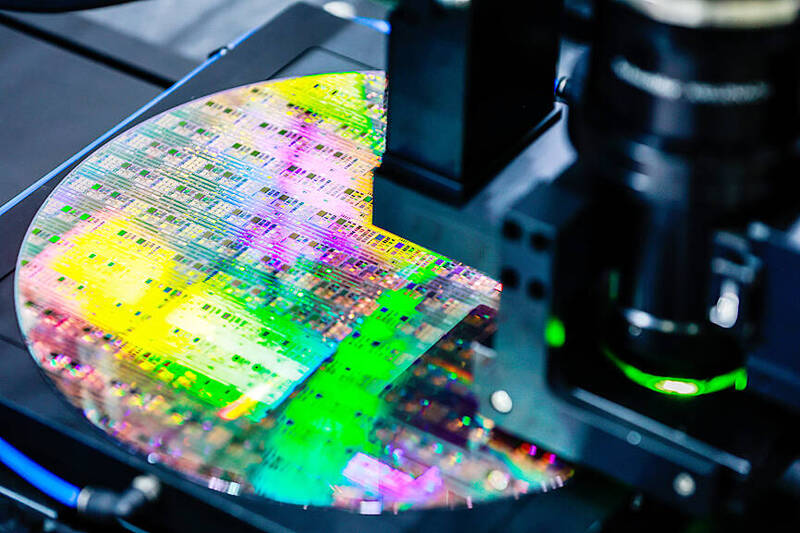
Taiwan must enhance its role in the global semiconductor industry by engaging in the entire value chain, rather than focusing solely on chip manufacturing. This assertion was made by Chris Miller, an economic historian and author of Chip War: The Fight for the World’s Most Critical Technology, during a recent event in San Jose, California.
Speaking at the Robert N. Noyce Award ceremony organized by the Semiconductor Industry Association, Miller emphasized that while Taiwan currently plays a vital role in chip production, particularly in the context of the emerging artificial intelligence (AI) era, there is substantial potential for growth throughout the entire value chain. “Taiwan is already very, very capable in chip manufacturing,” Miller stated, “but the challenge is to ensure it competes in a variety of value chain steps, including software and application layers.”
As AI continues to reshape the semiconductor landscape, the importance of software is expected to rise significantly. Miller noted that while the present focus remains on chips and the necessary infrastructure, the integration of AI technologies will further amplify these changes. He urged nations to consider the complete “AI technology stack” in their strategic planning.
Recognition for Taiwan’s contributions to the semiconductor field was highlighted by the awarding of the Robert N. Noyce Award to TSMC chairman C.C. Wei and former chairman Mark Liu. This prestigious accolade acknowledges TSMC’s critical position in the global semiconductor ecosystem, which has fostered significant benefits for both Taiwan and the United States. According to Miller, the award signifies that this collaborative relationship is likely to endure. “The US ecosystem will always exist in collaboration with those in Japan, Europe, South Korea, and Taiwan,” he explained. “No country can achieve self-sufficiency in this domain.”
Despite the recognition and achievements, the global semiconductor industry faces mixed sentiments, particularly due to escalating geopolitical tensions and a surge in AI-driven demand for chips. Miller pointed out that the restructuring of global supply chains presents challenges for the semiconductor sector, and Taiwan is not alone in navigating these complexities. “If you possess a technology that everyone else requires, then geopolitics becomes less impactful because everyone needs your technology,” he remarked.
Miller praised TSMC for its role in producing approximately 90 percent of the world’s high-end chips, underscoring the essential nature of these components in global technology. “Everyone around the world needs the chips that TSMC manufactures,” he stated, reinforcing the notion that Taiwan’s semiconductor industry is not just significant but indispensable on the world stage.
As Taiwan navigates these developments, the call to broaden its scope within the semiconductor value chain reflects a strategic imperative for maintaining its competitive edge in an increasingly interconnected and technology-driven global economy.

India Unveils Long-Range Hypersonic Missile Amid Regional Tensions

SK bioscience Launches Global Trial for Universal Sarbecovirus Vaccine

Senegal Coach Pape Thiaw Suspended and Fined After Final Disruption

PAS Denies Abolishing Chairman Post, Contradicts Muhyiddin’s Claim

Mbappé Critiques Real Madrid’s Effort After Benfica Defeat

Thailand’s December Factory Output Surges 2.52% Year-on-Year

Ishita Dutta Reveals Her Parenting Secret: Strong Coffee

Older GPs Express Concerns Over New Digital Health Record Mandate

Urban Jurgensen: A 252-Year Legacy Enters a New Era

Regina Martinez Breaks New Ground for Mexico in Cross-Country Skiing

South Korea’s Foreign Minister Cho Hyun to Visit China This Week

Starling Bank Plans Secondary Share Sale, Targeting $5.4 Billion Valuation

Munsang College Celebrates 100 Years with Grand Ceremony

PAS Aims to Expand Parliamentary Influence in Upcoming Election

De Minaur Triumphs at Washington Open After Thrilling Comeback

Kenvue Dismisses CEO Thibaut Mongon as Strategic Review Advances

Humanism Camp Engages 250 Youths in Summer Fest 2025

Colombian Senator Miguel Uribe Shows Signs of Recovery After Attack
-
 Sports3 months ago
Regina Martinez Breaks New Ground for Mexico in Cross-Country Skiing
-
 World8 months ago
South Korea’s Foreign Minister Cho Hyun to Visit China This Week
-
 Business8 months ago
Starling Bank Plans Secondary Share Sale, Targeting $5.4 Billion Valuation
-
 Top Stories8 months ago
Munsang College Celebrates 100 Years with Grand Ceremony
-
 World8 months ago
PAS Aims to Expand Parliamentary Influence in Upcoming Election
-
 Sports9 months ago
De Minaur Triumphs at Washington Open After Thrilling Comeback
-
 Business10 months ago
Kenvue Dismisses CEO Thibaut Mongon as Strategic Review Advances
-
 Lifestyle9 months ago
Humanism Camp Engages 250 Youths in Summer Fest 2025
-
 Top Stories10 months ago
Colombian Senator Miguel Uribe Shows Signs of Recovery After Attack
-

 Sports10 months ago
Tupou and Daugunu Join First Nations Squad for Lions Clash
-
 World10 months ago
ASEAN Gears Up for Historic Joint Meeting of Foreign and Economic Ministers
-

 Health9 months ago
New Study Challenges Assumptions About Aging and Inflammation