
Politics
Indonesian Government Proposes National Hero Status for Suharto

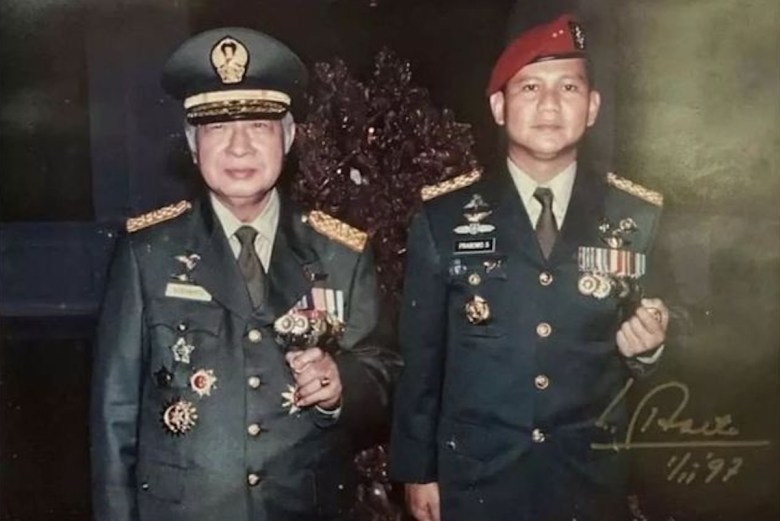
The Indonesian government is considering bestowing the title of “National Hero” upon former President Suharto, a move that has stirred significant controversy and provoked discussions about the implications for Indonesia’s young democracy. This proposal, led by President Prabowo Subianto, is seen not merely as an acknowledgment of Suharto’s leadership but as a politically charged act that could redefine the narrative surrounding his legacy.
Officials argue that the decision is administrative, grounded in formal criteria of service to the nation. They claim that Suharto’s leadership brought order, stability, and economic growth following a tumultuous period in Indonesian history. In this narrative, Suharto’s 32-year rule is framed as a time of modernization, infrastructure development, and national unity. Yet, this polished portrayal stands in stark contrast to the darker chapters of his administration, marked by the 1965-1966 anti-communist massacres that resulted in the deaths of hundreds of thousands of individuals.
Suharto’s regime was characterized by coercion, censorship, and the systematic silencing of dissent. Public participation was largely absent as political power became concentrated in the hands of the president, with corruption and cronyism becoming institutionalized. Recognizing Suharto as a national hero risks trivializing the legacy of repression and disregarding the struggles that shaped Indonesia’s path to democracy.
This proposal comes at a time when the memory of the Reformasi Movement of 1998 remains vivid. This movement was not only a response to the Asian financial crisis but also a collective rebellion against the oppressive tactics of the New Order regime. By elevating Suharto, the current government may be sending a message that it has not learned from past mistakes, risking the erasure of the collective memory of resistance that led to the establishment of the modern Indonesian Republic.
The timing of this proposal is particularly notable, as it coincides with President Prabowo’s administration. Prabowo, a former general and Suharto’s son-in-law, has increasingly adopted governance strategies reminiscent of Suharto’s era. His administration has consolidated a political coalition that effectively neutralizes opposition, raising concerns that the parliament may once again serve as an echo chamber for executive decisions.
In the economic realm, Prabowo’s policies reflect a return to state-led industrialization and economic nationalism. There is an emphasis on strengthening state-owned enterprises while private capital is managed through a mix of incentives and pressures, echoing the economic strategies of Suharto’s New Order. Such policies may yield short-term benefits, but they also risk re-establishing the deep inequalities and systemic corruption that plagued Indonesia during Suharto’s rule.
The proposal to honor Suharto cannot be divorced from these broader trends. It symbolizes an endorsement of a governing style that prioritizes order, loyalty, and stability over accountability and transparency. This nostalgia for the New Order era poses a significant threat, as it not only distorts historical truths but also lays the groundwork for a potential regression into authoritarian governance.
National heroes are expected to embody the moral values of a nation, representing courage, sacrifice, and integrity. Suharto’s legacy, while marked by significant economic developments, fails to meet this moral standard. His achievements were built on a foundation of coercion and exploitation, and to frame him as a hero is to teach future generations that success can overshadow moral accountability.
Indonesia’s democracy remains fragile, as its institutions continue to face the repercussions of the New Order’s legacy. Corruption is still widespread, and the military retains considerable influence in civilian matters. In this context, the symbolism of honoring Suharto carries profound implications. Elevating him to heroic status would not only distort the past but also undermine the moral foundation of Indonesia’s democratic identity.
Countries like South Korea have faced similar challenges and have chosen not to honor leaders with controversial pasts, despite their economic contributions. The South Korean people recognized that democracy cannot thrive on selective memory. A genuine reconciliation with history requires an honest acknowledgment of past injustices rather than glorification of oppressive figures.
As Indonesia stands at a crossroads, the promise of the Reformasi Movement was about more than merely replacing leaders; it was about fundamentally transforming the relationship between power and the people. To honor Suharto now would suggest that the sacrifices made for democracy were in vain and that the nation is weary of the complexities of democratic governance.
Moving forward, Indonesia must prioritize remembrance and ensure that its democratic identity is rooted in honesty about its past. The fall of Suharto marked the beginning of a new chapter, one characterized by the courage of ordinary citizens who refused to live in fear. To betray that memory would risk betraying the very essence of Indonesia itself. The government should reconsider this proposal and reaffirm its commitment to democratic values, recognizing that true heroes are those who resisted oppression, not those who imposed it.

India Unveils Long-Range Hypersonic Missile Amid Regional Tensions

SK bioscience Launches Global Trial for Universal Sarbecovirus Vaccine

Senegal Coach Pape Thiaw Suspended and Fined After Final Disruption

PAS Denies Abolishing Chairman Post, Contradicts Muhyiddin’s Claim

Mbappé Critiques Real Madrid’s Effort After Benfica Defeat

Thailand’s December Factory Output Surges 2.52% Year-on-Year

Ishita Dutta Reveals Her Parenting Secret: Strong Coffee

Older GPs Express Concerns Over New Digital Health Record Mandate

Urban Jurgensen: A 252-Year Legacy Enters a New Era

Regina Martinez Breaks New Ground for Mexico in Cross-Country Skiing

South Korea’s Foreign Minister Cho Hyun to Visit China This Week

Starling Bank Plans Secondary Share Sale, Targeting $5.4 Billion Valuation

Munsang College Celebrates 100 Years with Grand Ceremony

PAS Aims to Expand Parliamentary Influence in Upcoming Election

De Minaur Triumphs at Washington Open After Thrilling Comeback

Kenvue Dismisses CEO Thibaut Mongon as Strategic Review Advances

Humanism Camp Engages 250 Youths in Summer Fest 2025

Colombian Senator Miguel Uribe Shows Signs of Recovery After Attack
-
 Sports3 months ago
Regina Martinez Breaks New Ground for Mexico in Cross-Country Skiing
-
 World8 months ago
South Korea’s Foreign Minister Cho Hyun to Visit China This Week
-
 Business8 months ago
Starling Bank Plans Secondary Share Sale, Targeting $5.4 Billion Valuation
-
 Top Stories8 months ago
Munsang College Celebrates 100 Years with Grand Ceremony
-
 World8 months ago
PAS Aims to Expand Parliamentary Influence in Upcoming Election
-
 Sports9 months ago
De Minaur Triumphs at Washington Open After Thrilling Comeback
-
 Business10 months ago
Kenvue Dismisses CEO Thibaut Mongon as Strategic Review Advances
-
 Lifestyle9 months ago
Humanism Camp Engages 250 Youths in Summer Fest 2025
-
 Top Stories10 months ago
Colombian Senator Miguel Uribe Shows Signs of Recovery After Attack
-

 Sports10 months ago
Tupou and Daugunu Join First Nations Squad for Lions Clash
-
 World10 months ago
ASEAN Gears Up for Historic Joint Meeting of Foreign and Economic Ministers
-

 Health9 months ago
New Study Challenges Assumptions About Aging and Inflammation