
Politics
Taiwan’s National Security Bureau Monitors China’s Overseas Actions

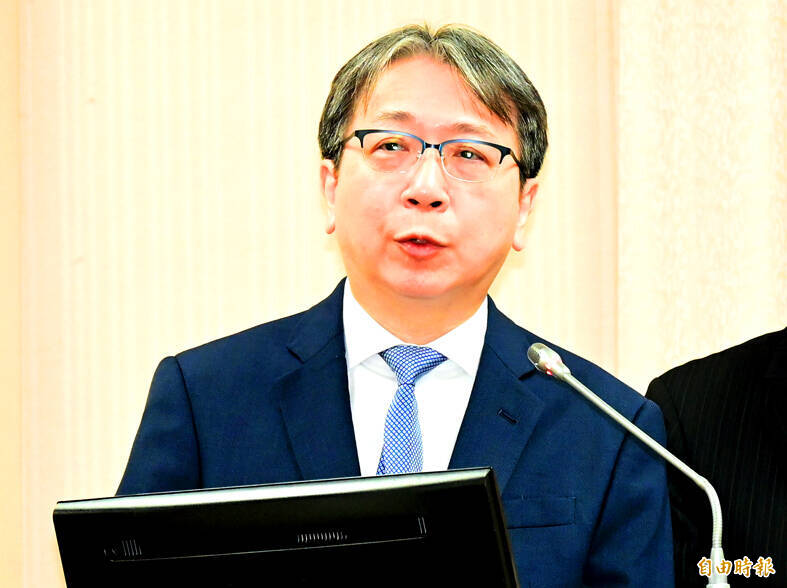
Taiwan’s National Security Bureau (NSB) is on high alert regarding China’s actions abroad, particularly concerning the potential harassment of Taiwanese citizens. During a recent meeting with the legislature’s Foreign Affairs and National Defense Committee, NSB Director-General Tsai Ming-yen revealed that China has stationed personnel specializing in Taiwan affairs at its embassies in several democratic nations. These officials are reportedly tasked with monitoring Taiwanese expatriates, businesspeople, and students.
Tsai’s remarks came as he addressed concerns raised by Democratic Progressive Party (DPP) Legislator Michelle Lin, who expressed unease over Beijing’s deployment of personnel from the Taiwan Affairs Office to embassies abroad. While Tsai acknowledged that China sometimes sends two to four staff members with experience in Taiwan matters, he did not disclose the specific countries involved. He assured that the NSB is actively monitoring these developments and working with local authorities to prevent any harassment of Taiwanese nationals.
Tsai emphasized that Taiwanese citizens in democratic nations should generally feel secure, as local police and security agencies are unlikely to tolerate any threats to their safety or breaches of diplomatic norms. He noted the challenges China faces in enforcing its jurisdiction across borders, specifically citing the difficulties in obtaining an Interpol “red notice” for individuals such as DPP Legislator Puma Shen. This is due to Interpol’s legal panel, which scrutinizes requests to ensure the system is not misused for political purposes.
In response to questions about Southeast Asian countries, such as Thailand, which may have more favorable relations with China, Tsai confirmed that the Ministry of Foreign Affairs is assessing the situation and exploring ways to effectively warn Taiwanese citizens of potential risks. Legislator Chen Chun-yu raised concerns about the need for enhanced intelligence sharing with allied nations in the region, particularly in the first island chain.
Taiwan has conducted nearly 100 bilateral meetings this year with national security leaders from 45 countries, according to Tsai. These discussions facilitate strategic communication and intelligence sharing, allowing Taiwan to understand regional security concerns and foster cooperation with friendly nations.
Lawmakers also expressed apprehension regarding China’s aggressive actions towards countries supportive of Taiwan. Recently, China imposed sanctions on Shigeru Iwasaki, the former chief of staff of the Joint Staff of the Japan Self-Defense Forces, after he was appointed as a political adviser to the Cabinet. Tsai noted that such actions often backfire, as they tend to galvanize support for Taiwan among its allies, who typically disregard Chinese entry denials.
As Taiwan navigates these complex geopolitical dynamics, Tsai asserted that friendly nations would stand firm against Chinese pressure. He reiterated that these countries are likely to vocalize their support for Taiwan and condemn China’s provocative measures, which threaten both human rights and regional stability. The NSB continues to work diligently to safeguard the interests of Taiwanese nationals abroad and maintain open lines of communication with international partners.

India Unveils Long-Range Hypersonic Missile Amid Regional Tensions

SK bioscience Launches Global Trial for Universal Sarbecovirus Vaccine

Senegal Coach Pape Thiaw Suspended and Fined After Final Disruption

PAS Denies Abolishing Chairman Post, Contradicts Muhyiddin’s Claim

Mbappé Critiques Real Madrid’s Effort After Benfica Defeat

Thailand’s December Factory Output Surges 2.52% Year-on-Year

Ishita Dutta Reveals Her Parenting Secret: Strong Coffee

Older GPs Express Concerns Over New Digital Health Record Mandate

Urban Jurgensen: A 252-Year Legacy Enters a New Era

Regina Martinez Breaks New Ground for Mexico in Cross-Country Skiing

South Korea’s Foreign Minister Cho Hyun to Visit China This Week

Starling Bank Plans Secondary Share Sale, Targeting $5.4 Billion Valuation

Munsang College Celebrates 100 Years with Grand Ceremony

PAS Aims to Expand Parliamentary Influence in Upcoming Election

De Minaur Triumphs at Washington Open After Thrilling Comeback

Kenvue Dismisses CEO Thibaut Mongon as Strategic Review Advances

Humanism Camp Engages 250 Youths in Summer Fest 2025

Colombian Senator Miguel Uribe Shows Signs of Recovery After Attack
-
 Sports3 months ago
Regina Martinez Breaks New Ground for Mexico in Cross-Country Skiing
-
 World8 months ago
South Korea’s Foreign Minister Cho Hyun to Visit China This Week
-
 Business8 months ago
Starling Bank Plans Secondary Share Sale, Targeting $5.4 Billion Valuation
-
 Top Stories8 months ago
Munsang College Celebrates 100 Years with Grand Ceremony
-
 World8 months ago
PAS Aims to Expand Parliamentary Influence in Upcoming Election
-
 Sports9 months ago
De Minaur Triumphs at Washington Open After Thrilling Comeback
-
 Business10 months ago
Kenvue Dismisses CEO Thibaut Mongon as Strategic Review Advances
-
 Lifestyle9 months ago
Humanism Camp Engages 250 Youths in Summer Fest 2025
-
 Top Stories10 months ago
Colombian Senator Miguel Uribe Shows Signs of Recovery After Attack
-

 Sports10 months ago
Tupou and Daugunu Join First Nations Squad for Lions Clash
-
 World10 months ago
ASEAN Gears Up for Historic Joint Meeting of Foreign and Economic Ministers
-

 Health9 months ago
New Study Challenges Assumptions About Aging and Inflammation