
Top Stories
Bondi Beach Mass Shooting Sparks Concerns Over Lone Wolf Terrorism

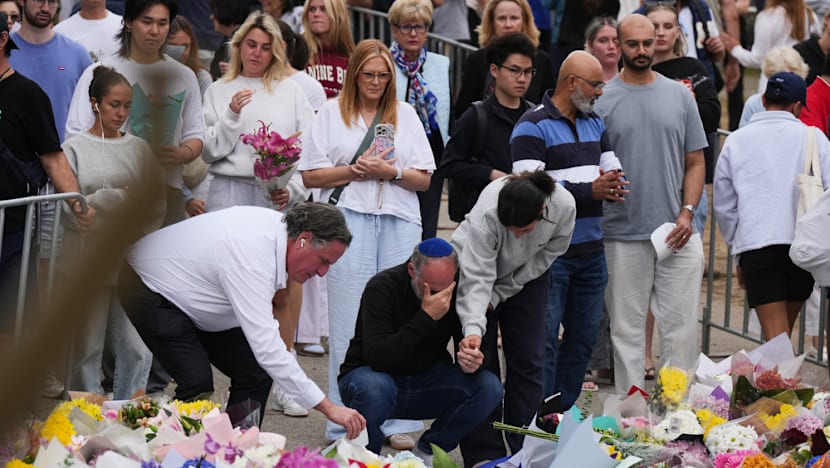
A mass shooting at Sydney’s Bondi Beach on December 14 has reignited fears surrounding the rise of lone wolf terrorism. The incident, which resulted in the deaths of 15 individuals during a Jewish holiday event, has been described as Australia’s worst mass shooting in nearly three decades. Authorities allege that the attack was executed by **Sajid Akram**, 50, and his 24-year-old son **Naveed Akram**, both of whom appeared to have acted independently.
Law enforcement officials confirmed that Sajid was shot dead by police at the scene, while Naveed was charged with **59 offences** shortly after regaining consciousness from a coma, including murder and terrorism-related charges. In the aftermath of the attack, Australian Prime Minister **Anthony Albanese** indicated that the gunmen likely drew inspiration from **Islamic State** ideology, as investigators discovered homemade ISIS flags in their vehicle.
Challenges in Detecting Lone Wolf Actors
Lone wolf actors, those who engage in political violence without direct ties to established terrorist networks, pose significant detection challenges for security agencies. Experts note that such individuals are more difficult to identify compared to organized groups. **Rohan Gunaratna**, a professor at Singapore’s Nanyang Technological University, explained that established terrorist organizations have identifiable “threat signatures,” including training locations and member networks. In contrast, lone actors operate without a structured support system, complicating detection efforts.
The trend of lone wolf attacks has escalated over the past two decades. **Levi West**, a research fellow at the Australian National University, pointed out that since the mid-2000s, most jihadist plots in Western countries have resembled lone actor attacks rather than large-scale, centrally coordinated operations.
Gunaratna emphasized the importance of developing capabilities to detect and prevent both group-based and individual attacks. He noted the necessity for governments to adapt their strategies to counter this evolving threat.
Concerns Over Radicalization and Follow-Up
The **Australian Security Intelligence Organisation** had previously investigated Naveed Akram in 2019 for alleged links to Islamic State but determined he did not pose a threat at that time. West acknowledged the complexities of assessing potential threats, asserting that while it may appear obvious in hindsight, the evidence available in 2019 did not warrant action.
Following the **October 7, 2023**, Hamas attack on Israel, which escalated tensions in the region, Gunaratna suggested that Australian authorities should have reevaluated Naveed’s situation. He highlighted a surge in radicalization among supporters of Islamic State and Al-Qaeda in the wake of this event, implying that the attack may have inspired individuals to act.
**Greg Barton**, a professor at Deakin University, raised questions about whether Australian authorities conducted follow-up assessments after Naveed’s initial investigation. He remarked that a lack of awareness regarding the radicalization of Sajid Akram could have contributed to the attack.
The Role of the Internet in Radicalization
The internet has significantly influenced the rise of lone wolf terrorism, making it easier for individuals to access extremist content and ideologies. West explained that while governments can neutralize leaders of terrorist organizations, they struggle to eradicate the ideas that fuel these movements. As long as individuals have internet access, they can encounter and resonate with jihadist propaganda, leading to self-radicalization.
The impact of social media on terrorism cannot be understated. Gunaratna described it as a transformative factor, noting that contemporary events can inspire others to commit acts of violence. He warned that similar attacks to the one at Bondi Beach could emerge without adequate preventive measures in place.
Regional Implications and Security Concerns
The implications of the Bondi Beach attack extend beyond Australia, particularly concerning potential threats in **Southeast Asia**. Barton pointed out that Sajid and Naveed Akram spent time in the **Philippines** prior to the shooting, with their last known location being **Davao City**, a region historically linked to Islamist militancy.
Although Australian authorities have not confirmed reports regarding the suspects receiving military training in the Philippines, the potential for firearms to cross borders remains a concern. Barton highlighted the risk posed by the prevalence of firearms in the region, suggesting that this could facilitate similar attacks in neighboring countries.
The shift in terrorism threat levels in parts of the Philippines, from high to low, does not negate the risks posed by lone actors. As Barton stated, the tragedy in Bondi serves as a stark reminder that even amateur gunmen can inflict significant harm, prompting the need for heightened vigilance and preparedness to prevent future incidents.
The Bondi Beach mass shooting has highlighted critical gaps in threat detection and response, as well as the ongoing challenges posed by the rise of lone wolf terrorism. With radicalization driven by digital platforms and the potential for copycat incidents, authorities in Australia and beyond must remain alert to the evolving landscape of terrorism.

India Unveils Long-Range Hypersonic Missile Amid Regional Tensions

SK bioscience Launches Global Trial for Universal Sarbecovirus Vaccine

Senegal Coach Pape Thiaw Suspended and Fined After Final Disruption

PAS Denies Abolishing Chairman Post, Contradicts Muhyiddin’s Claim

Mbappé Critiques Real Madrid’s Effort After Benfica Defeat

Thailand’s December Factory Output Surges 2.52% Year-on-Year

Ishita Dutta Reveals Her Parenting Secret: Strong Coffee

Older GPs Express Concerns Over New Digital Health Record Mandate

Urban Jurgensen: A 252-Year Legacy Enters a New Era

Regina Martinez Breaks New Ground for Mexico in Cross-Country Skiing

South Korea’s Foreign Minister Cho Hyun to Visit China This Week

Starling Bank Plans Secondary Share Sale, Targeting $5.4 Billion Valuation

Munsang College Celebrates 100 Years with Grand Ceremony

PAS Aims to Expand Parliamentary Influence in Upcoming Election

De Minaur Triumphs at Washington Open After Thrilling Comeback

Kenvue Dismisses CEO Thibaut Mongon as Strategic Review Advances

Humanism Camp Engages 250 Youths in Summer Fest 2025

Colombian Senator Miguel Uribe Shows Signs of Recovery After Attack
-
 Sports3 months ago
Regina Martinez Breaks New Ground for Mexico in Cross-Country Skiing
-
 World8 months ago
South Korea’s Foreign Minister Cho Hyun to Visit China This Week
-
 Business8 months ago
Starling Bank Plans Secondary Share Sale, Targeting $5.4 Billion Valuation
-
 Top Stories8 months ago
Munsang College Celebrates 100 Years with Grand Ceremony
-
 World8 months ago
PAS Aims to Expand Parliamentary Influence in Upcoming Election
-
 Sports9 months ago
De Minaur Triumphs at Washington Open After Thrilling Comeback
-
 Business10 months ago
Kenvue Dismisses CEO Thibaut Mongon as Strategic Review Advances
-
 Lifestyle9 months ago
Humanism Camp Engages 250 Youths in Summer Fest 2025
-
 Top Stories10 months ago
Colombian Senator Miguel Uribe Shows Signs of Recovery After Attack
-

 Sports10 months ago
Tupou and Daugunu Join First Nations Squad for Lions Clash
-

 World10 months ago
ASEAN Gears Up for Historic Joint Meeting of Foreign and Economic Ministers
-

 Health9 months ago
New Study Challenges Assumptions About Aging and Inflammation