
Business
US-China Relations: Bureaucratic Parallels Amid Rivalry

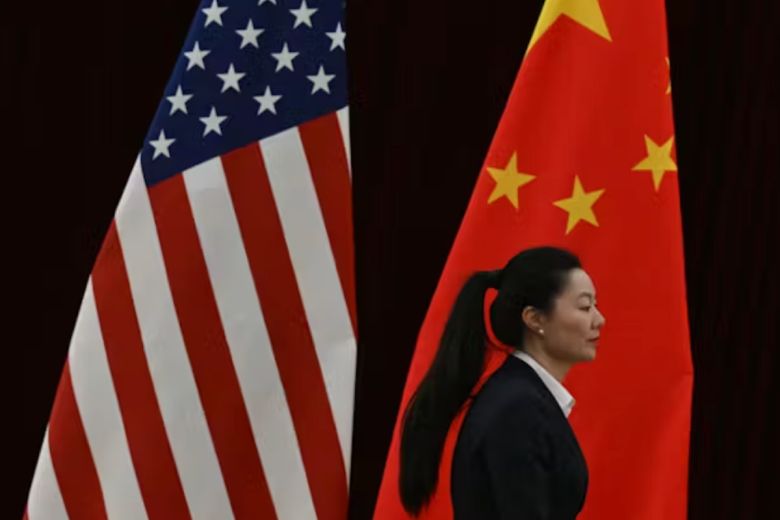
Tensions between the United States and China have intensified in 2025, marked by reciprocal tariffs and competition over rare earth elements. This ongoing economic and military rivalry is often framed as a clash of ideologies—democracy versus autocracy, and economic liberalism versus state-led growth. However, a new perspective reveals that the bureaucratic systems in both nations share significant similarities, shaped more by practical challenges than ideological divides.
Research conducted by an international team of scholars, including Daniel E. Esser from American University and Heiner Janus from the German Institute of Development and Sustainability, highlights these parallels. In a recent workshop that brought together participants from both countries and beyond, the focus was on how bureaucracies respond to global challenges. The findings suggest that despite the contrasting political landscapes, the bureaucrats in both nations operate under similar incentives, leading to comparable behaviors in the face of complex issues.
Structural Differences Yet Similar Motivations
While there are notable differences between the bureaucratic structures of the US and China, they are often driven by the same underlying motivations. As of 2024, China’s bureaucracy is more centralized, employing approximately 8 million civil servants. In contrast, the US has a more decentralized system, with around 3 million federal employees. Despite these structural distinctions, research indicates that civil servants worldwide exhibit similar behaviors when addressing intricate problems.
Bureaucrats in both nations navigate the pressures of political leadership while striving to enhance their expertise and career prospects. This commonality is evident in areas such as foreign aid and environmental management, where officials must balance political objectives with public expectations.
For instance, the foreign aid strategies of both countries appear diametrically opposed. China established the China International Development Cooperation Agency in 2018, enhancing its global engagement. Conversely, the US eliminated the United States Agency for International Development (USAID) in early 2025, significantly reducing its foreign aid budget. Yet, upon closer examination, the roles of foreign aid bureaucrats in both countries reveal a shared focus on meeting political goals and managing taxpayer-funded initiatives.
In both contexts, officials are under pressure to demonstrate effective use of resources while avoiding the perception of waste, especially in light of domestic needs. As US officials adapt to a new approach in financial diplomacy, they find themselves increasingly aligned with the Chinese model of seeking mutual benefits through aid.
Deflecting Blame and Careerism
The dynamics of blame avoidance among bureaucrats further illustrate the similarities across these two countries. In both China and the US, officials often deflect criticism for policy failures rather than celebrating successes. This behavior stems from the risks associated with policy failures, which can jeopardize entire careers.
For example, in Hebei Province, anti-air pollution measures implemented in response to a central government directive in 2017 led to unintended consequences. Provincial officials, eager to avoid blame from national leadership, implemented measures that overlooked the needs of local residents. Similarly, in the US, the contamination crisis in Flint, Michigan, following a change in water source, resulted in widespread health issues. In both cases, officials shifted responsibility onto others, revealing a shared tendency to protect their interests.
These career-driven motivations also surfaced during the Covid-19 pandemic. Bureaucrats in both countries faced the urgent task of implementing public health measures. Despite China’s perceived “authoritarian advantage” in imposing restrictions, both Chinese and American officials exhibited risk-averse behavior, prioritizing actions that would favor their career advancement over evidence-based decision-making.
As a result, both nations experienced delays in their responses to the pandemic, impacting public health outcomes. This trend highlights how bureaucratic practices, regardless of political context, can lead to similar challenges.
In conclusion, amid escalating geopolitical tensions between Washington and Beijing, it is crucial to recognize the role of capable bureaucracies in implementing political directives. While political leaders may set the agenda, it is bureaucrats who translate these goals into actionable policies. As both countries navigate a complex global landscape, their bureaucratic behaviors continue to reflect a pattern driven by incentives rather than ideology.
This research sheds light on the often-overlooked similarities between the bureaucracies of the US and China, suggesting that in times of heightened political rhetoric, these commonalities could provide a semblance of stability. The work of Mark Theisen and Tim Hailer-Röthel further emphasizes that as political leaders’ proclamations filter through large bureaucratic organizations, the stability offered by established routines can mitigate the impact of erratic political announcements.

Parliament to Discuss Pritam Singh’s Conviction and Response

infinityseek Launches Innovative Omega-3 Solution at BioST 2025 SG

Singapore’s Dhani Andika Razali Claims Gold in SEA Games Silat

South Korean Leader Promotes Transparency with Livestreamed Briefings

Jeanette Aw Celebrates 25 Years in Showbiz with Heartfelt Tributes

US-China Relations: Bureaucratic Parallels Amid Rivalry

Alleged Bondi Beach Gunman Set to Face Charges as Funerals Begin

Singapore Accelerates Global Media Ambitions with New Initiatives

Singapore’s Exports Surge 11.6% in November, Exceeding Forecasts

Kenvue Dismisses CEO Thibaut Mongon as Strategic Review Advances

Humanism Camp Engages 250 Youths in Summer Fest 2025

De Minaur Triumphs at Washington Open After Thrilling Comeback

Tupou and Daugunu Join First Nations Squad for Lions Clash

Colombian Senator Miguel Uribe Shows Signs of Recovery After Attack

New Study Challenges Assumptions About Aging and Inflammation

South Korea’s Foreign Minister Cho Hyun to Visit China This Week

ASEAN Gears Up for Historic Joint Meeting of Foreign and Economic Ministers

Oil Prices Surge Following New EU Sanctions on Russia
-
 Business5 months ago
Kenvue Dismisses CEO Thibaut Mongon as Strategic Review Advances
-
 Lifestyle5 months ago
Humanism Camp Engages 250 Youths in Summer Fest 2025
-
 Sports5 months ago
De Minaur Triumphs at Washington Open After Thrilling Comeback
-
 Sports5 months ago
Tupou and Daugunu Join First Nations Squad for Lions Clash
-
 Top Stories5 months ago
Colombian Senator Miguel Uribe Shows Signs of Recovery After Attack
-
 Health5 months ago
New Study Challenges Assumptions About Aging and Inflammation
-
 World3 months ago
South Korea’s Foreign Minister Cho Hyun to Visit China This Week
-
 World5 months ago
ASEAN Gears Up for Historic Joint Meeting of Foreign and Economic Ministers
-
 Business5 months ago
Oil Prices Surge Following New EU Sanctions on Russia
-

 Entertainment5 months ago
Detaşe-Sabah Violin Ensemble Captivates at Gabala Music Festival
-

 Business3 months ago
Starling Bank Plans Secondary Share Sale, Targeting $5.4 Billion Valuation
-

 Entertainment5 months ago
Baku Metro Extends Hours for Justin Timberlake Concert