
Politics
US Trade Relations with China: Tariffs Fail to Shift Balance

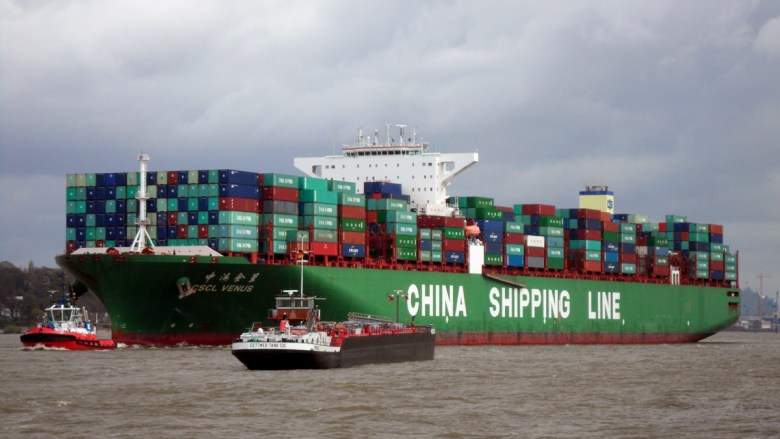
China’s exports to the United States have seen a significant decline of 26% year-on-year in the eight months following the imposition of additional tariffs by President Donald Trump in April 2023. Despite this reduction, the anticipated victory for the United States in the ongoing trade war remains elusive, as China’s global trade surplus has continued to reach record highs. Analysts suggest that the recent US National Security Strategy report indicates a growing recognition within the Trump administration of the challenges ahead in achieving a favorable outcome in the trade conflict.
The report, released on December 4, 2023, reflects a noticeable shift in tone. While it criticizes previous engagement strategies with China, it does so with less hostility than in earlier documents. Trump placed blame on former administrations for failing to recognize that encouraging investment in China would not lead to the desired economic reforms. Instead, he argued, “China got rich and powerful, and used its wealth and power to its considerable advantage.”
Despite this, the report expresses aspirations for a more balanced relationship between the two nations. It highlights that China has recycled approximately $1.3 trillion of its trade surplus into loans across the Global South, which poses new national security and economic challenges for the US and its allies. This growing concern is underscored by the fact that European, Japanese, and South Korean entities collectively hold around $7 trillion in net foreign assets, while international financial institutions possess about $1.5 trillion in assets. The strategy outlines a commitment to reform multilateral development institutions to better serve American interests.
Furthermore, the report urges allies—such as Europe, Japan, South Korea, Australia, Canada, and Mexico—to adopt policies that direct China’s growth towards household consumption. The rationale behind this approach is based on the belief that regions like Southeast Asia, Latin America, and the Middle East cannot absorb China’s excess production capacity.
Chinese commentators have noted a perceptible softening in the US’s rhetoric. Guoping, a military columnist from Zhejiang, remarked that while the report still addresses Taiwan and the South China Sea, the language is less aggressive than in past iterations. He suggested that this reflects the reality of China’s growing strength and the US’s inability to achieve its objectives through confrontation.
The report indicates a pivot in US strategy, emphasizing the Monroe Doctrine as part of its efforts to maintain dominance in the Western Hemisphere. First articulated by President James Monroe in 1823, this doctrine asserts that the US will resist external interference in its sphere of influence. Li Haidong, a professor at China Foreign Affairs University, commented that while the language has changed, the underlying competitive mindset remains intact.
The impact of the US-China trade war can be seen in stark numbers. As US tariffs average around 55%, many Chinese manufacturers have relocated their production to ASEAN countries, such as Vietnam and Thailand, where tariffs are more manageable at around 20%. Despite the relocation costs and job losses in China, the broader economic impact has been limited. In fact, China has reported a 5.4% increase in total exports to $3.41 trillion in the first 11 months of 2023, alongside a 21.6% rise in its trade surplus to $1.08 trillion.
Exports to the US decreased by $89 billion, or 18.9%, to $385.9 billion, while exports to ASEAN surged by $72 billion, an increase of 13.7%. Other markets, including Hong Kong, India, Mexico, and members of the European Union, have also stepped in to mitigate the impact of the trade war, with exports to the EU rising by 8.1% to $508 billion.
In summary, while the US has made efforts to counter China’s economic rise through tariffs and strategic initiatives, the latest developments suggest a complex landscape where China’s resilience and adaptability continue to challenge American trade objectives. The evolving dynamics of this relationship will require careful navigation in the months and years ahead, as both nations seek to redefine their roles on the global stage.

India Unveils Long-Range Hypersonic Missile Amid Regional Tensions

SK bioscience Launches Global Trial for Universal Sarbecovirus Vaccine

Senegal Coach Pape Thiaw Suspended and Fined After Final Disruption

PAS Denies Abolishing Chairman Post, Contradicts Muhyiddin’s Claim

Mbappé Critiques Real Madrid’s Effort After Benfica Defeat

Thailand’s December Factory Output Surges 2.52% Year-on-Year

Ishita Dutta Reveals Her Parenting Secret: Strong Coffee

Older GPs Express Concerns Over New Digital Health Record Mandate

Urban Jurgensen: A 252-Year Legacy Enters a New Era

Regina Martinez Breaks New Ground for Mexico in Cross-Country Skiing

South Korea’s Foreign Minister Cho Hyun to Visit China This Week

Starling Bank Plans Secondary Share Sale, Targeting $5.4 Billion Valuation

Munsang College Celebrates 100 Years with Grand Ceremony

PAS Aims to Expand Parliamentary Influence in Upcoming Election

De Minaur Triumphs at Washington Open After Thrilling Comeback

Kenvue Dismisses CEO Thibaut Mongon as Strategic Review Advances

Humanism Camp Engages 250 Youths in Summer Fest 2025

Colombian Senator Miguel Uribe Shows Signs of Recovery After Attack
-
 Sports3 months ago
Regina Martinez Breaks New Ground for Mexico in Cross-Country Skiing
-
 World8 months ago
South Korea’s Foreign Minister Cho Hyun to Visit China This Week
-
 Business8 months ago
Starling Bank Plans Secondary Share Sale, Targeting $5.4 Billion Valuation
-
 Top Stories8 months ago
Munsang College Celebrates 100 Years with Grand Ceremony
-
 World8 months ago
PAS Aims to Expand Parliamentary Influence in Upcoming Election
-
 Sports9 months ago
De Minaur Triumphs at Washington Open After Thrilling Comeback
-
 Business10 months ago
Kenvue Dismisses CEO Thibaut Mongon as Strategic Review Advances
-
 Lifestyle9 months ago
Humanism Camp Engages 250 Youths in Summer Fest 2025
-
 Top Stories10 months ago
Colombian Senator Miguel Uribe Shows Signs of Recovery After Attack
-

 Sports10 months ago
Tupou and Daugunu Join First Nations Squad for Lions Clash
-
 World10 months ago
ASEAN Gears Up for Historic Joint Meeting of Foreign and Economic Ministers
-

 Health9 months ago
New Study Challenges Assumptions About Aging and Inflammation