
Science
Scientists Detect Unusual Signals Hinting at Primordial Black Holes

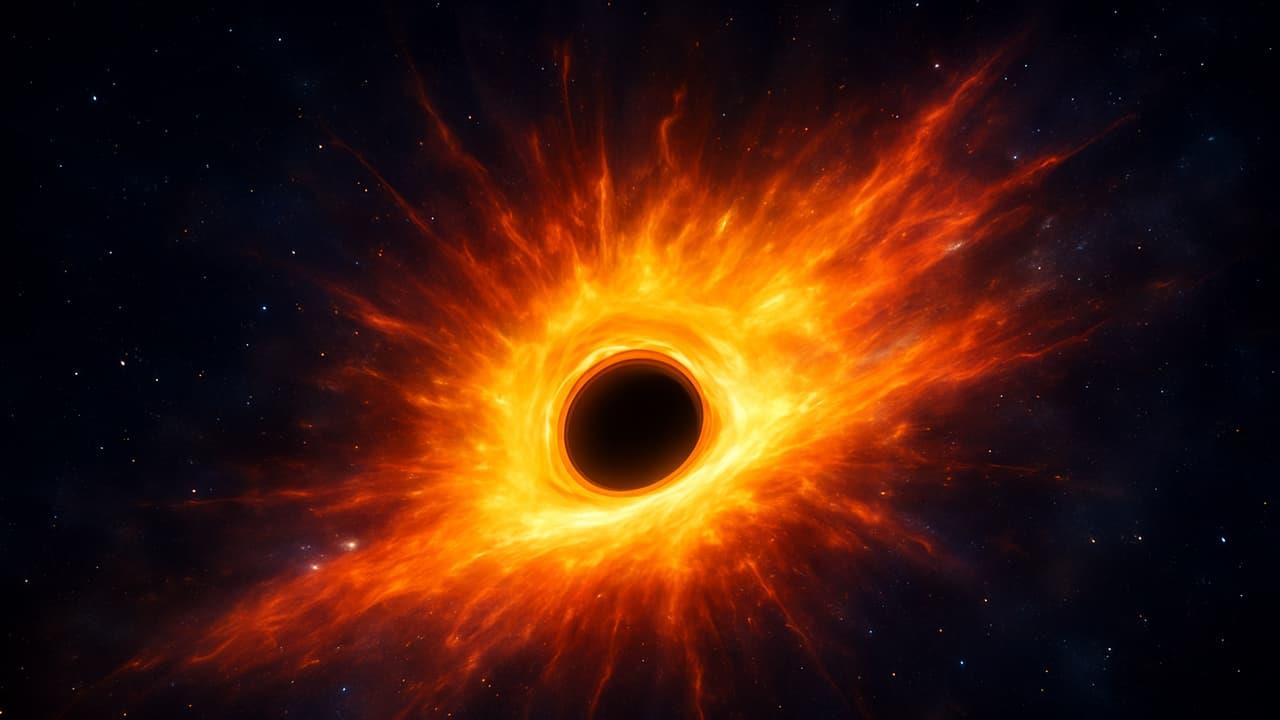
Scientists have potentially found the first evidence of primordial black holes, dense objects thought to have formed just moments after the Big Bang. On November 12, the LIGO and Virgo gravitational wave observatories detected an unusual signal indicating a merger of black holes that are significantly smaller than any known stellar remnants. This finding could represent a pivotal moment in astrophysics, providing the “smoking gun” that researchers have sought for decades.
Understanding the Significance of Primordial Black Holes
Typically, black holes emerge from the collapse of massive stars. However, the black holes linked to this recent signal exhibit a mass lighter than any stellar remnant yet remain compact. This discrepancy suggests an alternate formation process, likely rooted in the energy fluctuations of the early universe. These fluctuations could have collapsed into miniature black holes that are smaller than atoms but possess the mass of stars.
Primordial black holes are particularly intriguing because they could provide insights into dark matter, the elusive substance that plays a crucial role in the structure of galaxies. Their potential existence could reshape our understanding of the cosmos and the fundamental components that govern it.
Cautious Optimism Among Researchers
While the scientific community expresses excitement over this discovery, researchers maintain a cautious approach. The detected signal has a relatively high “false alarm rate,” meaning it could be attributed to instrumental noise rather than an actual event. To establish the existence of primordial black holes, scientists will require additional detections of similar lightweight mergers.
Upcoming upgrades to the LIGO and Virgo observatories are anticipated to enhance detection capabilities. Researchers hope that within the next few years, these advancements will yield more conclusive evidence regarding the existence of primordial black holes, which may have been lurking in the universe’s shadows since its inception.
This potential breakthrough underscores the ongoing quest to unravel the mysteries of the universe and confirms the vital role of gravitational wave astronomy in deepening our understanding of cosmic phenomena.

India Unveils Long-Range Hypersonic Missile Amid Regional Tensions

SK bioscience Launches Global Trial for Universal Sarbecovirus Vaccine

Senegal Coach Pape Thiaw Suspended and Fined After Final Disruption

PAS Denies Abolishing Chairman Post, Contradicts Muhyiddin’s Claim

Mbappé Critiques Real Madrid’s Effort After Benfica Defeat

Thailand’s December Factory Output Surges 2.52% Year-on-Year

Ishita Dutta Reveals Her Parenting Secret: Strong Coffee

Older GPs Express Concerns Over New Digital Health Record Mandate

Urban Jurgensen: A 252-Year Legacy Enters a New Era

Regina Martinez Breaks New Ground for Mexico in Cross-Country Skiing

South Korea’s Foreign Minister Cho Hyun to Visit China This Week

Starling Bank Plans Secondary Share Sale, Targeting $5.4 Billion Valuation

Munsang College Celebrates 100 Years with Grand Ceremony

PAS Aims to Expand Parliamentary Influence in Upcoming Election

De Minaur Triumphs at Washington Open After Thrilling Comeback

Kenvue Dismisses CEO Thibaut Mongon as Strategic Review Advances

Humanism Camp Engages 250 Youths in Summer Fest 2025

Colombian Senator Miguel Uribe Shows Signs of Recovery After Attack
-
 Sports3 months ago
Regina Martinez Breaks New Ground for Mexico in Cross-Country Skiing
-
 World7 months ago
South Korea’s Foreign Minister Cho Hyun to Visit China This Week
-
 Business8 months ago
Starling Bank Plans Secondary Share Sale, Targeting $5.4 Billion Valuation
-
 Top Stories8 months ago
Munsang College Celebrates 100 Years with Grand Ceremony
-
 World7 months ago
PAS Aims to Expand Parliamentary Influence in Upcoming Election
-
 Sports9 months ago
De Minaur Triumphs at Washington Open After Thrilling Comeback
-
 Business9 months ago
Kenvue Dismisses CEO Thibaut Mongon as Strategic Review Advances
-
 Lifestyle9 months ago
Humanism Camp Engages 250 Youths in Summer Fest 2025
-
 Top Stories9 months ago
Colombian Senator Miguel Uribe Shows Signs of Recovery After Attack
-

 Sports9 months ago
Tupou and Daugunu Join First Nations Squad for Lions Clash
-
 World9 months ago
ASEAN Gears Up for Historic Joint Meeting of Foreign and Economic Ministers
-

 Health9 months ago
New Study Challenges Assumptions About Aging and Inflammation