
World
Greenpeace Demands Investigation into Malaysia’s Bright Blue River

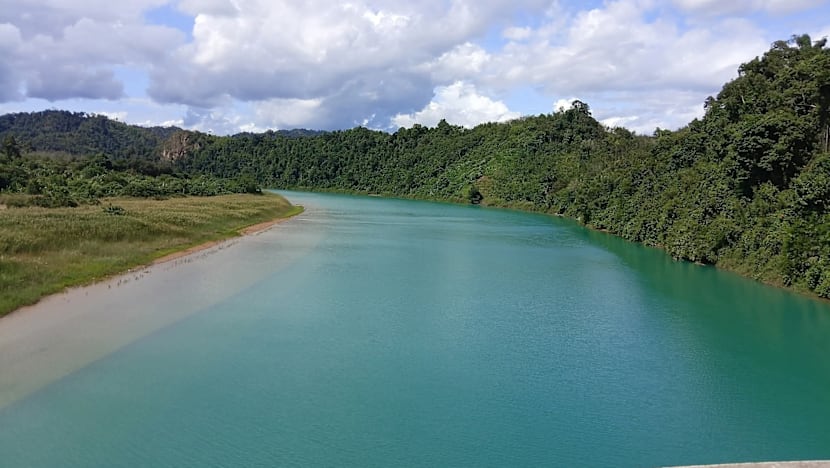
Environmental organization Greenpeace has called for an investigation into the bright blue coloration of the Sungai Perak, Malaysia’s second-longest river. This unusual phenomenon, observed near recently suspended rare earth and tin mining operations, has raised serious concerns about pollution and the effectiveness of mining oversight in the region. The situation has escalated following alarming visuals of the river, which have captured widespread attention.
On November 21, 2023, Greenpeace highlighted the need for “full transparency and an independent investigation” into the cause of this environmental change. The organization expressed deep concern over the implications of the river turning a striking turquoise color, emphasizing that the decision to suspend mining operations was merely a first step towards addressing the issue.
Natural Resources Minister Johari Abdul Ghani confirmed that an investigation is underway, focusing on the chemicals employed in the treatment processes at a nearby rare earth mine. During a parliamentary session earlier in the week, Johari disclosed that the government had ordered a temporary halt to operations at the rare earth facility and two tin mines for a period of three weeks.
According to Bernama, Malaysia’s national news agency, readings from the rare earths site indicated a radiation level of 13 becquerels, significantly exceeding the one-becquerel limit established in the operation’s environmental impact assessment report. Greenpeace has also urged authorities to assess water quality downstream to further investigate the potential environmental impact of the mining activities.
The blue coloration of the Sungai Perak was first noted approximately a month ago, prompting heightened scrutiny of the regional mining practices. As Malaysia continues to emerge as a significant player in the rare earth mining and processing sector, international interest in its operations is intensifying. In September 2023, U.S. President Donald Trump and Malaysian Prime Minister Anwar Ibrahim formalized a trade agreement to enhance U.S. access to critical minerals, underscoring the geopolitical relevance of Malaysia’s rare earth reserves.
The country is estimated to hold around 16.2 million tonnes of untapped rare earth reserves, with a nationwide moratorium on raw rare earth exports set to take effect on January 1, 2024. This moratorium aims to encourage domestic processing, ensuring that the country can capitalize on its natural resources while adhering to environmental safeguards.
As investigations proceed, the spotlight remains on the balance between economic development and environmental protection in Malaysia’s burgeoning mining industry.

Takaichi’s Leadership: A New Era for Japan’s Indo-Pacific Strategy

Singapore Commits S$37 Billion to Boost Research and Innovation

Bayern’s Luis Diaz Sees Champions League Ban Cut to Two Matches

Vaccine Makers Alarmed by US Advisory Panel’s Hepatitis B Shift

Favorites Shine in 2026 World Cup Draw; Trump Receives Honor

Taiwan and US Experts Advocate Energy Resilience Strategies

Vaccine Makers Alarmed by US Panel’s Shift on Hepatitis B for Newborns

Draw Unveils Groups for 2026 World Cup in North America

Taiwan and US Collaborate to Enhance Energy Resilience

Humanism Camp Engages 250 Youths in Summer Fest 2025

Kenvue Dismisses CEO Thibaut Mongon as Strategic Review Advances

De Minaur Triumphs at Washington Open After Thrilling Comeback

Tupou and Daugunu Join First Nations Squad for Lions Clash

Colombian Senator Miguel Uribe Shows Signs of Recovery After Attack

ASEAN Gears Up for Historic Joint Meeting of Foreign and Economic Ministers

New Study Challenges Assumptions About Aging and Inflammation

Oil Prices Surge Following New EU Sanctions on Russia

Detaşe-Sabah Violin Ensemble Captivates at Gabala Music Festival
-
 Lifestyle4 months ago
Humanism Camp Engages 250 Youths in Summer Fest 2025
-
 Business5 months ago
Kenvue Dismisses CEO Thibaut Mongon as Strategic Review Advances
-
 Sports4 months ago
De Minaur Triumphs at Washington Open After Thrilling Comeback
-
 Sports5 months ago
Tupou and Daugunu Join First Nations Squad for Lions Clash
-
 Top Stories5 months ago
Colombian Senator Miguel Uribe Shows Signs of Recovery After Attack
-
 World5 months ago
ASEAN Gears Up for Historic Joint Meeting of Foreign and Economic Ministers
-
 Health4 months ago
New Study Challenges Assumptions About Aging and Inflammation
-
 Business5 months ago
Oil Prices Surge Following New EU Sanctions on Russia
-
 Entertainment4 months ago
Detaşe-Sabah Violin Ensemble Captivates at Gabala Music Festival
-

 Entertainment4 months ago
Baku Metro Extends Hours for Justin Timberlake Concert
-

 Top Stories5 months ago
Rethinking Singapore’s F&B Regulations Amid Business Closures
-

 Business5 months ago
U.S. House Approves Stablecoin Bill, Sends to Trump for Signature