
World
COP30 Summit in Brazil Concludes Amidst Disappointment Over Fossil Fuels

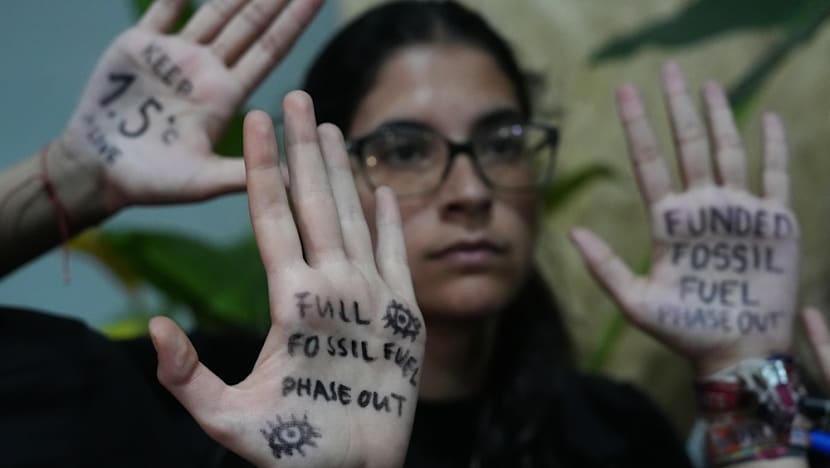
The COP30 climate summit in Brazil concluded over the weekend without reaching consensus on a crucial issue: a plan for phasing out fossil fuels. Despite increasing calls for urgent climate action, many experts expressed disappointment, stating that the lack of progress signals a troubling trajectory in the global fight against climate change.
James Chin, a professor of Asian studies at the University of Tasmania, emphasized that the outcome reflects the growing divide between wealthy and developing nations. He noted that affluent countries are reluctant to acknowledge their historical emissions or to share the financial burden of climate mitigation. This reluctance leaves developing nations grappling with severe climate-related challenges and minimal options for funding their adaptation efforts. “There was basically no outcome for the meeting. At the end of the day, (rich nations) refuse to pay and this is where the big divide is,” Chin stated in an interview. “Mitigation of climate change costs billions and billions, and like the saying goes, ‘no money, no talk.’”
Limited Progress Since Paris Agreement
Nearly a decade after the landmark Paris Agreement, which aimed to limit global temperature increases to within 1.5°C above pre-industrial levels, expectations for COP30 were cautiously optimistic. Unfortunately, the summit turned out to be one of the most divisive in recent memory, highlighting the fragility of international climate negotiations. Over 80 countries advocated for a roadmap to phase out fossil fuels, but their voices were overshadowed by resistance from powerful oil-producing states and major economies.
Injy Johnstone, a research fellow at the Smith School of Enterprise and the Environment, lamented the missed opportunity. “Any delay to the transition away from fossil fuels not only adds fuel to the fire. It also shows the limitations of the consensus process,” she explained. A clear transition roadmap could have transformed political rhetoric into actionable plans that countries could implement.
Questionable Commitments and Global Dynamics
On a more optimistic note, Brazil’s presidency at COP30 did manage to secure a compromise that calls for wealthy nations to triple climate financing for developing countries by 2035. This funding is intended to help nations adapt to rising sea levels, increased storm intensity, and extreme heat. However, analysts remain skeptical about the feasibility of this pledge. Chin described it as a “public relations exercise” designed to justify the expenses of hosting the summit. “Nobody actually believes that it will come to fruition. Just like all the previous COPs, most of the key climate agreements have not been met,” he remarked. “Unfortunately, the rich countries have now come to the conclusion that there is very little middle ground. It is the poor countries that will ultimately pay the price.”
The absence of an official delegation from the United States further complicated the discussions. Former President Donald Trump, known for his skepticism of climate science, has rolled back support for renewable energy and promoted the expansion of fossil fuel production. Analysts indicate that the U.S. stance impacts the dynamics of international negotiations, even in its absence. “It’s not about America’s emissions itself. It’s the message it sends to other countries,” said Aaron Choo, a senior assistant director at the Singapore Institute of International Affairs. “Without a pro-environment U.S. in the room, countries like Russia become bolder in blocking certain proposals.”
Despite the challenges at the summit, Johnstone highlighted that the presence of numerous U.S. state and local leaders, including governors from California, New Mexico, and Wisconsin, demonstrated ongoing commitment to climate action at the subnational level.
Meanwhile, China has been making significant strides in its climate initiatives. In September, Beijing announced a commitment to reduce greenhouse gas emissions by 7 to 10 percent below peak levels by 2035. As the world’s leading supplier of clean energy technology, China’s actions could influence global climate efforts. Choo cautioned against underestimating China’s ambitions. “China’s been quiet, but it’s getting deal-making done. They want to clean up industries, decarbonise, and electrify for their own sake,” he noted.
The challenges of phasing out fossil fuels remain formidable. Johnstone pointed out that many economies still depend on fossil fuels, making any transition plan appear daunting. Chin echoed this sentiment, stating that many nations hesitate to commit to rapid fossil fuel reductions, especially when the world’s biggest emitters, such as the U.S. and China, are reluctant to change their practices. “Countries like China and India, who are major consumers of oil, also support maintaining oil production as it stabilizes prices,” he explained.
As the impasse over fossil fuels continues, a separate international conference is scheduled for April in Colombia, co-hosted by the Netherlands. Johnstone suggested this could signal that countries are willing to seek alternative platforms for climate discussions. “If the UN system can’t deliver, other countries are going to step in. I hope we can see further pressure building from the sidelines,” she said.
Choo summarized the ongoing dilemma: “It’s difficult to talk about climate when we’re worried about our own incomes, housing, and medical costs. But it matters. The effects of climate change will make our lives worse. Even if we don’t live to see it, our children will see it. That’s the reality.”

Takaichi’s Leadership: A New Era for Japan’s Indo-Pacific Strategy

Singapore Commits S$37 Billion to Boost Research and Innovation

Bayern’s Luis Diaz Sees Champions League Ban Cut to Two Matches

Vaccine Makers Alarmed by US Advisory Panel’s Hepatitis B Shift

Favorites Shine in 2026 World Cup Draw; Trump Receives Honor

Taiwan and US Experts Advocate Energy Resilience Strategies

Vaccine Makers Alarmed by US Panel’s Shift on Hepatitis B for Newborns

Draw Unveils Groups for 2026 World Cup in North America

Taiwan and US Collaborate to Enhance Energy Resilience

Kenvue Dismisses CEO Thibaut Mongon as Strategic Review Advances

Humanism Camp Engages 250 Youths in Summer Fest 2025

De Minaur Triumphs at Washington Open After Thrilling Comeback

Tupou and Daugunu Join First Nations Squad for Lions Clash

Colombian Senator Miguel Uribe Shows Signs of Recovery After Attack

ASEAN Gears Up for Historic Joint Meeting of Foreign and Economic Ministers

New Study Challenges Assumptions About Aging and Inflammation

Oil Prices Surge Following New EU Sanctions on Russia

Detaşe-Sabah Violin Ensemble Captivates at Gabala Music Festival
-
 Business5 months ago
Kenvue Dismisses CEO Thibaut Mongon as Strategic Review Advances
-
 Lifestyle4 months ago
Humanism Camp Engages 250 Youths in Summer Fest 2025
-
 Sports4 months ago
De Minaur Triumphs at Washington Open After Thrilling Comeback
-
 Sports5 months ago
Tupou and Daugunu Join First Nations Squad for Lions Clash
-
 Top Stories5 months ago
Colombian Senator Miguel Uribe Shows Signs of Recovery After Attack
-
 World5 months ago
ASEAN Gears Up for Historic Joint Meeting of Foreign and Economic Ministers
-
 Health4 months ago
New Study Challenges Assumptions About Aging and Inflammation
-
 Business5 months ago
Oil Prices Surge Following New EU Sanctions on Russia
-
 Entertainment4 months ago
Detaşe-Sabah Violin Ensemble Captivates at Gabala Music Festival
-

 Entertainment4 months ago
Baku Metro Extends Hours for Justin Timberlake Concert
-

 Top Stories5 months ago
Rethinking Singapore’s F&B Regulations Amid Business Closures
-

 Business5 months ago
U.S. House Approves Stablecoin Bill, Sends to Trump for Signature