
World
Chengdu’s Success as China’s Happiest City Raises Questions

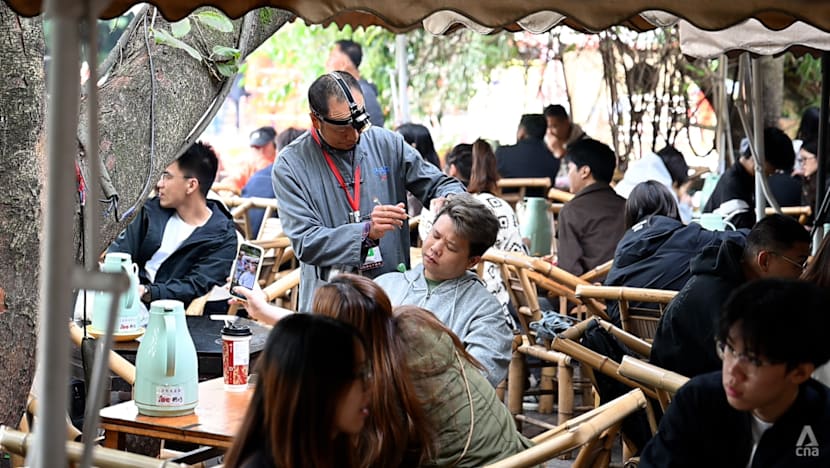
Chengdu, the capital of Sichuan province, has been recognized as one of China’s happiest cities for 16 consecutive years, according to an annual poll by Oriental Outlook, a magazine affiliated with the Xinhua state news agency. The city is celebrated for its vibrant culture, relaxed lifestyle, and a growing economy, with a GDP that surpassed 2.35 trillion yuan (US$330 billion) in 2024. As the list of happiest cities is set to be released later this year, many are questioning whether Chengdu’s successful formula can be replicated elsewhere in China.
Visitors to Chengdu enjoy its lively parks, such as the People’s Park, where locals and tourists gather to sip “kungfu tea” prepared with remarkable skill. The park is a microcosm of the city’s charm, filled with teenagers dressed in elaborate cosplay, seniors practicing ballroom dancing, and street vendors serving a variety of local delicacies. This bustling atmosphere showcases the unique blend of cultural richness and leisurely living that defines Chengdu.
The deputy editor for politics and culture at Oriental Outlook, Dai Wenming, explained that the city’s happiness ranking is derived from factors such as average income, quality of daily life, and the effectiveness of public services. According to Zhang Keyun, a professor at Renmin University, leisure plays a significant role in Chengdu’s appeal. He noted that the city’s economy is steadily growing while maintaining a laid-back lifestyle, which attracts a diverse population.
Chengdu’s population has surged by approximately 30 percent over the past five years, reaching around 21.4 million. This growth comes despite broader economic challenges affecting other cities, such as a downturn in the property market and increased job competition. As Wang Di, a history professor at the University of Macau, pointed out, the city’s relaxed image can obscure the realities faced by many residents, particularly young people who encounter significant challenges in the job market.
While happiness in Chengdu is characterized by the local term “yan huo qi,” or everyday warmth, it is not without its complexities. Many residents find joy in their daily routines, whether it’s sharing meals at hotpot restaurants or enjoying the affordability of life in Chengdu. The cost of living is notably lower than in first-tier cities like Beijing and Shanghai, making it easier for residents to enjoy a comfortable lifestyle. For instance, metro fares and grocery prices are around 15 to 20 percent cheaper, allowing locals to save on daily expenses.
The city has also attracted newcomers from more competitive urban environments. In 2024 alone, Chengdu welcomed an estimated 71,000 new residents. People like Cao Nongnong, a software engineer who relocated from Shenzhen, have found that their purchasing power and quality of life have improved significantly. The affordability of housing, with apartments costing up to ten times less than those in major cities, has made Chengdu an attractive destination for many.
As a “park city” with over 1,500 public parks, Chengdu integrates nature into urban living. Experts like Yang Linchuan from Southwest Jiaotong University emphasize that this urban model enhances community well-being. The city’s historical significance as a cultural crossroads adds to its allure, with its temples and tea gardens still echoing its rich past.
Despite its many advantages, challenges persist beneath the surface. Chengdu’s minimum wage stands at 2,330 yuan, lower than in other major cities, and the national youth unemployment rate recently reached 17.3 percent. Many young residents, such as Yun Ni, a 29-year-old artist, express concerns about financial stability and job competition, highlighting that happiness can be elusive amid economic pressures.
The ongoing popularity of Chengdu as a travel destination has attracted tourists, particularly from Southeast Asia. Local businesses benefit from this influx, yet the city struggles with the balance between growth and maintaining its relaxed charm. Many independent bookstores and cultural venues are closing, signaling a shift in the local landscape.
Researchers from the Chengdu Social Sciences Academy and the Chinese Academy of Social Sciences (CASS) have examined the city’s “happiness formula,” aiming to identify the elements that contribute to its high rankings. They found that a combination of cultural confidence, ecological advantages, and community care are essential for fostering urban well-being. However, experts caution against attempting to replicate Chengdu’s model elsewhere, as each city possesses unique characteristics that shape its identity.
As Chengdu prepares to receive its next happiness ranking, the broader implications of its success and challenges will continue to resonate throughout China. The city’s blend of economic growth, cultural richness, and leisurely lifestyle makes it a fascinating case study for urban development, but whether its formula for happiness can be replicated remains to be seen.

Takaichi’s Leadership: A New Era for Japan’s Indo-Pacific Strategy

Singapore Commits S$37 Billion to Boost Research and Innovation

Bayern’s Luis Diaz Sees Champions League Ban Cut to Two Matches

Vaccine Makers Alarmed by US Advisory Panel’s Hepatitis B Shift

Favorites Shine in 2026 World Cup Draw; Trump Receives Honor

Taiwan and US Experts Advocate Energy Resilience Strategies

Vaccine Makers Alarmed by US Panel’s Shift on Hepatitis B for Newborns

Draw Unveils Groups for 2026 World Cup in North America

Taiwan and US Collaborate to Enhance Energy Resilience

Kenvue Dismisses CEO Thibaut Mongon as Strategic Review Advances

Humanism Camp Engages 250 Youths in Summer Fest 2025

De Minaur Triumphs at Washington Open After Thrilling Comeback

Tupou and Daugunu Join First Nations Squad for Lions Clash

Colombian Senator Miguel Uribe Shows Signs of Recovery After Attack

ASEAN Gears Up for Historic Joint Meeting of Foreign and Economic Ministers

New Study Challenges Assumptions About Aging and Inflammation

Oil Prices Surge Following New EU Sanctions on Russia

Detaşe-Sabah Violin Ensemble Captivates at Gabala Music Festival
-
 Business5 months ago
Kenvue Dismisses CEO Thibaut Mongon as Strategic Review Advances
-
 Lifestyle4 months ago
Humanism Camp Engages 250 Youths in Summer Fest 2025
-
 Sports4 months ago
De Minaur Triumphs at Washington Open After Thrilling Comeback
-
 Sports5 months ago
Tupou and Daugunu Join First Nations Squad for Lions Clash
-
 Top Stories5 months ago
Colombian Senator Miguel Uribe Shows Signs of Recovery After Attack
-
 World5 months ago
ASEAN Gears Up for Historic Joint Meeting of Foreign and Economic Ministers
-
 Health4 months ago
New Study Challenges Assumptions About Aging and Inflammation
-
 Business5 months ago
Oil Prices Surge Following New EU Sanctions on Russia
-
 Entertainment4 months ago
Detaşe-Sabah Violin Ensemble Captivates at Gabala Music Festival
-

 Entertainment4 months ago
Baku Metro Extends Hours for Justin Timberlake Concert
-
 Top Stories5 months ago
Rethinking Singapore’s F&B Regulations Amid Business Closures
-

 Business5 months ago
U.S. House Approves Stablecoin Bill, Sends to Trump for Signature