
Top Stories
Takaichi and Koizumi Under Scrutiny for Political Spending

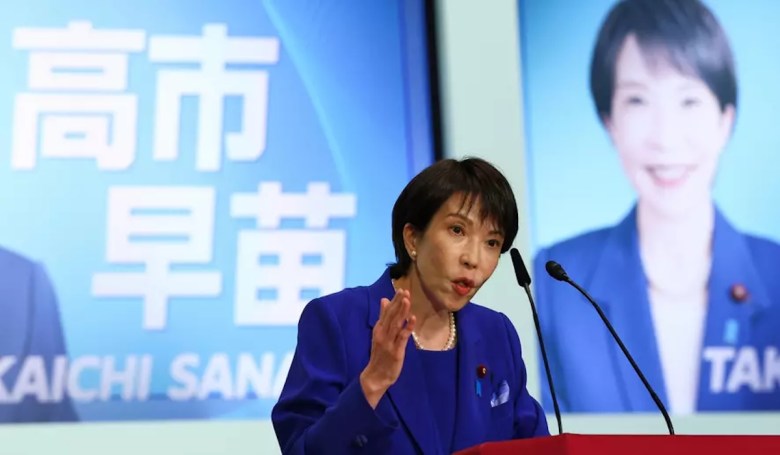
Recent political fund disclosures have raised questions about the campaign spending of Prime Minister Sanae Takaichi and Defense Minister Shinjiro Koizumi. Both politicians have come under scrutiny for their significant publicity expenditures and company donations during the past year, as reported by the Mainichi Shimbun on November 28, 2024.
In the lead-up to the 2024 Liberal Democratic Party (LDP) leadership race, Takaichi reportedly allocated over ¥80 million (approximately $550,000) for publicity efforts. This amount dwarfs the ¥20 million spent by Koizumi and the modest ¥420,000 reported by former Prime Minister Shigeru Ishiba. While these figures may seem modest compared to lavish political campaigns in the United States, they are significant within the context of Japan, where stricter rules regarding political funding exist due to past scandals.
The LDP leadership race concluded in September 2024, following Prime Minister Fumio Kishida‘s resignation amid public discontent related to slush fund scandals and connections with the Unification Church. Although Takaichi garnered the most votes in the first round, she ultimately lost to Ishiba in the runoff. Nonetheless, her visibility and expenditure during the campaign are believed to have positioned her favorably for future leadership opportunities.
In detail, Takaichi’s political fund report indicates that ¥83.84 million was allocated for publicity before and during the race, a stark increase from the ¥10 million spent in her previous campaign in 2021. Notably, significant portions of her budget were directed towards digital advertising—¥33 million went to an Osaka-based agency specializing in video and social media, and ¥5 million was paid for website development to a company associated with late campaign strategist Shinnosuke Fujikawa. Additionally, Takaichi’s team expended ¥45.84 million on leaflets, despite restrictions on mailing promotional materials prior to the official campaign period.
Despite these restrictions, Takaichi’s campaign successfully distributed leaflets to over 300,000 party members, leading to a warning from the LDP’s election management committee following complaints. The documents are believed to have positively influenced her support among party members.
Koizumi, who finished third in the race, also made considerable investments in publicity, with his campaign reporting ¥20.23 million paid to a Tokyo PR firm for election support. Following the race, he incurred additional ¥29.19 million in campaign expenses, although the connection to the leadership race remains unclear. Furthermore, he allocated ¥13 million to a firm conducting public-opinion research during the campaign.
In contrast, Ishiba’s expenditures were significantly lower, with his campaign reporting only ¥390,000 for leaflet production and ¥30,000 for social media banners.
The LDP leadership race is not governed by Japan’s Public Offices Election Act, which means no formal spending limits or mandatory reporting requirements exist. While the party restricts certain costly activities, violations do not attract penalties, raising concerns about the potential for unregulated social media advertising in future campaigns.
On the same day, NHK reported that local chapters of the LDP, led by Takaichi and Koizumi, each received ¥10 million in corporate donations exceeding the annual limit set by the Political Funds Control Act. Takaichi’s chapter in the Nara 2nd district accepted a donation from a Tokyo-based company, while Koizumi’s Kanagawa 11th district chapter received funds from an Osaka-based company. Both donations surpassed the legal cap of ¥7.5 million based on the companies’ capital sizes.
Takaichi’s office stated that the excess donation resulted from a miscalculation regarding the company’s size, which was corrected after the donation was returned. Koizumi’s office similarly reported a lack of awareness about the capital size and confirmed that the excess amount was refunded and will be documented in next year’s financial report.
Japan’s political landscape has been marred by various funding scandals, including the Lockheed scandal in 1976 and the Recruit scandal in 1988. These incidents have historically triggered public backlash, prompting the LDP to lose its long-standing dominance in 1993. Following these events, the Political Fund Control Act was revised to introduce stricter donation limits and reporting requirements.
Recent LDP slush fund scandals have reignited discussions about the need for greater transparency in political funding. Banning corporate contributions, a proposal from the LDP’s current coalition partner, Nippon Ishin no Kai (Japan Innovation Party), remains a contentious issue in parliamentary discussions.
Takaichi’s substantial investment in publicity, particularly through social media, may have contributed to her cabinet’s approval ratings, which stood at 72% as of late November 2024, according to a Yomiuri Shimbun survey. While some media outlets have compared her approval ratings with those of previous administrations, such assessments may overlook the distinct socio-economic contexts and campaign strategies employed.
The ongoing scrutiny of Takaichi and Koizumi’s spending highlights the role of media and public opinion in maintaining accountability within the political sphere. Diverse media perspectives are crucial, as outlets like the Asahi Shimbun and Mainichi Shimbun have taken a more critical stance toward Takaichi compared to the Yomiuri Shimbun and Sankei Shimbun.
As political funding continues to be a focal point in Japan, ensuring clear guidelines and adherence to regulations will be vital for restoring public trust in political institutions.

Takaichi’s Leadership: A New Era for Japan’s Indo-Pacific Strategy

Singapore Commits S$37 Billion to Boost Research and Innovation

Bayern’s Luis Diaz Sees Champions League Ban Cut to Two Matches

Vaccine Makers Alarmed by US Advisory Panel’s Hepatitis B Shift

Favorites Shine in 2026 World Cup Draw; Trump Receives Honor

Taiwan and US Experts Advocate Energy Resilience Strategies

Vaccine Makers Alarmed by US Panel’s Shift on Hepatitis B for Newborns

Draw Unveils Groups for 2026 World Cup in North America

Taiwan and US Collaborate to Enhance Energy Resilience

Kenvue Dismisses CEO Thibaut Mongon as Strategic Review Advances

Humanism Camp Engages 250 Youths in Summer Fest 2025

De Minaur Triumphs at Washington Open After Thrilling Comeback

Tupou and Daugunu Join First Nations Squad for Lions Clash

Colombian Senator Miguel Uribe Shows Signs of Recovery After Attack

ASEAN Gears Up for Historic Joint Meeting of Foreign and Economic Ministers

New Study Challenges Assumptions About Aging and Inflammation

Oil Prices Surge Following New EU Sanctions on Russia

Detaşe-Sabah Violin Ensemble Captivates at Gabala Music Festival
-
 Business5 months ago
Kenvue Dismisses CEO Thibaut Mongon as Strategic Review Advances
-
 Lifestyle4 months ago
Humanism Camp Engages 250 Youths in Summer Fest 2025
-
 Sports4 months ago
De Minaur Triumphs at Washington Open After Thrilling Comeback
-
 Sports5 months ago
Tupou and Daugunu Join First Nations Squad for Lions Clash
-
 Top Stories5 months ago
Colombian Senator Miguel Uribe Shows Signs of Recovery After Attack
-
 World5 months ago
ASEAN Gears Up for Historic Joint Meeting of Foreign and Economic Ministers
-
 Health4 months ago
New Study Challenges Assumptions About Aging and Inflammation
-
 Business5 months ago
Oil Prices Surge Following New EU Sanctions on Russia
-
 Entertainment4 months ago
Detaşe-Sabah Violin Ensemble Captivates at Gabala Music Festival
-

 Entertainment4 months ago
Baku Metro Extends Hours for Justin Timberlake Concert
-

 Top Stories5 months ago
Rethinking Singapore’s F&B Regulations Amid Business Closures
-

 Business5 months ago
U.S. House Approves Stablecoin Bill, Sends to Trump for Signature