
Sports
PSG Embraces Homegrown Talent with New Training Campus

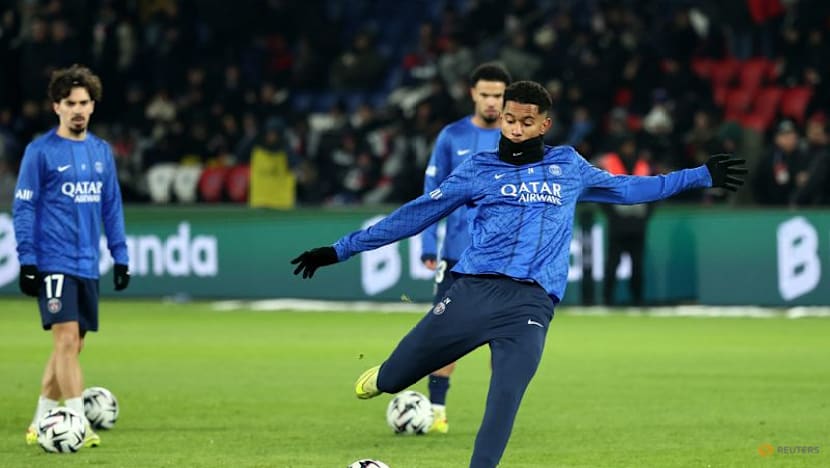
Paris Saint-Germain (PSG) has announced a strategic pivot towards developing homegrown talent, highlighted by the recent goal scored by academy forward Senny Mayulu in the Champions League final. This goal not only sealed a victory over Inter Milan but also marked a significant turning point for the club, which is now investing in its new €350 million (approximately $403 million) training campus on the outskirts of Paris.
The facility aims to consolidate PSG’s men’s, women’s, and youth teams under a unified structure. This initiative reflects the club’s commitment to nurturing local talent rather than relying solely on high-profile signings. Luis Campos, PSG’s sports director, emphasized this vision, stating, “There’s only one flight of stairs to climb. In the long term, it will be possible to build a squad without spending fortunes on the market and have a team with a French identity.”
Integrating Young Talent into the First Team
PSG’s shift towards homegrown players is already visible this season, with five academy graduates—Warren Zaire-Emery, Senny Mayulu, Noham Kamara, Ibrahim Mbaye, and Quentin Ndjantou—being integrated into the first team. In May, the club fielded its youngest starting XI in history against Montpellier, with an average age of 21 years and 251 days. The team that triumphed in the Champions League final had an average age of 24 years and 110 days, making it the second-youngest squad to win the competition, just older than the legendary 1994-95 Ajax Amsterdam team.
Zaire-Emery set a record by starting a match at just 16 years, four months and 29 days, while Mbaye made his debut at only two months older. This focus on youth marks a significant change from the club’s previous strategy following the acquisition by Qatar Sports Investments in 2011, during which PSG became known for its lavish spending on star players like Zlatan Ibrahimovic, Neymar, Kylian Mbappe, and Lionel Messi.
A Comprehensive Development Strategy
The new training campus, completed in January 2024, is built on three key pillars: sporting development, education, and personal growth, according to academy director Yohan Cabaye. He recently confirmed that the Inspection du Travail, a French government body, is investigating claims of mismanagement within the academy. Cabaye reassured that the club has nothing to hide, stating, “When you have ambition, you must accept the level of demands that comes with it. We have to keep moving forward and working.”
The proximity of academy players to the senior squad is designed to facilitate smoother transitions. Campos explained, “We want our youth teams to understand the principles of play used by the head coach. When they step up, they must already know our pressing and possession game.” To accommodate these young talents, PSG has intentionally reduced the size of its senior squad, aiming for a mix of 14 to 15 versatile players alongside six to seven academy talents.
This strategic shift is particularly timely, as French football faces economic challenges due to declining domestic broadcast revenues. For PSG, fostering talent from within is becoming both a sporting and financial imperative. “This is just the beginning,” Cabaye stated. “We’re celebrating 50 years, but this project is the start of something much bigger.”

Takaichi’s Leadership: A New Era for Japan’s Indo-Pacific Strategy

Singapore Commits S$37 Billion to Boost Research and Innovation

Bayern’s Luis Diaz Sees Champions League Ban Cut to Two Matches

Vaccine Makers Alarmed by US Advisory Panel’s Hepatitis B Shift

Favorites Shine in 2026 World Cup Draw; Trump Receives Honor

Taiwan and US Experts Advocate Energy Resilience Strategies

Vaccine Makers Alarmed by US Panel’s Shift on Hepatitis B for Newborns

Draw Unveils Groups for 2026 World Cup in North America

Taiwan and US Collaborate to Enhance Energy Resilience

Kenvue Dismisses CEO Thibaut Mongon as Strategic Review Advances

Humanism Camp Engages 250 Youths in Summer Fest 2025

De Minaur Triumphs at Washington Open After Thrilling Comeback

Tupou and Daugunu Join First Nations Squad for Lions Clash

Colombian Senator Miguel Uribe Shows Signs of Recovery After Attack

ASEAN Gears Up for Historic Joint Meeting of Foreign and Economic Ministers

New Study Challenges Assumptions About Aging and Inflammation

Oil Prices Surge Following New EU Sanctions on Russia

Detaşe-Sabah Violin Ensemble Captivates at Gabala Music Festival
-
 Business5 months ago
Kenvue Dismisses CEO Thibaut Mongon as Strategic Review Advances
-
 Lifestyle4 months ago
Humanism Camp Engages 250 Youths in Summer Fest 2025
-
 Sports4 months ago
De Minaur Triumphs at Washington Open After Thrilling Comeback
-
 Sports5 months ago
Tupou and Daugunu Join First Nations Squad for Lions Clash
-
 Top Stories5 months ago
Colombian Senator Miguel Uribe Shows Signs of Recovery After Attack
-
 World5 months ago
ASEAN Gears Up for Historic Joint Meeting of Foreign and Economic Ministers
-
 Health4 months ago
New Study Challenges Assumptions About Aging and Inflammation
-
 Business5 months ago
Oil Prices Surge Following New EU Sanctions on Russia
-
 Entertainment4 months ago
Detaşe-Sabah Violin Ensemble Captivates at Gabala Music Festival
-

 Entertainment4 months ago
Baku Metro Extends Hours for Justin Timberlake Concert
-
 Top Stories5 months ago
Rethinking Singapore’s F&B Regulations Amid Business Closures
-

 Business5 months ago
U.S. House Approves Stablecoin Bill, Sends to Trump for Signature