
Science
Researchers Reconstruct Century of Solar Data to Predict Storms

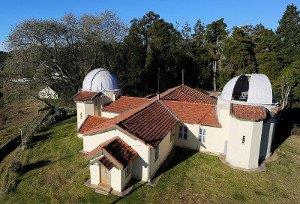
Researchers have developed a groundbreaking method to reconstruct the Sun’s polar magnetic behaviour over the last century. This innovative approach, led by the Aryabhatta Research Institute of Observational Sciences (ARIES), hinges on the analysis of historical solar images from the Kodaikanal Solar Observatory (KoSO). The findings were announced by India’s Ministry of Science and Technology on November 19, 2023.
The research team, under the guidance of Dibya Kirti Mishra of ARIES, collaborated with experts from various prestigious institutions, including the Indian Institute of Space Science and Technology, the Southwest Research Institute in the United States, Germany’s Max Planck Institute for Solar System Research, and Italy’s INAF Osservatorio Astronomico di Roma. Together, they estimated the polar field of the Sun throughout the past century, an essential factor in enhancing our understanding of solar activity.
Understanding the Sun’s magnetic behaviour is crucial for predicting solar storms, which can have far-reaching implications. These storms can damage satellites, disrupt GPS systems, and even lead to widespread power outages. The Ministry highlighted that the extensive KoSO archive serves as a significant data source for artificial intelligence and machine learning applications, with over 100 years of observations now digitized into images.
The researchers employed advanced feature identification algorithms to analyze this extensive dataset. By merging the historical data with recent observations from Italy’s Rome-PSPT, they identified the polar network, a series of tiny bright features near the Sun’s poles. This polar network serves as a powerful proxy for estimating the strength of the solar polar field.
The reconstruction technique has also been utilized to estimate the strength of the ongoing Solar Cycle 25, contributing valuable insights into solar behaviour. The observations at KoSO, which began in a special wavelength known as Ca II K in 1904, have been instrumental in uncovering the secrets of solar magnetism. This wavelength captures the chromospheric activity of the Sun, revealing areas where bright patches, known as plages and networks, form due to magnetic activity.
KoSO, located in Bangalore, India, operates as an autonomous institute under the Department of Science & Technology (DST) of the Government of India. The complete dataset, including the reconstructed polar field and the Polar Network Index (PNI) series, is now freely accessible to the public on platforms such as GitHub and Zenodo, promoting further research and exploration in the field.
This research marks a significant advancement in solar physics, potentially enhancing our ability to anticipate and mitigate the impacts of solar storms on modern technology. The collaboration of prominent international institutions underscores the importance of global efforts in understanding our Sun and its influence on Earth.

Takaichi’s Leadership: A New Era for Japan’s Indo-Pacific Strategy

Singapore Commits S$37 Billion to Boost Research and Innovation

Bayern’s Luis Diaz Sees Champions League Ban Cut to Two Matches

Vaccine Makers Alarmed by US Advisory Panel’s Hepatitis B Shift

Favorites Shine in 2026 World Cup Draw; Trump Receives Honor

Taiwan and US Experts Advocate Energy Resilience Strategies

Vaccine Makers Alarmed by US Panel’s Shift on Hepatitis B for Newborns

Draw Unveils Groups for 2026 World Cup in North America

Taiwan and US Collaborate to Enhance Energy Resilience

Kenvue Dismisses CEO Thibaut Mongon as Strategic Review Advances

Humanism Camp Engages 250 Youths in Summer Fest 2025

De Minaur Triumphs at Washington Open After Thrilling Comeback

Tupou and Daugunu Join First Nations Squad for Lions Clash

Colombian Senator Miguel Uribe Shows Signs of Recovery After Attack

ASEAN Gears Up for Historic Joint Meeting of Foreign and Economic Ministers

New Study Challenges Assumptions About Aging and Inflammation

Oil Prices Surge Following New EU Sanctions on Russia

Detaşe-Sabah Violin Ensemble Captivates at Gabala Music Festival
-
 Business5 months ago
Kenvue Dismisses CEO Thibaut Mongon as Strategic Review Advances
-
 Lifestyle4 months ago
Humanism Camp Engages 250 Youths in Summer Fest 2025
-
 Sports4 months ago
De Minaur Triumphs at Washington Open After Thrilling Comeback
-
 Sports5 months ago
Tupou and Daugunu Join First Nations Squad for Lions Clash
-
 Top Stories5 months ago
Colombian Senator Miguel Uribe Shows Signs of Recovery After Attack
-
 World5 months ago
ASEAN Gears Up for Historic Joint Meeting of Foreign and Economic Ministers
-
 Health4 months ago
New Study Challenges Assumptions About Aging and Inflammation
-
 Business5 months ago
Oil Prices Surge Following New EU Sanctions on Russia
-
 Entertainment4 months ago
Detaşe-Sabah Violin Ensemble Captivates at Gabala Music Festival
-

 Entertainment4 months ago
Baku Metro Extends Hours for Justin Timberlake Concert
-

 Top Stories5 months ago
Rethinking Singapore’s F&B Regulations Amid Business Closures
-
 Business5 months ago
U.S. House Approves Stablecoin Bill, Sends to Trump for Signature