
Politics
US Offers F-35s to Saudi Arabia, Shaping Middle East Air Dominance

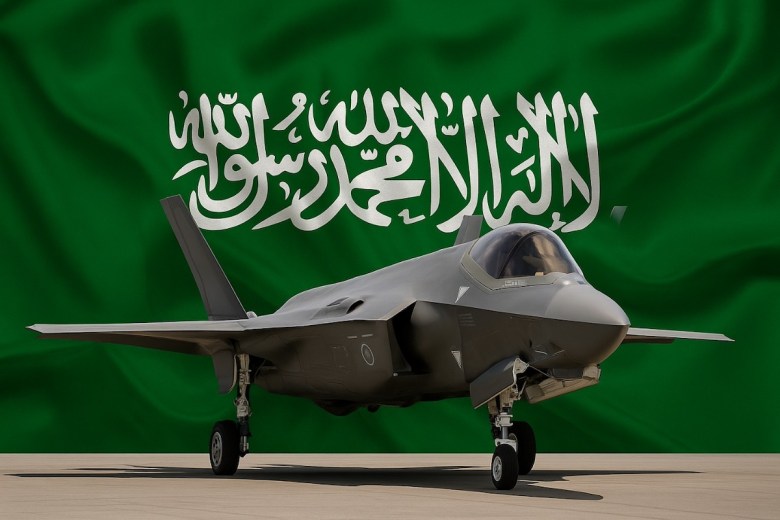
The United States has proposed the sale of advanced F-35 stealth fighters to Saudi Arabia, marking a significant shift in airpower dynamics across the Middle East. During a meeting on March 15, 2024, US President Donald Trump and Saudi Crown Prince Mohammad bin Salman announced a landmark defense agreement that includes future deliveries of these state-of-the-art aircraft. This deal is part of a broader US-Saudi Strategic Defense Agreement and reinforces the two nations’ military partnership, which has spanned over eight decades.
Should the agreement be finalized, Saudi Arabia will become the second country in the region, alongside Israel, to operate the F-35. However, the sale comes with certain restrictions. Reports indicate that Saudi Arabia may be limited to acquiring only two squadrons, or a total of 24 jets. Additionally, the deal is designed to ensure that Israel maintains its qualitative military edge in the region, with Israel already in the process of assembling a third F-35 squadron.
The proposed sale has generated significant discussions regarding the potential limitations on Saudi Arabia’s operational capabilities. According to reports, the United States may not permit Saudi Arabia to upgrade the F-35 jets independently, nor will it allow the integration of certain advanced technologies without prior approval. Furthermore, there are indications that the US may withhold specific armaments, such as the AIM-260 Joint Advanced Tactical Missile (JATM), known for its superior range of 193 kilometers.
In addition to the technical limitations, the F-35s provided to Saudi Arabia may come with software restrictions, potentially keeping them technologically inferior to those in Israel’s arsenal. This arrangement aims to bolster Saudi Arabia’s airpower capabilities while simultaneously reinforcing the US defense industrial base. The sale is framed as an extension of Trump’s “America First” agenda, further ensuring that Saudi Arabia continues to procure American military equipment and create jobs in the US defense sector.
The timing of this announcement closely follows Saudi Arabia’s commitment to increase its investments in the US to nearly $1 trillion. From a strategic perspective, the recent Israeli operations against Iran in June 2025 may have demonstrated the F-35’s effectiveness in combat scenarios, providing a compelling case for Saudi Arabia’s interest in acquiring these aircraft. Israel’s ability to operate the F-35 with advanced electronic warfare capabilities allowed it to evade Iranian defenses, showcasing the fighter’s operational advantages.
While Saudi Arabia’s pursuit of enhanced military capabilities is evident, concerns have also arisen regarding the implications of technology transfer. The New York Times reported that the US Defense Intelligence Agency (DIA) has expressed reservations about the potential sale, citing risks related to technology leakage, especially given Saudi Arabia’s growing defense ties with China. This concern parallels the UAE’s previous unsuccessful bid to acquire F-35s, which was halted due to similar worries about maintaining Israel’s military superiority and safeguarding sensitive US technologies.
Furthermore, China’s advancements in its own military aviation capabilities, exemplified by the production of the J-35 stealth fighter, raise additional questions about the broader implications of the US-Saudi deal. The J-35 has drawn comparisons to the F-35, suggesting potential espionage in its development. As China continues to enhance its presence in the international fighter jet market, it may offer alternatives to countries like Saudi Arabia that seek to diversify their military partnerships.
Saudi Arabia’s strategy appears to include not only the acquisition of F-35s but also interest in other fighter programs. The kingdom has expressed intentions to acquire 100 units of Turkey’s KAAN fighter, developed following Turkey’s exclusion from the F-35 program. Additionally, Saudi Arabia is considering participation in the UK-Italy-Japan Global Combat Air Program (GCAP), although the sophistication and technological maturity of these alternatives remain uncertain.
As the situation evolves, Saudi Arabia’s military ambitions and its balancing act between US and Chinese influence will continue to shape the future of airpower in the Middle East. The F-35 deal underscores the complex interplay of defense technology, geopolitical strategy, and international relations that will define the region’s military landscape in the years to come.

Takaichi’s Leadership: A New Era for Japan’s Indo-Pacific Strategy

Singapore Commits S$37 Billion to Boost Research and Innovation

Bayern’s Luis Diaz Sees Champions League Ban Cut to Two Matches

Vaccine Makers Alarmed by US Advisory Panel’s Hepatitis B Shift

Favorites Shine in 2026 World Cup Draw; Trump Receives Honor

Taiwan and US Experts Advocate Energy Resilience Strategies

Vaccine Makers Alarmed by US Panel’s Shift on Hepatitis B for Newborns

Draw Unveils Groups for 2026 World Cup in North America

Taiwan and US Collaborate to Enhance Energy Resilience

Kenvue Dismisses CEO Thibaut Mongon as Strategic Review Advances

Humanism Camp Engages 250 Youths in Summer Fest 2025

De Minaur Triumphs at Washington Open After Thrilling Comeback

Tupou and Daugunu Join First Nations Squad for Lions Clash

Colombian Senator Miguel Uribe Shows Signs of Recovery After Attack

ASEAN Gears Up for Historic Joint Meeting of Foreign and Economic Ministers

New Study Challenges Assumptions About Aging and Inflammation

Oil Prices Surge Following New EU Sanctions on Russia

Detaşe-Sabah Violin Ensemble Captivates at Gabala Music Festival
-
 Business5 months ago
Kenvue Dismisses CEO Thibaut Mongon as Strategic Review Advances
-
 Lifestyle4 months ago
Humanism Camp Engages 250 Youths in Summer Fest 2025
-
 Sports4 months ago
De Minaur Triumphs at Washington Open After Thrilling Comeback
-
 Sports5 months ago
Tupou and Daugunu Join First Nations Squad for Lions Clash
-
 Top Stories5 months ago
Colombian Senator Miguel Uribe Shows Signs of Recovery After Attack
-
 World5 months ago
ASEAN Gears Up for Historic Joint Meeting of Foreign and Economic Ministers
-
 Health4 months ago
New Study Challenges Assumptions About Aging and Inflammation
-
 Business5 months ago
Oil Prices Surge Following New EU Sanctions on Russia
-
 Entertainment4 months ago
Detaşe-Sabah Violin Ensemble Captivates at Gabala Music Festival
-

 Entertainment4 months ago
Baku Metro Extends Hours for Justin Timberlake Concert
-

 Top Stories5 months ago
Rethinking Singapore’s F&B Regulations Amid Business Closures
-
 Business5 months ago
U.S. House Approves Stablecoin Bill, Sends to Trump for Signature