
Politics
US Military Presence in Caribbean Signals Shift Toward Venezuela

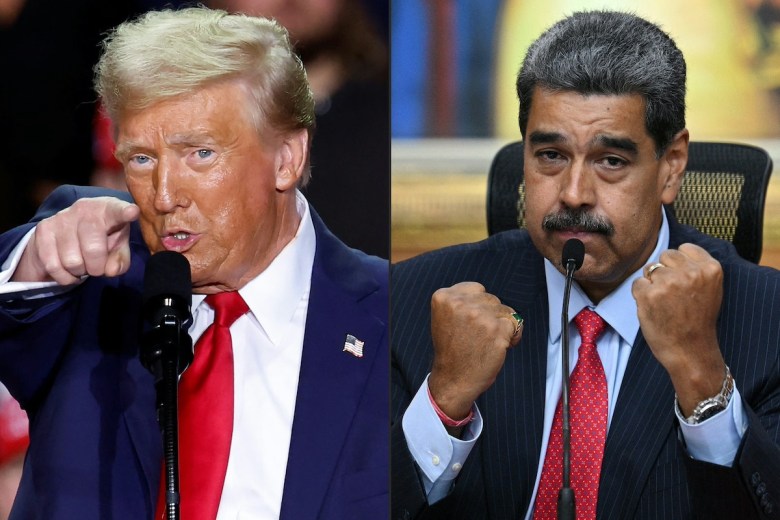
The United States has escalated its military operations in the Caribbean, signaling a shift in its approach toward Venezuela. Recent developments, including the deployment of advanced naval assets and covert operations, suggest a move from covert to overt engagement in the region. As tensions rise, the implications for both nations and the broader geopolitical landscape become increasingly significant.
Military Maneuvers Indicate Escalation
U.S. military actions have intensified in recent months, with the deployment of over 10,000 marines and sailors to the Caribbean. This marks the largest naval presence in the area since the Cuban Missile Crisis. The **USS Gerald R. Ford**, the U.S. Navy’s most advanced aircraft carrier, is now stationed nearby, alongside a variety of air and naval platforms. Reports indicate that this military buildup is not merely for anti-narcotics operations, as U.S. officials have suggested, but may also serve as a preparation for potential direct involvement in Venezuela.
The escalation began subtly with drone strikes targeting what the U.S. government claimed were vessels linked to drug trafficking. Yet, experts highlight that the geography of these operations raises questions about their true intent. Cocaine trafficking routes typically originate from Colombia and other countries, not through the waters where these strikes occurred. This discrepancy hints at a broader strategy focused on Venezuela, particularly as tensions with both Russia and China continue to rise.
Strategic Implications of U.S. Actions
The backdrop to this renewed focus on Venezuela includes the country’s vast oil reserves and its growing ties with Russia and China. **Nicolas Maduro’s** government has relied on support from Moscow, which has provided military assistance, and Beijing, which has offered financial backing. In a bid to secure more international support, Maduro has even suggested allowing U.S. firms to take majority stakes in Venezuela’s oil industry, a proposition that was quickly dismissed by Washington.
This strategic interest aligns with the historical context of the **Monroe Doctrine**, which underscores the U.S. commitment to maintaining influence in its hemisphere. The Trump administration, while adapting to a multipolar world, appears unwilling to accept a strong Russian or Chinese foothold in Latin America. By deploying military resources and intelligence assets, the U.S. is signaling its readiness to counter any challenge to its dominance in the region.
As the U.S. solidifies its military posture, accusations of covert operations have emerged. Caracas has claimed to have intercepted CIA-linked operatives allegedly planning a false-flag operation to justify further U.S. intervention. Additionally, reports suggest attempts by the FBI to bribe individuals close to Maduro in order to facilitate a regime change.
The military capabilities of Venezuela, while substantial on paper, are dwindling in practice. Years of mismanagement and corruption have left its armed forces ill-equipped to resist a concerted attack. The country’s aging fleet of aircraft and limited operational capacity make it vulnerable to U.S. naval superiority.
Potential Consequences of Military Action
Should the U.S. decide to escalate its involvement further, the ramifications could be profound. Toppling Maduro would only be the beginning; the aftermath could lead to widespread chaos reminiscent of conflicts in Libya or Syria. Venezuela’s civilian militias, armed during Maduro’s tenure, could fragment, creating a vacuum of power filled by various factions. The potential for violence and instability looms large, raising concerns about a protracted conflict.
As the U.S. navigates these complexities, it faces the uncomfortable reality that it may already be engaged in a conflict it has yet to officially acknowledge. The ongoing military actions, framed as counter-narcotics efforts, are evidently driven by geopolitical considerations.
The historical precedent of powerful nations intervening in weaker states without clear objectives serves as a cautionary tale. While the U.S. may demonstrate its military might, it must also consider the long-term consequences of its actions in Venezuela. The challenge lies not only in defeating a regime but also in rebuilding a nation fraught with division and unrest.
In summary, the U.S. military’s increased presence in the Caribbean exemplifies a strategic pivot toward Venezuela, reflecting a combination of historical doctrine and contemporary geopolitical reality. As tensions escalate, the world watches closely to see how this precarious situation unfolds.

Takaichi’s Leadership: A New Era for Japan’s Indo-Pacific Strategy

Singapore Commits S$37 Billion to Boost Research and Innovation

Bayern’s Luis Diaz Sees Champions League Ban Cut to Two Matches

Vaccine Makers Alarmed by US Advisory Panel’s Hepatitis B Shift

Favorites Shine in 2026 World Cup Draw; Trump Receives Honor

Taiwan and US Experts Advocate Energy Resilience Strategies

Vaccine Makers Alarmed by US Panel’s Shift on Hepatitis B for Newborns

Draw Unveils Groups for 2026 World Cup in North America

Taiwan and US Collaborate to Enhance Energy Resilience

Kenvue Dismisses CEO Thibaut Mongon as Strategic Review Advances

Humanism Camp Engages 250 Youths in Summer Fest 2025

De Minaur Triumphs at Washington Open After Thrilling Comeback

Tupou and Daugunu Join First Nations Squad for Lions Clash

Colombian Senator Miguel Uribe Shows Signs of Recovery After Attack

ASEAN Gears Up for Historic Joint Meeting of Foreign and Economic Ministers

New Study Challenges Assumptions About Aging and Inflammation

Oil Prices Surge Following New EU Sanctions on Russia

Detaşe-Sabah Violin Ensemble Captivates at Gabala Music Festival
-
 Business5 months ago
Kenvue Dismisses CEO Thibaut Mongon as Strategic Review Advances
-
 Lifestyle4 months ago
Humanism Camp Engages 250 Youths in Summer Fest 2025
-
 Sports4 months ago
De Minaur Triumphs at Washington Open After Thrilling Comeback
-
 Sports5 months ago
Tupou and Daugunu Join First Nations Squad for Lions Clash
-
 Top Stories5 months ago
Colombian Senator Miguel Uribe Shows Signs of Recovery After Attack
-
 World5 months ago
ASEAN Gears Up for Historic Joint Meeting of Foreign and Economic Ministers
-
 Health4 months ago
New Study Challenges Assumptions About Aging and Inflammation
-
 Business5 months ago
Oil Prices Surge Following New EU Sanctions on Russia
-
 Entertainment4 months ago
Detaşe-Sabah Violin Ensemble Captivates at Gabala Music Festival
-

 Entertainment4 months ago
Baku Metro Extends Hours for Justin Timberlake Concert
-

 Top Stories5 months ago
Rethinking Singapore’s F&B Regulations Amid Business Closures
-
 Business5 months ago
U.S. House Approves Stablecoin Bill, Sends to Trump for Signature