
Politics
US Drives Pakistan-Israel Engagement Amid Geopolitical Shift

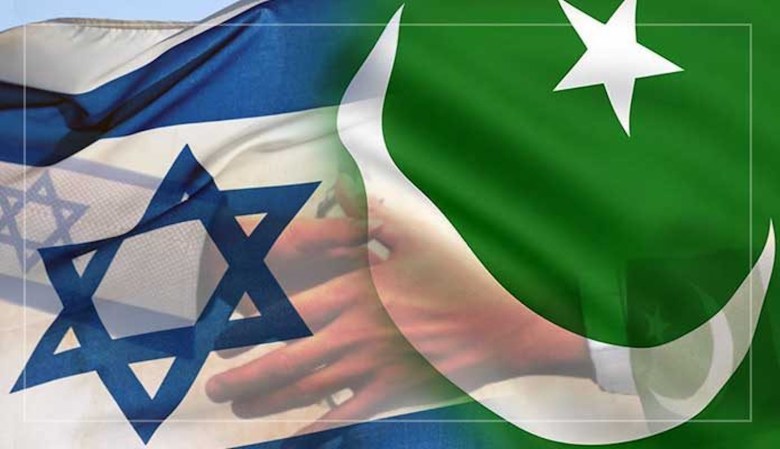
Recent interactions between Pakistani officials and Israeli representatives signal a significant shift in geopolitical dynamics, largely influenced by the United States. Pakistan’s increased engagement with Israel, both public and discreet, is reshaping the regional landscape and may lead to a formal recognition of Israel by Islamabad.
The most conspicuous evidence of this engagement occurred on November 4, 2025, at the World Travel Market Fair in London. Here, Michael Izhakov, the director general of Israeli Tourism, participated in a well-documented conversation with Sardar Yasir Ilyas Khan, an advisor to Pakistan’s Prime Minister. This meeting is particularly noteworthy given that the two countries do not maintain formal diplomatic relations. The openness of this exchange indicates a willingness from both sides to explore normalization of ties.
Another significant moment unfolded during Shahbaz Sharif’s visit to New York for the UN General Assembly in late September 2025. Reports indicated a discreet interaction between Sharif and Daniel Rosen, president of the American Jewish Congress. Although neither party publicly confirmed the meeting, the lack of denial suggests a shift towards high-level contacts that could herald deeper diplomatic ties.
The Sharm el-Sheikh meeting on October 13, 2025, also underscored Pakistan’s evolving role within the region. Though presented as a display of Muslim unity, the gathering was largely symbolic, aiming to consolidate U.S. influence amid growing international pressure on Israel due to its actions in Gaza. The meeting excluded key players Israel and Hamas, reflecting Washington’s strategy to align Muslim states behind a U.S.-friendly narrative.
In response to the international outcry against Israel, including movements by several European nations to recognize the State of Palestine, the Sharm el-Sheikh summit served the dual purpose of projecting regional cooperation while mitigating Israel’s global isolation. Following the summit, the momentum for diplomatic recognition of Palestine began to wane, suggesting that U.S. intervention had effectively redirected the narrative in favor of Israel.
A striking moment at the UN General Assembly occurred when Donald Trump paused his speech to invite Sharif to share his thoughts. Sharif praised Trump as a “man of peace” and reiterated his earlier nomination of Trump for the Nobel Prize, reinforcing Pakistan’s alignment with U.S. perspectives on the Gaza conflict. This public endorsement not only elevated Trump’s stature but also highlighted Pakistan’s emerging relevance in Middle Eastern diplomacy.
Beyond official diplomacy, some actors within Pakistani civil society have engaged with Israel, signaling an unofficial track of interaction. In 2025, a delegation of journalists and influencers visited Israel under the auspices of the NGO Sharaka, which promotes dialogue between Israel and South/South Asian countries. Although the Pakistani Foreign Office denied any official involvement, the delegation described the visit as enlightening, emphasizing the need for cross-cultural understanding.
For Israel, engaging with Pakistan serves multiple strategic objectives. As the only Muslim-majority nation with nuclear capabilities, Pakistan holds considerable influence and poses a long-term security challenge. By fostering ties with Islamabad, Israel aims to alleviate concerns regarding Pakistan’s nuclear status while simultaneously reshaping perceptions within the Islamic world.
Pakistan’s own motivations for engagement are equally evident. Heightened military cooperation between India and Israel, particularly during operations like Operation Sindoor in May 2025, has raised Islamabad’s security concerns. By establishing a connection with Israel, Pakistan may seek to counterbalance the growing Indo-Israeli alliance, which is perceived as a threat to its national security.
Recent protests by the Tehreek-e-Labbaik Pakistan party over rumors of rapprochement with Israel underscore the sensitivity of this issue within Pakistan. Nonetheless, Sharif’s public endorsement of a two-state solution upon returning from Sharm el-Sheikh reflects a subtle shift in language that carries significant symbolic weight for a nation traditionally opposed to recognizing Israel.
The ongoing constitutional amendments in Pakistan, which centralize power under military leadership, have been interpreted as preparations for managing any backlash against potential foreign policy shifts. This consolidation of authority aims to provide a stable environment for navigating sensitive geopolitical realignments.
The United States recognizes that achieving a symbolic breakthrough regarding Israel’s recognition requires a major Muslim state to change its long-held position. Pakistan, due to its unique geopolitical and symbolic significance, is seen as the most viable candidate for this shift.
As diplomatic channels between Pakistan and Israel deepen, the foundations for a potential normalization of relations are being laid. Reports suggest that Israel, with U.S. support, is quietly assisting Pakistan in navigating multilateral financial institutions and engaging in back-channel discussions aimed at establishing trust.
These developments indicate that Pakistan’s engagement with Israel is not a serendipitous occurrence but rather part of a broader strategic realignment. The architecture for a renewed diplomatic framework, akin to “Abraham Accords 2.0,” is quietly being constructed.
Should Pakistan eventually recognize Israel, it would profoundly affect regional alignments and reshape global diplomatic calculations. The direction of recent events suggests that this possibility is increasingly plausible, as both nations navigate the complexities of modern geopolitics.

Takaichi’s Leadership: A New Era for Japan’s Indo-Pacific Strategy

Singapore Commits S$37 Billion to Boost Research and Innovation

Bayern’s Luis Diaz Sees Champions League Ban Cut to Two Matches

Vaccine Makers Alarmed by US Advisory Panel’s Hepatitis B Shift

Favorites Shine in 2026 World Cup Draw; Trump Receives Honor

Taiwan and US Experts Advocate Energy Resilience Strategies

Vaccine Makers Alarmed by US Panel’s Shift on Hepatitis B for Newborns

Draw Unveils Groups for 2026 World Cup in North America

Taiwan and US Collaborate to Enhance Energy Resilience

Kenvue Dismisses CEO Thibaut Mongon as Strategic Review Advances

Humanism Camp Engages 250 Youths in Summer Fest 2025

De Minaur Triumphs at Washington Open After Thrilling Comeback

Tupou and Daugunu Join First Nations Squad for Lions Clash

Colombian Senator Miguel Uribe Shows Signs of Recovery After Attack

ASEAN Gears Up for Historic Joint Meeting of Foreign and Economic Ministers

New Study Challenges Assumptions About Aging and Inflammation

Oil Prices Surge Following New EU Sanctions on Russia

Detaşe-Sabah Violin Ensemble Captivates at Gabala Music Festival
-
 Business5 months ago
Kenvue Dismisses CEO Thibaut Mongon as Strategic Review Advances
-
 Lifestyle4 months ago
Humanism Camp Engages 250 Youths in Summer Fest 2025
-
 Sports4 months ago
De Minaur Triumphs at Washington Open After Thrilling Comeback
-
 Sports5 months ago
Tupou and Daugunu Join First Nations Squad for Lions Clash
-
 Top Stories5 months ago
Colombian Senator Miguel Uribe Shows Signs of Recovery After Attack
-
 World5 months ago
ASEAN Gears Up for Historic Joint Meeting of Foreign and Economic Ministers
-
 Health4 months ago
New Study Challenges Assumptions About Aging and Inflammation
-
 Business5 months ago
Oil Prices Surge Following New EU Sanctions on Russia
-
 Entertainment4 months ago
Detaşe-Sabah Violin Ensemble Captivates at Gabala Music Festival
-

 Entertainment4 months ago
Baku Metro Extends Hours for Justin Timberlake Concert
-

 Top Stories5 months ago
Rethinking Singapore’s F&B Regulations Amid Business Closures
-
 Business5 months ago
U.S. House Approves Stablecoin Bill, Sends to Trump for Signature