
Politics
Severe Flooding in Vietnam Sparks Outrage Over Hydropower Mismanagement

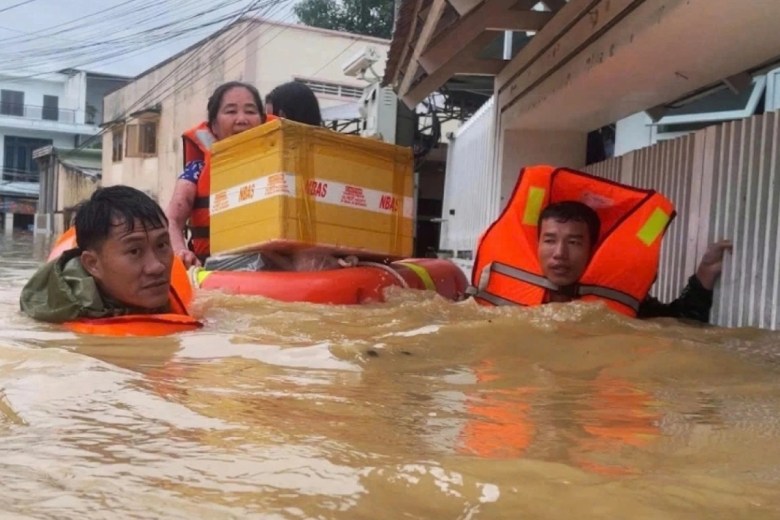
Severe flooding in south-central Vietnam has resulted in numerous fatalities, displacing thousands and submerging entire districts. Locals in Khanh Hoa, Phu Yen, and Dak Lak view this disaster not only as a consequence of extreme rainfall but also as a human-made tragedy exacerbated by hydropower mismanagement and information suppression. The Ba Ha Hydropower Plant has become the focal point of public anger after it released over 16,000 cubic meters per second of water on November 19, 2025, overwhelming downstream communities in a matter of minutes.
Despite early warnings of heavy rainfall beginning on November 14, the Ba Ha Hydropower Plant maintained its reservoir at an unsafe level of 103-105 meters, exceeding the safe “dead water level” of 101 meters. This failure to lower the reservoir left no capacity to gradually release water during the storm, resulting in catastrophic flooding as entire hamlets were submerged before residents could react.
Authorities had previously promised reforms following similar flooding incidents in 2016 and 2021, but once again, no substantial changes were implemented. Just hours before the flooding peaked, the official Facebook page of Hoa Thịnh Commune Police was still promoting unrelated security initiatives, leaving locals unaware of the impending disaster. The first emergency communication advised residents to “not go outside” without offering evacuation guidance.
As floodwaters rose, communication systems failed, and authorities focused on controlling information rather than ensuring transparency. Local volunteers and self-organized aid groups emerged as the primary responders, providing critical assistance to isolated villages. Their reports indicated that bodies were tied to trees to prevent drifting, and many individuals remained stranded for up to 72 hours without food or clean water. These firsthand accounts suggested that the official death toll was significantly understated.
In response to rising public outcry, police announced they had “handled over 50 cases” of spreading “false information,” yet they did not disclose any names, charges, or evidence. This approach has raised concerns that censorship is replacing necessary communication and accountability.
Vietnam has built hundreds of hydropower dams across the Central Highlands and south-central region, often at the expense of natural forests, with over 200,000 hectares cleared in the last decade. While hydropower has been marketed as “clean energy,” the current system prioritizes revenue generation over safety and environmental sustainability. Combined with climate change, the result is a precarious situation that endangers communities.
Survivors are not simply blaming the state; they are posing vital questions about the disaster response. Why was the reservoir full before predicted heavy rain? Why were local authorities not warned? Why does Vietnam have nationwide SMS systems for donations but not for emergency alerts? Why were individuals penalized for reporting fatalities while help was still needed?
These inquiries reflect a demand for improvement in disaster governance rather than political dissent. The Vietnamese government possesses the scientific capability to address these issues but lacks the political will to reform hydropower management and implement real-time emergency alert systems.
To restore public trust and ensure safety, a thorough investigation into the Ba Ha Hydropower Plant’s operations between November 14 and November 19 is essential. Authorities should release all reservoir logs, rainfall data, and operational orders. Additionally, modernizing dam-operation protocols with mandatory pre-release requirements and establishing a national emergency alert system would be crucial steps forward.
The flooding disaster in Vietnam serves as a reminder that natural events can be compounded by governance failures. If the country continues to treat such disasters as public relations challenges rather than addressing the underlying structural issues, the potential for future tragedies remains high.
Nguyen Ngoc Nhu Quynh, known as Mother Mushroom, is a prominent Vietnamese blogger and human rights advocate. She emphasizes the need for accountability and reform in light of this disaster, urging authorities to prioritize citizen safety and transparency in disaster management.

Takaichi’s Leadership: A New Era for Japan’s Indo-Pacific Strategy

Singapore Commits S$37 Billion to Boost Research and Innovation

Bayern’s Luis Diaz Sees Champions League Ban Cut to Two Matches

Vaccine Makers Alarmed by US Advisory Panel’s Hepatitis B Shift

Favorites Shine in 2026 World Cup Draw; Trump Receives Honor

Taiwan and US Experts Advocate Energy Resilience Strategies

Vaccine Makers Alarmed by US Panel’s Shift on Hepatitis B for Newborns

Draw Unveils Groups for 2026 World Cup in North America

Taiwan and US Collaborate to Enhance Energy Resilience

Kenvue Dismisses CEO Thibaut Mongon as Strategic Review Advances

Humanism Camp Engages 250 Youths in Summer Fest 2025

De Minaur Triumphs at Washington Open After Thrilling Comeback

Tupou and Daugunu Join First Nations Squad for Lions Clash

Colombian Senator Miguel Uribe Shows Signs of Recovery After Attack

ASEAN Gears Up for Historic Joint Meeting of Foreign and Economic Ministers

New Study Challenges Assumptions About Aging and Inflammation

Oil Prices Surge Following New EU Sanctions on Russia

Detaşe-Sabah Violin Ensemble Captivates at Gabala Music Festival
-
 Business5 months ago
Kenvue Dismisses CEO Thibaut Mongon as Strategic Review Advances
-
 Lifestyle4 months ago
Humanism Camp Engages 250 Youths in Summer Fest 2025
-
 Sports4 months ago
De Minaur Triumphs at Washington Open After Thrilling Comeback
-
 Sports5 months ago
Tupou and Daugunu Join First Nations Squad for Lions Clash
-
 Top Stories5 months ago
Colombian Senator Miguel Uribe Shows Signs of Recovery After Attack
-
 World5 months ago
ASEAN Gears Up for Historic Joint Meeting of Foreign and Economic Ministers
-
 Health4 months ago
New Study Challenges Assumptions About Aging and Inflammation
-
 Business5 months ago
Oil Prices Surge Following New EU Sanctions on Russia
-
 Entertainment4 months ago
Detaşe-Sabah Violin Ensemble Captivates at Gabala Music Festival
-

 Entertainment4 months ago
Baku Metro Extends Hours for Justin Timberlake Concert
-

 Top Stories5 months ago
Rethinking Singapore’s F&B Regulations Amid Business Closures
-

 Business5 months ago
U.S. House Approves Stablecoin Bill, Sends to Trump for Signature