
Politics
Japan Evaluates Military Options Amid Taiwan Strait Tensions

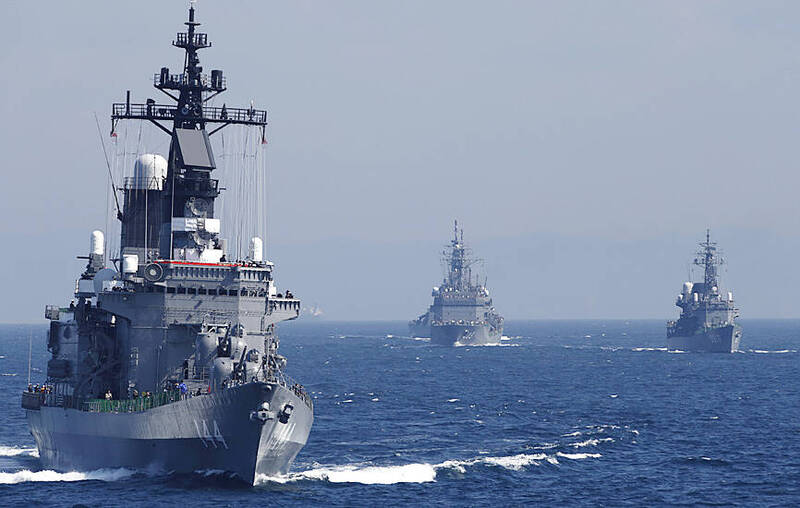
Tensions in the Taiwan Strait have prompted Japan to reassess its military options in the event of a conflict involving China and Taiwan. According to a recent analysis by Tang Ming-hua, a researcher at the Institute for National Defense and Security Research, Japan may consider four potential responses should China launch an attack on Taiwan. This strategic evaluation follows remarks made by Japanese Prime Minister Sanae Takaichi on November 7, 2023, where she indicated that any aggressive actions by China could threaten Japan’s national security, allowing Tokyo to invoke security legislation from 2015.
Takaichi’s statements mark a significant escalation, as they were the first from a Japanese prime minister to frame the Taiwan issue as an existential threat to Japan. Tang outlined various scenarios for Japan’s involvement, reflecting a complex balance between military preparedness and diplomatic restraint.
In the first scenario, Japan could adopt a defensive stance, emphasizing domestic measures while refraining from invoking the security law. This approach would likely focus on enhancing surveillance of Japan’s southwestern islands, improving missile defense systems, and facilitating the evacuation of Japanese nationals from Taiwan. While this option minimizes the risk of conflict escalation, it may undermine trust within the Japan-US alliance.
The second scenario involves Japan acknowledging a significant impact from the conflict and directing the Japan Self-Defense Forces to provide logistical support to US forces. This could entail granting access to military bases, sharing intelligence, and protecting supply lines at sea. Although Japan would not engage in direct combat, it could be perceived by China as an ally of the US, potentially inviting retaliation.
A more assertive third option would see Japan declare a “survival-threatening crisis,” allowing it to engage in collective self-defense under the security law. This could enable Japan to intercept Chinese military assets threatening its territory or US bases, escort American vessels through vital maritime chokepoints like the Miyako Strait and Bashi Channel, and conduct operations to protect its airspace. While Japan would still avoid direct engagement in the Taiwanese conflict, it would be involved in combat operations indirectly.
The most extreme scenario involves a full-scale military operation conducted jointly by Japan and the US. This would include long-range strikes, anti-ship missions, and coordinated command-and-control systems, effectively making Japan a direct participant in the conflict. Such a shift would drastically alter the security landscape in the region.
Tang emphasized that each scenario carries distinct strategic and political implications. Takaichi’s assertion that Taiwan’s security is directly tied to Japan’s national survival suggests a heightened likelihood of Japan’s involvement in a conflict over Taiwan, especially if China misjudges the situation. Japan now faces a critical dilemma: balancing credible military readiness to deter China while avoiding entanglement in a broader regional war. The outcome will depend significantly on the evolving crisis dynamics and the political will to respond.

Takaichi’s Leadership: A New Era for Japan’s Indo-Pacific Strategy

Singapore Commits S$37 Billion to Boost Research and Innovation

Bayern’s Luis Diaz Sees Champions League Ban Cut to Two Matches

Vaccine Makers Alarmed by US Advisory Panel’s Hepatitis B Shift

Favorites Shine in 2026 World Cup Draw; Trump Receives Honor

Taiwan and US Experts Advocate Energy Resilience Strategies

Vaccine Makers Alarmed by US Panel’s Shift on Hepatitis B for Newborns

Draw Unveils Groups for 2026 World Cup in North America

Taiwan and US Collaborate to Enhance Energy Resilience

Kenvue Dismisses CEO Thibaut Mongon as Strategic Review Advances

Humanism Camp Engages 250 Youths in Summer Fest 2025

De Minaur Triumphs at Washington Open After Thrilling Comeback

Tupou and Daugunu Join First Nations Squad for Lions Clash

Colombian Senator Miguel Uribe Shows Signs of Recovery After Attack

ASEAN Gears Up for Historic Joint Meeting of Foreign and Economic Ministers

New Study Challenges Assumptions About Aging and Inflammation

Oil Prices Surge Following New EU Sanctions on Russia

Detaşe-Sabah Violin Ensemble Captivates at Gabala Music Festival
-
 Business5 months ago
Kenvue Dismisses CEO Thibaut Mongon as Strategic Review Advances
-
 Lifestyle4 months ago
Humanism Camp Engages 250 Youths in Summer Fest 2025
-
 Sports4 months ago
De Minaur Triumphs at Washington Open After Thrilling Comeback
-
 Sports5 months ago
Tupou and Daugunu Join First Nations Squad for Lions Clash
-
 Top Stories5 months ago
Colombian Senator Miguel Uribe Shows Signs of Recovery After Attack
-
 World5 months ago
ASEAN Gears Up for Historic Joint Meeting of Foreign and Economic Ministers
-
 Health4 months ago
New Study Challenges Assumptions About Aging and Inflammation
-
 Business5 months ago
Oil Prices Surge Following New EU Sanctions on Russia
-
 Entertainment4 months ago
Detaşe-Sabah Violin Ensemble Captivates at Gabala Music Festival
-

 Entertainment4 months ago
Baku Metro Extends Hours for Justin Timberlake Concert
-

 Top Stories5 months ago
Rethinking Singapore’s F&B Regulations Amid Business Closures
-
 Business5 months ago
U.S. House Approves Stablecoin Bill, Sends to Trump for Signature