
Politics
Japan Deploys Missiles, Heightening Tensions with China

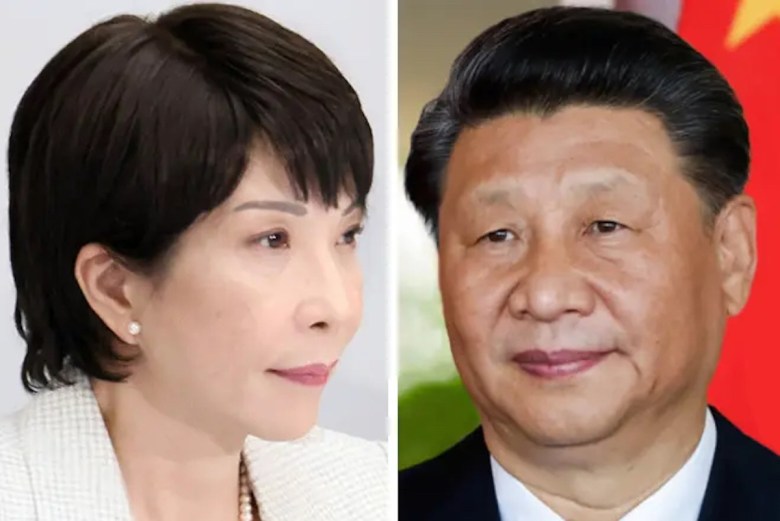
Japan’s recent deployment of medium-range surface-to-air missiles on Yonaguni, an island located just 110 kilometers from Taiwan, marks a significant shift in its defense strategy. This decision not only reflects Japan’s evolving military posture but also escalates tensions within a region already fraught with security concerns involving Japan, China, and Taiwan.
In a statement that has stirred controversy, Japan’s new Prime Minister, Sanae Takaichi, warned that any military action by China against Taiwan could pose a direct threat to Japan’s national survival. This assertion, she stated, could justify a military response under Japan’s collective self-defense laws. In response, Beijing condemned Takaichi’s remarks as a violation of the “one-China principle,” accusing Japan of destabilizing the region.
As tensions mounted, China implemented various retaliatory measures, which included suspending seafood imports from Japan and issuing travel warnings to its citizens. Additionally, there have been calls from nationalistic Chinese commentators for a ban on rare earth exports to Japan, a move that could significantly impact Japan’s technology and automotive sectors.
Despite these pressures, Takaichi has maintained her stance, framing her comments as reflective of Japan’s legitimate security concerns. Japan’s Defense Minister, Shinjiro Koizumi, supported the deployment of missiles, arguing that bolstering the country’s southern defenses would reduce the risk of armed conflict. His perspective highlights the complex security dynamics influenced by China’s military expansion, heightened tensions in the East China Sea, and uncertainties surrounding Taiwan’s future.
The strategic implications of this missile placement are profound. For China, the deployment reinforces the perception that Japan is increasingly aligning itself with U.S. and Taiwanese interests. Taiwan, while potentially reassured by Japan’s military posture, may also feel the pressure of relying more heavily on a broader coalition for its defense, complicating any potential conflict scenarios.
The current situation creates a precarious environment where military assets and political maneuvering converge in southern Japan, now seen as a potential flashpoint in the Indo-Pacific. Yet, the focus on military deployments risks overshadowing a more significant and troubling trend: the deterioration of diplomatic relations.
China has revived historical narratives questioning Japan’s sovereignty over the Ryukyu Islands, a development that Tokyo perceives as a troubling form of revisionism. Public sentiment in both countries has become increasingly entrenched and nationalistic, creating a climate ripe for misinterpretation and conflict.
The stakes are high, and the region stands perilously close to a confrontation, not out of a desire for war but due to the rapid decline of responsible diplomatic engagement. In moments of heightened tension, effective and mature diplomacy is essential. Military actions without open lines of communication increase the risk of misinterpretation, with Japan viewing its missile deployment as defensive while China perceives it as an escalation.
In this context, both Tokyo and Beijing must recognize the interdependence of their economies and security frameworks. Issues such as trade, supply chains, and energy flows hinge on sustained cooperation and restraint. The potential for a crisis looms as hostilities converge on southern Japan, but there is still an opportunity to prevent this region from becoming the epicenter of a larger conflict.
As Japan, China, Taiwan, and other powers in the Indo-Pacific navigate these rising tensions, it is crucial to resist the temptation of militarized rivalry. Strengthening defense capabilities is a valid concern, but restoring dialogue between China and Japan is now more essential than ever. The future stability of Asia will not depend solely on the number of missiles stationed on Yonaguni, but rather on the capacity of leaders to engage wisely and peacefully amidst growing pressures.
Dr. Phar Kim Beng, a professor of ASEAN Studies and director of the Institute of International and ASEAN Studies at the International Islamic University of Malaysia, emphasizes the necessity of diplomatic engagement in overcoming these challenges. The region’s path forward relies on fostering cooperation rather than confrontation.

Takaichi’s Leadership: A New Era for Japan’s Indo-Pacific Strategy

Singapore Commits S$37 Billion to Boost Research and Innovation

Bayern’s Luis Diaz Sees Champions League Ban Cut to Two Matches

Vaccine Makers Alarmed by US Advisory Panel’s Hepatitis B Shift

Favorites Shine in 2026 World Cup Draw; Trump Receives Honor

Taiwan and US Experts Advocate Energy Resilience Strategies

Vaccine Makers Alarmed by US Panel’s Shift on Hepatitis B for Newborns

Draw Unveils Groups for 2026 World Cup in North America

Taiwan and US Collaborate to Enhance Energy Resilience

Humanism Camp Engages 250 Youths in Summer Fest 2025

Kenvue Dismisses CEO Thibaut Mongon as Strategic Review Advances

De Minaur Triumphs at Washington Open After Thrilling Comeback

Tupou and Daugunu Join First Nations Squad for Lions Clash

Colombian Senator Miguel Uribe Shows Signs of Recovery After Attack

ASEAN Gears Up for Historic Joint Meeting of Foreign and Economic Ministers

New Study Challenges Assumptions About Aging and Inflammation

Oil Prices Surge Following New EU Sanctions on Russia

Detaşe-Sabah Violin Ensemble Captivates at Gabala Music Festival
-
 Lifestyle4 months ago
Humanism Camp Engages 250 Youths in Summer Fest 2025
-
 Business5 months ago
Kenvue Dismisses CEO Thibaut Mongon as Strategic Review Advances
-
 Sports4 months ago
De Minaur Triumphs at Washington Open After Thrilling Comeback
-
 Sports5 months ago
Tupou and Daugunu Join First Nations Squad for Lions Clash
-
 Top Stories5 months ago
Colombian Senator Miguel Uribe Shows Signs of Recovery After Attack
-
 World5 months ago
ASEAN Gears Up for Historic Joint Meeting of Foreign and Economic Ministers
-
 Health4 months ago
New Study Challenges Assumptions About Aging and Inflammation
-
 Business5 months ago
Oil Prices Surge Following New EU Sanctions on Russia
-
 Entertainment4 months ago
Detaşe-Sabah Violin Ensemble Captivates at Gabala Music Festival
-

 Entertainment4 months ago
Baku Metro Extends Hours for Justin Timberlake Concert
-

 Top Stories5 months ago
Rethinking Singapore’s F&B Regulations Amid Business Closures
-

 Business5 months ago
U.S. House Approves Stablecoin Bill, Sends to Trump for Signature