
Lifestyle
Singapore Tops Global Talent Competitiveness Index for 2023

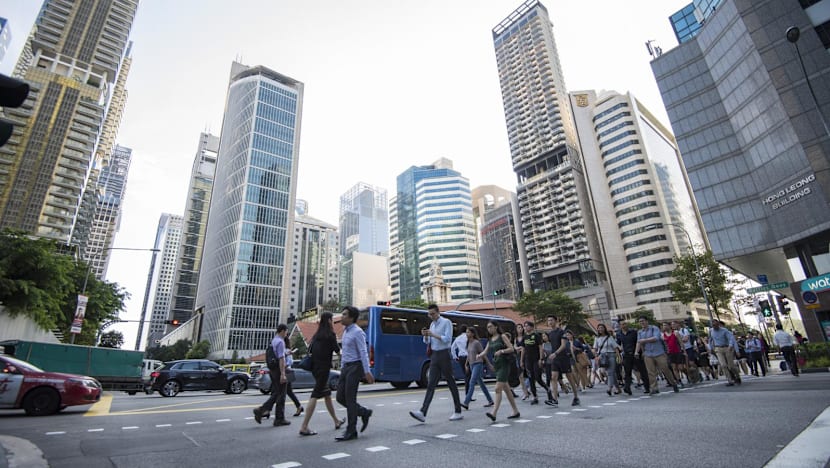
Singapore has achieved a remarkable milestone by being ranked as the world’s most attractive destination for developing, attracting, and retaining talent, according to the 2023 Global Talent Competitiveness Index. This is the first time Singapore has secured the top position in the annual ranking, which was initiated by the business school INSEAD in 2013. The index evaluates labor markets, work organization, and talent flows, using data from 135 countries across 77 indicators.
The latest edition of the index highlighted Singapore’s strong educational framework, effective governance, and proactive strategies aimed at cultivating a workforce prepared for innovation. These qualities are increasingly vital in our rapidly evolving world shaped by artificial intelligence.
Key Insights and Rankings
High-income nations in Europe continue to dominate the index, with Switzerland dropping from first to second place this year, followed by Denmark in third. Other countries within the top ten include Finland, Sweden, the Netherlands, Norway, Luxembourg, the United States, and Australia. Notably, the United States recorded its weakest performance since the index’s inception, falling from third place to ninth.
In Asia, Japan ranks 28th and South Korea 31st, while China is positioned at 53rd. The report underscores Singapore’s significant improvement in talent retention, as it climbed from 38th to 31st in this area, highlighting a critical advancement for the city-state.
How Singapore Achieved the Top Spot
Emeritus Professor Paul Evans, co-founder of the index, noted that Singapore has consistently ranked second since the index began. This year, the country’s leap to the top was largely attributed to enhanced talent retention strategies. “The weakest pillar for Singapore has always been retaining talent. The law of talent is – the better you are, the more opportunities you have elsewhere,” he explained during an interview. He emphasized that Singapore has addressed this challenge effectively, which has contributed to its rise in the rankings.
Singapore’s performance in regulatory frameworks and high-level skills development, particularly in research and digital sectors, has also been commendable. The nation secured the top rank globally for generalist adaptive skills, indicating its capability to nurture a workforce that remains relevant in the face of rapid technological and economic changes.
“The top countries are not only able to attract, keep and develop the right sort of talent amid constantly changing economies,” Professor Evans remarked, “what lies behind that are the ecosystems.” He praised Singapore for its collaborative environment among government, educational institutions, labor unions, and the business community, which allows for a swift response to labor needs.
Singapore’s reputation as a desirable location for skilled workers continues to grow, driven by its employability rates, safe living conditions, and efforts to create a more vibrant urban environment. Despite this success, Professor Evans cautioned that Singapore must continuously improve to meet the evolving expectations of both local and international talent.
Future Implications and Strategies
Industry leaders believe that this recognition will attract more companies to Singapore. Jon Goldstein, a managing partner at recruitment firm Page Executive, noted that Singapore is recognized as a launch pad for both regional and global business expansions. “With this recognition, you’re going to see more businesses putting headquarters and launch teams here, bringing higher value positions to Singapore’s market,” he stated.
Shawn Huang, Senior Parliamentary Secretary for Manpower, emphasized the importance of maintaining flexible talent strategies in light of technological advancements and shifting labor market demands. “To keep our competitive edge as a global business node, we must continue to strengthen our position as a global hub for talent,” he said. He highlighted the need to attract talent from around the world while also investing in the local talent pipeline.
Huang also pointed out that soft skills, such as creativity, critical thinking, emotional intelligence, and leadership, will become increasingly valuable as artificial intelligence takes over more routine tasks. Singapore’s commitment to nurturing these essential skills will be crucial for its ongoing success in the global talent landscape.

Takaichi’s Leadership: A New Era for Japan’s Indo-Pacific Strategy

Singapore Commits S$37 Billion to Boost Research and Innovation

Bayern’s Luis Diaz Sees Champions League Ban Cut to Two Matches

Vaccine Makers Alarmed by US Advisory Panel’s Hepatitis B Shift

Favorites Shine in 2026 World Cup Draw; Trump Receives Honor

Taiwan and US Experts Advocate Energy Resilience Strategies

Vaccine Makers Alarmed by US Panel’s Shift on Hepatitis B for Newborns

Draw Unveils Groups for 2026 World Cup in North America

Taiwan and US Collaborate to Enhance Energy Resilience

Kenvue Dismisses CEO Thibaut Mongon as Strategic Review Advances

Humanism Camp Engages 250 Youths in Summer Fest 2025

De Minaur Triumphs at Washington Open After Thrilling Comeback

Tupou and Daugunu Join First Nations Squad for Lions Clash

Colombian Senator Miguel Uribe Shows Signs of Recovery After Attack

ASEAN Gears Up for Historic Joint Meeting of Foreign and Economic Ministers

New Study Challenges Assumptions About Aging and Inflammation

Oil Prices Surge Following New EU Sanctions on Russia

Detaşe-Sabah Violin Ensemble Captivates at Gabala Music Festival
-
 Business5 months ago
Kenvue Dismisses CEO Thibaut Mongon as Strategic Review Advances
-
 Lifestyle4 months ago
Humanism Camp Engages 250 Youths in Summer Fest 2025
-
 Sports4 months ago
De Minaur Triumphs at Washington Open After Thrilling Comeback
-
 Sports5 months ago
Tupou and Daugunu Join First Nations Squad for Lions Clash
-
 Top Stories5 months ago
Colombian Senator Miguel Uribe Shows Signs of Recovery After Attack
-
 World5 months ago
ASEAN Gears Up for Historic Joint Meeting of Foreign and Economic Ministers
-
 Health4 months ago
New Study Challenges Assumptions About Aging and Inflammation
-
 Business5 months ago
Oil Prices Surge Following New EU Sanctions on Russia
-
 Entertainment4 months ago
Detaşe-Sabah Violin Ensemble Captivates at Gabala Music Festival
-

 Entertainment4 months ago
Baku Metro Extends Hours for Justin Timberlake Concert
-

 Top Stories5 months ago
Rethinking Singapore’s F&B Regulations Amid Business Closures
-

 Business5 months ago
U.S. House Approves Stablecoin Bill, Sends to Trump for Signature