
Business
U.S. Dollar Faces Largest Weekly Drop in Four Months

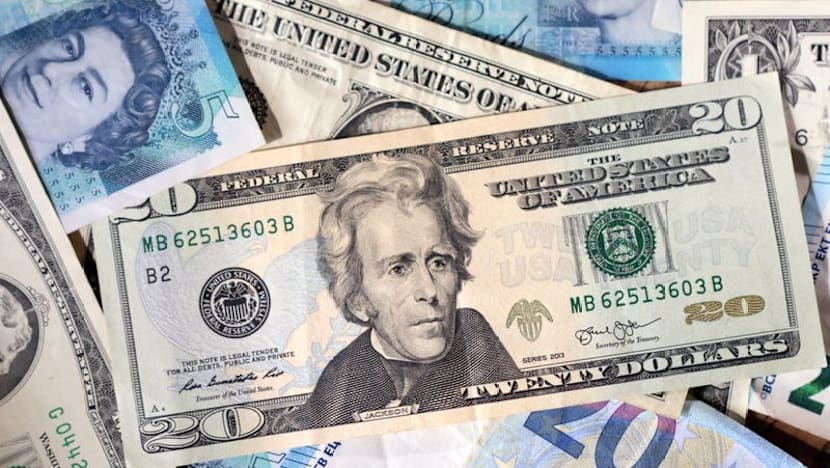
The U.S. dollar is set to experience its largest weekly decline in four months, driven by investor expectations of further monetary easing and ongoing pressure from President Donald Trump to lower interest rates. On Thursday, the dollar index edged up by 0.05 percent to 99.58, but it remains down 0.60 percent for the week, following a retreat from a six-month high reached the previous week.
A contributing factor to the dollar’s decline is the thin liquidity in U.S. markets due to the Thanksgiving holiday. This situation has resulted in amplified trading activity, according to Francesco Pesole, a forex strategist at ING. He noted that this environment could potentially prompt Japanese authorities to intervene in the dollar-yen exchange rate if necessary.
Investor sentiment is shifting as the appeal of the dollar diminishes. Mark Haefele, chief investment officer at UBS Global Wealth Management, advised investors to reconsider their currency allocations, favoring the euro and the Australian dollar instead. The anticipated appointment of White House economic adviser Kevin Hassett—a proponent of rate cuts—as the next Federal Reserve chair could further negatively impact the dollar.
Mixed Outlook for the Dollar
The outlook for the dollar remains divided among analysts. Themos Fiotakis, global head of forex strategy at Barclays, highlighted a shift in dynamics, stating, “We’ve gone through a period where rate differentials and euro growth expectations clearly benefited Europe over the U.S.” He also emphasized that the resilience of the U.S. economy could challenge previous assumptions about currency strength.
As the dollar falters, other currencies are experiencing their own fluctuations. The euro fell 0.05 percent to $1.1596 after reaching a 1.5-week high earlier in the day. Negotiations surrounding a potential peace deal in Ukraine are influencing the euro’s trajectory. President Vladimir Putin indicated that a draft peace plan discussed with the United States and Ukraine could pave the way for future agreements. However, uncertainty remains, and analysts do not foresee an immediate “peace dividend” that would benefit the Swiss franc, traditionally viewed as a safe haven.
Regional Currencies Gain Momentum
The New Zealand dollar has surged to a three-week high of $0.5728, appreciating nearly 2 percent since a hawkish shift from the Reserve Bank of New Zealand. Although the bank cut rates on Wednesday, it signaled that the easing cycle is likely nearing its end, prompting market expectations for a rate hike by December 2026. This contrasts sharply with over 90 basis points of rate cuts anticipated for the U.S. Federal Reserve by the end of 2024.
The Australian dollar has also strengthened, bolstered by a stronger-than-expected inflation report released on Wednesday. This data supports the notion that Australia’s easing cycle has concluded. With the highest interest rates in the G10, the Australian dollar appears undervalued, trading at $0.6536 within a channel it has occupied for the past 18 months.
As global currencies fluctuate, the movements reflect broader economic expectations and monetary policy shifts that could reshape international markets in the coming weeks.

Takaichi’s Leadership: A New Era for Japan’s Indo-Pacific Strategy

Singapore Commits S$37 Billion to Boost Research and Innovation

Bayern’s Luis Diaz Sees Champions League Ban Cut to Two Matches

Vaccine Makers Alarmed by US Advisory Panel’s Hepatitis B Shift

Favorites Shine in 2026 World Cup Draw; Trump Receives Honor

Taiwan and US Experts Advocate Energy Resilience Strategies

Vaccine Makers Alarmed by US Panel’s Shift on Hepatitis B for Newborns

Draw Unveils Groups for 2026 World Cup in North America

Taiwan and US Collaborate to Enhance Energy Resilience

Humanism Camp Engages 250 Youths in Summer Fest 2025

Kenvue Dismisses CEO Thibaut Mongon as Strategic Review Advances

De Minaur Triumphs at Washington Open After Thrilling Comeback

Tupou and Daugunu Join First Nations Squad for Lions Clash

Colombian Senator Miguel Uribe Shows Signs of Recovery After Attack

ASEAN Gears Up for Historic Joint Meeting of Foreign and Economic Ministers

New Study Challenges Assumptions About Aging and Inflammation

Oil Prices Surge Following New EU Sanctions on Russia

Detaşe-Sabah Violin Ensemble Captivates at Gabala Music Festival
-
 Lifestyle4 months ago
Humanism Camp Engages 250 Youths in Summer Fest 2025
-
 Business5 months ago
Kenvue Dismisses CEO Thibaut Mongon as Strategic Review Advances
-
 Sports4 months ago
De Minaur Triumphs at Washington Open After Thrilling Comeback
-
 Sports5 months ago
Tupou and Daugunu Join First Nations Squad for Lions Clash
-
 Top Stories5 months ago
Colombian Senator Miguel Uribe Shows Signs of Recovery After Attack
-
 World5 months ago
ASEAN Gears Up for Historic Joint Meeting of Foreign and Economic Ministers
-
 Health4 months ago
New Study Challenges Assumptions About Aging and Inflammation
-
 Business5 months ago
Oil Prices Surge Following New EU Sanctions on Russia
-
 Entertainment4 months ago
Detaşe-Sabah Violin Ensemble Captivates at Gabala Music Festival
-

 Entertainment4 months ago
Baku Metro Extends Hours for Justin Timberlake Concert
-

 Top Stories5 months ago
Rethinking Singapore’s F&B Regulations Amid Business Closures
-
 Business5 months ago
U.S. House Approves Stablecoin Bill, Sends to Trump for Signature