
Business
The Rise and Retreat of Globalization: An Economic Overview

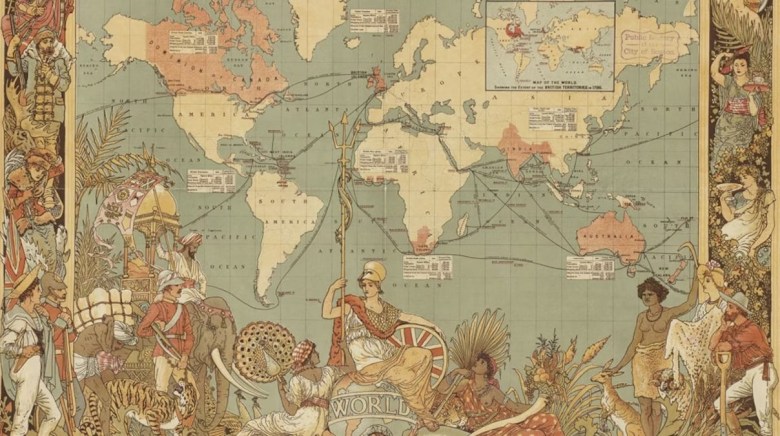
The world economy, once characterized by a relentless push toward globalization, is now experiencing a notable retreat. This shift is not merely a reaction to recent political developments but reflects historical trends that have shaped international trade and investment for centuries. According to economic historian J. Bradford DeLong, the global economy surged from a mere US$81.7 billion in 1650 to approximately US$70.3 trillion in 2020, marking an astonishing 860-fold increase. The most significant growth occurred during two key periods: the “long 19th century” from the late 18th century until World War I, and the post-World War II era leading up to the 2008 global financial crisis.
This article examines the forces driving the decline of globalization, exploring whether this trend is a cause for concern or a potential opportunity for a new economic order.
Historical Context of Globalization
The trajectory of globalization has been shaped by numerous factors, including technological advancements in communication and transportation, as well as significant movements of people across borders. Each major era of globalization has been marked by a dominant economic power, typically a country that has set the rules for global trade. Historically, this power has shifted among nations, with the United States currently facing challenges to its long-standing position.
In the modern context, the influence of former President Donald Trump has been significant, particularly regarding his imposition of tariffs and a more isolationist approach to trade. While Trump’s tariffs have intensified existing economic problems, they are not the root cause. Instead, they highlight a growing acknowledgment of the decline of the US as the preeminent economic force. As the US retreats from its global leadership role, no single power has emerged to take its place, leaving a vacuum in global economic governance.
The rise of China has been suggested by many as a potential successor, but the nation faces its own challenges, including the absence of a universally accepted currency and the constraints of a one-party political system. The implications of a deglobalized world are complex, as historical precedents indicate that such conditions can lead to economic instability and political chaos, reminiscent of the interwar years when the world faced significant turmoil.
The Mercantilist and Free Trade Models
Historically, economic models have oscillated between mercantilism and free trade. The French approach in the 1600s, spearheaded by finance minister Jean-Baptiste Colbert, emphasized protectionist measures to strengthen national industries while limiting foreign competition. Colbert believed that accumulating wealth—primarily gold—was essential for national power, leading to policies that included tripling import tariffs and establishing monopolies on key industries.
In contrast, the British model championed by economists such as Adam Smith and David Ricardo promoted free trade as a mutually beneficial arrangement. This ideology gained traction in the 19th century, marking a shift in power dynamics within British politics. The repeal of the 1846 Corn Laws signified a move towards free trade, ultimately enabling Britain to leverage its industrial capabilities for global dominance.
The US, following its founding in 1776, initially adopted a protectionist stance. Policies articulated by Treasury Secretary Alexander Hamilton focused on safeguarding emerging industries through tariffs. This approach persisted until after World War II, when the US transitioned into a global superpower, advocating for a rules-based international order that facilitated free trade and investment.
The Bretton Woods Conference in 1944 laid the groundwork for global financial institutions like the International Monetary Fund (IMF) and the World Bank, which established the US dollar as the principal currency for international transactions. This shift enabled the US to wield significant influence over global economic policies, fostering a period of unprecedented growth.
Yet this era of globalization has not benefited all equally. The rise of neoliberal policies in the late 20th century, characterized by deregulation and financialization, led to widening income inequalities. By 2023, research indicated that the top 10% of US citizens controlled nearly half of the nation’s wealth, while the bottom 50% held just 6%.
As globalization wanes, the question remains: what comes next? While the US grapples with its changing role, the world must navigate the complexities of a potentially more chaotic economic landscape.
In conclusion, the rise and decline of globalization illustrate a fundamental shift in the global economic order. As we understand the historical context and the implications of these changes, we face a critical juncture in determining the future of international trade and economic cooperation.

Japan’s Missile Sale to Boost Philippines’ Defense Strategy

Singapore Commits S$37 Billion to Research and Innovation Over 5 Years

Australia Extends Lead to 116 Runs in Second Ashes Test

Takaichi’s Leadership: A New Era for Japan’s Indo-Pacific Strategy

Singapore Commits S$37 Billion to Boost Research and Innovation

Bayern’s Luis Diaz Sees Champions League Ban Cut to Two Matches

Vaccine Makers Alarmed by US Advisory Panel’s Hepatitis B Shift

Favorites Shine in 2026 World Cup Draw; Trump Receives Honor

Taiwan and US Experts Advocate Energy Resilience Strategies

Kenvue Dismisses CEO Thibaut Mongon as Strategic Review Advances

Humanism Camp Engages 250 Youths in Summer Fest 2025

De Minaur Triumphs at Washington Open After Thrilling Comeback

Tupou and Daugunu Join First Nations Squad for Lions Clash

Colombian Senator Miguel Uribe Shows Signs of Recovery After Attack

ASEAN Gears Up for Historic Joint Meeting of Foreign and Economic Ministers

New Study Challenges Assumptions About Aging and Inflammation

Oil Prices Surge Following New EU Sanctions on Russia

Detaşe-Sabah Violin Ensemble Captivates at Gabala Music Festival
-
 Business5 months ago
Kenvue Dismisses CEO Thibaut Mongon as Strategic Review Advances
-
 Lifestyle4 months ago
Humanism Camp Engages 250 Youths in Summer Fest 2025
-
 Sports4 months ago
De Minaur Triumphs at Washington Open After Thrilling Comeback
-
 Sports5 months ago
Tupou and Daugunu Join First Nations Squad for Lions Clash
-
 Top Stories5 months ago
Colombian Senator Miguel Uribe Shows Signs of Recovery After Attack
-
 World5 months ago
ASEAN Gears Up for Historic Joint Meeting of Foreign and Economic Ministers
-
 Health4 months ago
New Study Challenges Assumptions About Aging and Inflammation
-
 Business5 months ago
Oil Prices Surge Following New EU Sanctions on Russia
-
 Entertainment4 months ago
Detaşe-Sabah Violin Ensemble Captivates at Gabala Music Festival
-

 Entertainment4 months ago
Baku Metro Extends Hours for Justin Timberlake Concert
-

 Top Stories5 months ago
Rethinking Singapore’s F&B Regulations Amid Business Closures
-
 Business5 months ago
U.S. House Approves Stablecoin Bill, Sends to Trump for Signature