
Business
Taiwan’s TAIEX Poised to Approach 35,000 Points Driven by AI Boom

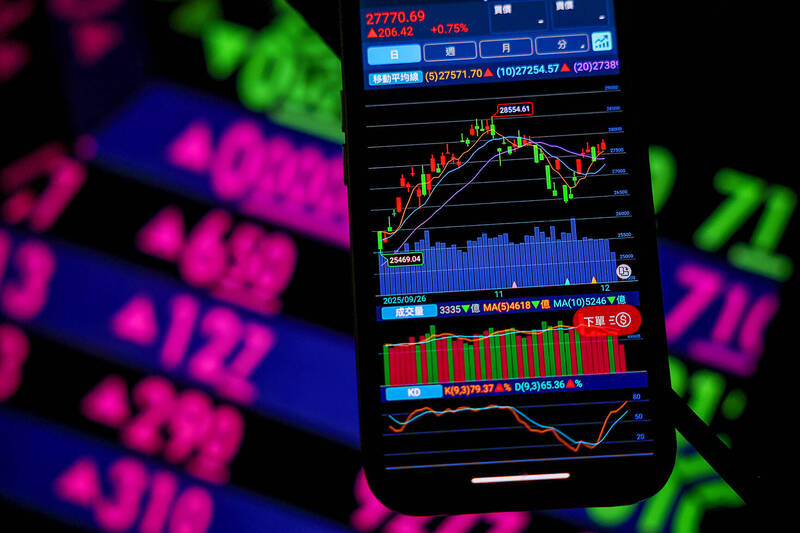
Taiwan’s benchmark index, the TAIEX, is projected to approach 35,000 points in 2024, buoyed by a global surge in artificial intelligence (AI), according to five major advisory firms. This optimistic outlook reflects the significant role that leading Taiwanese technology companies are set to play in the evolving market landscape.
Market Outlook Driven by AI Innovations
President Capital Management Corp has put forth the most bullish forecast, predicting that the TAIEX will reach 34,988 points. The firm’s president, Liao Wan-ting, emphasized that the expansion of AI applications—from server technology to edge AI devices such as smart glasses—will fuel continued growth in AI-related stocks. This trend is expected to support the TAIEX’s upward trajectory next year.
The TAIEX saw a notable rebound this year, recovering from a low of 17,391.76 points recorded on April 9, following earlier concerns over potential tariffs from former US President Donald Trump. As of last Friday, the index closed at 27,980.89 points, reflecting a robust increase of 21.47 percent year-to-date and a remarkable 61 percent rise from its April low, driven by easing tariff anxieties, growing enthusiasm for AI, and expectations of US Federal Reserve interest rate cuts.
Key Players and Their Impact
The five leading technology companies in Taiwan—Taiwan Semiconductor Manufacturing Co (TSMC), Hon Hai Precision Industry Co, Delta Electronics Inc, MediaTek Inc, and Quanta Computer Inc—collectively account for 52.8 percent of the TAIEX’s market capitalization. According to Rico Fan, president of Capital Investment Management Corp, these firms are poised to continue dominating the market, with TSMC alone representing over 40 percent of the index.
Fan anticipates that the TAIEX will challenge the 34,000-point mark next year, powered by the performance of these technology giants. TSMC, in particular, is expected to report earnings per share of NT$75 in 2024, significantly contributing to the index’s upward movement. This follows market expectations that TSMC’s earnings per share will exceed NT$60 for the current year.
The outlook remains positive across the board. Barry Huang, chairman of First Capital Management Inc, expressed confidence that the ongoing global trend toward AI will continue to benefit Taiwan significantly. Huang predicted that the TAIEX could reach 31,000 points next year, with potential to rise to 33,000 points if economic conditions improve further.
In a similar vein, Edward Chen, chairman of Fubon Securities Investment Services Co, expects the index to reach 32,000 points and potentially climb to 34,000 points under favorable circumstances. He highlighted the anticipated ample market liquidity and the impact of expected rate cuts by the Federal Reserve as key drivers of this AI-fueled momentum.
Lastly, Jerry Lu, chairman of Hua Nan Securities Investment Management Co, remains optimistic, forecasting the TAIEX to increase to 32,000 points next year. Lu does not foresee an imminent end to the AI bubble, reinforcing the overall confidence in the sector’s growth potential.
As the global AI boom continues to reshape markets, Taiwan’s TAIEX stands poised for significant advancements, driven by its leading technology firms and a favorable economic environment.

Unraveling the 1965 Separation of Singapore from Malaysia

Vivacta Bio Reveals Promising GT801 CAR-T Results at ASH 2025

Celta Vigo Stuns Real Madrid with 2-0 Victory in LaLiga Clash

Trump’s National Security Strategy Sparks Controversy and Criticism

Vivacta Bio Unveils Promising Results for GT801 in Non-Hodgkin’s Lymphoma

Piastri Celebrates Summer Sun After Mixed F1 Season in Abu Dhabi

Water Leak at Louvre Damages Rare Egyptian Antiquities Books

Australia Implements Groundbreaking Social Media Ban for Teens

Taiwan’s TAIEX Poised to Approach 35,000 Points Driven by AI Boom

Kenvue Dismisses CEO Thibaut Mongon as Strategic Review Advances

Humanism Camp Engages 250 Youths in Summer Fest 2025

De Minaur Triumphs at Washington Open After Thrilling Comeback

Tupou and Daugunu Join First Nations Squad for Lions Clash

Colombian Senator Miguel Uribe Shows Signs of Recovery After Attack

ASEAN Gears Up for Historic Joint Meeting of Foreign and Economic Ministers

New Study Challenges Assumptions About Aging and Inflammation

Oil Prices Surge Following New EU Sanctions on Russia

Detaşe-Sabah Violin Ensemble Captivates at Gabala Music Festival
-
 Business5 months ago
Kenvue Dismisses CEO Thibaut Mongon as Strategic Review Advances
-
 Lifestyle4 months ago
Humanism Camp Engages 250 Youths in Summer Fest 2025
-
 Sports4 months ago
De Minaur Triumphs at Washington Open After Thrilling Comeback
-
 Sports5 months ago
Tupou and Daugunu Join First Nations Squad for Lions Clash
-
 Top Stories5 months ago
Colombian Senator Miguel Uribe Shows Signs of Recovery After Attack
-
 World5 months ago
ASEAN Gears Up for Historic Joint Meeting of Foreign and Economic Ministers
-
 Health4 months ago
New Study Challenges Assumptions About Aging and Inflammation
-
 Business5 months ago
Oil Prices Surge Following New EU Sanctions on Russia
-
 Entertainment4 months ago
Detaşe-Sabah Violin Ensemble Captivates at Gabala Music Festival
-

 Entertainment4 months ago
Baku Metro Extends Hours for Justin Timberlake Concert
-

 Business5 months ago
U.S. House Approves Stablecoin Bill, Sends to Trump for Signature
-

 Top Stories5 months ago
Rethinking Singapore’s F&B Regulations Amid Business Closures