
Politics
US Military Expands Operations on Japan’s Yonaguni Island Amid Tensions

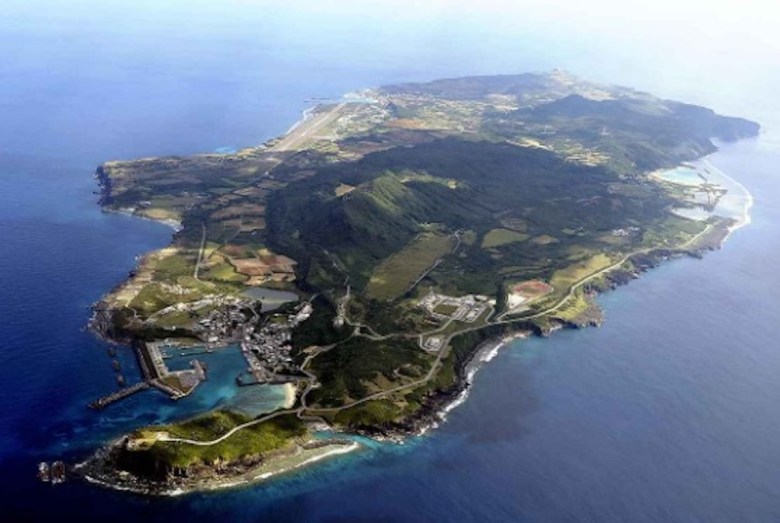
Tensions surrounding Taiwan have prompted the United States to enhance military operations on Yonaguni Island, Japan’s westernmost point, situated just 112 kilometers from Taiwan. Reports indicate that the US Marine Corps has significantly increased its presence on the island, aligning with its strategic initiatives within the First Island Chain. This development, confirmed by Naval News, marks a critical shift in the region as the US seeks to bolster deterrence against potential Chinese aggression.
The US military’s activities on Yonaguni have included logistical missions that began in September 2025. These operations involved offloading vital supplies, such as medical equipment and disaster response materials, at Kubura Port. The exercises, conducted under the banner of Resolute Dragon 2025, were coordinated with Japan’s Self-Defense Forces (JSDF). A notable milestone occurred in October when a Forward Arming and Refueling Point (FARP) was established, allowing CH-53E heavy-lift helicopters to operate in this strategic area for the first time.
While US officials emphasize the humanitarian assistance aspects of these missions, the island’s proximity to Taiwan enhances its importance as a military asset. Its infrastructure, including ports and runways, positions Yonaguni as a critical node for potential reinforcement operations or defense measures against China. The military presence was further underscored by a recent barge mission in November, demonstrating ongoing activity and commitment to the area.
The strategic significance of Yonaguni is highlighted by its location on China’s “First Island Defense Line,” serving as a key point for surveillance and anti-access operations. With its capabilities, the island could facilitate US missile systems and anti-submarine efforts, providing a staging ground for potential operations should tensions escalate in the Taiwan Strait.
Despite its advantages, Yonaguni’s small size—only 28 square kilometers—limits the deployment of larger military systems. For instance, the US Typhon, equipped with Tomahawk cruise missiles, may not be feasible due to the infrastructure constraints. Instead, smaller systems like the Navy-Marine Expeditionary Ship Interdiction System (NMESIS), capable of striking targets up to 185 kilometers away, are more suitable for the island’s austere environment.
The presence of NMESIS on Yonaguni could provide coverage for key maritime routes, including the Miyako Strait, a crucial passage for Chinese naval forces. This positioning is vital as it could impact potential amphibious operations near northern Taiwan. Furthermore, Yonaguni is integral to the US “Fish Hook” underwater sensor network, enhancing maritime awareness in the region.
While the US has made strategic gains, challenges remain. The Department of Defense (DoD) 2024 China Military Power Report indicates that China maintains a substantial fleet of 48 conventionally-powered submarines. Reports by Sarah Kirchberger from the China Maritime Studies Institute highlight ongoing submarine production capabilities in Chinese shipyards, which could pose a significant threat to US and allied operations in the event of conflict.
In scenarios where US forces may need to retake Taiwan, Yonaguni could serve as a staging area; however, the risks of such operations are significant. Historical military campaigns illustrate the challenges and potential losses involved in high-stakes conflict. The island’s vulnerability to attacks, especially from Chinese drones, complicates its role as a secure military asset.
Research conducted by Stacie Pettyjohn and Molly Campbell for the Center for a New American Security notes that simulated attacks on Yonaguni could force US forces into a defensive posture, potentially depleting their interceptor capabilities. Furthermore, the island’s limited infrastructure poses vulnerabilities, with only one civilian airport available for military operations.
Experts highlight that Chinese missile attacks could disrupt operations by damaging runways, significantly limiting US air capabilities. As noted by Thomas Shugart III and Timothy Walton in a Hudson Institute report, the lack of investment in hardened defenses may further expose US forces to initial strikes, complicating their ability to respond effectively.
While Yonaguni enhances the US and Japan’s military reach into the Taiwan Strait, its fragile infrastructure and strategic vulnerabilities raise concerns about its effectiveness in prolonged conflicts. The evolving dynamics in the region suggest that while Yonaguni may serve as a forward asset, it also carries risks that could impact the broader security landscape in the First Island Chain.

Japan’s Missile Sale to Boost Philippines’ Defense Strategy

Singapore Commits S$37 Billion to Research and Innovation Over 5 Years

Australia Extends Lead to 116 Runs in Second Ashes Test

Takaichi’s Leadership: A New Era for Japan’s Indo-Pacific Strategy

Singapore Commits S$37 Billion to Boost Research and Innovation

Bayern’s Luis Diaz Sees Champions League Ban Cut to Two Matches

Vaccine Makers Alarmed by US Advisory Panel’s Hepatitis B Shift

Favorites Shine in 2026 World Cup Draw; Trump Receives Honor

Taiwan and US Experts Advocate Energy Resilience Strategies

Humanism Camp Engages 250 Youths in Summer Fest 2025

Kenvue Dismisses CEO Thibaut Mongon as Strategic Review Advances

De Minaur Triumphs at Washington Open After Thrilling Comeback

Tupou and Daugunu Join First Nations Squad for Lions Clash

Colombian Senator Miguel Uribe Shows Signs of Recovery After Attack

ASEAN Gears Up for Historic Joint Meeting of Foreign and Economic Ministers

New Study Challenges Assumptions About Aging and Inflammation

Oil Prices Surge Following New EU Sanctions on Russia

Detaşe-Sabah Violin Ensemble Captivates at Gabala Music Festival
-
 Lifestyle4 months ago
Humanism Camp Engages 250 Youths in Summer Fest 2025
-
 Business5 months ago
Kenvue Dismisses CEO Thibaut Mongon as Strategic Review Advances
-
 Sports4 months ago
De Minaur Triumphs at Washington Open After Thrilling Comeback
-
 Sports5 months ago
Tupou and Daugunu Join First Nations Squad for Lions Clash
-
 Top Stories5 months ago
Colombian Senator Miguel Uribe Shows Signs of Recovery After Attack
-
 World5 months ago
ASEAN Gears Up for Historic Joint Meeting of Foreign and Economic Ministers
-
 Health4 months ago
New Study Challenges Assumptions About Aging and Inflammation
-
 Business5 months ago
Oil Prices Surge Following New EU Sanctions on Russia
-
 Entertainment4 months ago
Detaşe-Sabah Violin Ensemble Captivates at Gabala Music Festival
-

 Entertainment4 months ago
Baku Metro Extends Hours for Justin Timberlake Concert
-

 Top Stories5 months ago
Rethinking Singapore’s F&B Regulations Amid Business Closures
-

 Business5 months ago
U.S. House Approves Stablecoin Bill, Sends to Trump for Signature