
Top Stories
Tensions Rise as China and Japan Face Off Over Taiwan Disputes

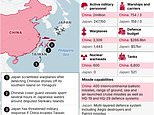
Tensions between China and Japan have escalated significantly as both nations prepare for potential conflict over Taiwan and disputed territories. Chinese President Xi Jinping has reportedly ordered military readiness with the aim of seizing Taiwan by 2027. This move is accompanied by stern warnings directed at Tokyo, indicating that Japan would “bear all consequences” should it interfere in China’s plans.
The backdrop to these increasing hostilities involves longstanding territorial disputes, particularly over a group of islands known as the Senkaku Islands in Japan and the Diaoyu Islands in China. Control of these islands has long been a source of tension, and the situation has intensified as both countries bolster their military capabilities in the region.
As Beijing continues to assert its claims over Taiwan, Japanese officials are contemplating their own defense strategies, including the possibility of acquiring nuclear capabilities. This consideration marks a significant shift in Japan’s post-World War II defense policy, which has traditionally emphasized a pacifist approach.
Military Mobilization and Strategic Posturing
Recent reports indicate that China is not only ramping up military exercises in the Taiwan Strait but is also engaging in aggressive rhetoric aimed at deterring Japanese intervention. The Chinese government has made clear that any military action taken by Japan in support of Taiwan would result in severe repercussions. Analysts suggest that this is part of a broader strategy to intimidate neighboring countries and assert dominance in the Asia-Pacific region.
In response, Japanese Prime Minister Fumio Kishida has reaffirmed Japan’s commitment to defending its national interests. The Japanese government is enhancing its defense spending and engaging in closer military cooperation with allies, particularly the United States. This partnership is seen as crucial in countering Chinese aggression and maintaining stability in the region.
The Global Implications of Rising Tensions
The geopolitical implications of a potential conflict between China and Japan extend far beyond East Asia. A confrontation could disrupt global trade routes and impact economies around the world. The Taiwan Strait is a vital passage for international shipping, and any military engagement could have severe ramifications for global supply chains.
International reactions have been cautious, with many countries urging both sides to pursue diplomatic solutions. The United States has reiterated its support for Japan as a key ally in the region, emphasizing the importance of peace and stability.
The situation remains fluid, and the coming months will be critical in determining whether diplomatic efforts can defuse rising tensions or if military posturing will lead to an escalation. As both nations navigate this precarious landscape, the world watches closely, aware that the stakes have never been higher.
In conclusion, the potential for conflict between China and Japan over Taiwan and territorial disputes is a pressing concern for international relations. With military readiness on both sides and the specter of nuclear options being considered by Japan, the region stands at a crossroads, where the choices made in the coming years could have far-reaching consequences.

Takaichi’s Leadership: A New Era for Japan’s Indo-Pacific Strategy

Singapore Commits S$37 Billion to Boost Research and Innovation

Bayern’s Luis Diaz Sees Champions League Ban Cut to Two Matches

Vaccine Makers Alarmed by US Advisory Panel’s Hepatitis B Shift

Favorites Shine in 2026 World Cup Draw; Trump Receives Honor

Taiwan and US Experts Advocate Energy Resilience Strategies

Vaccine Makers Alarmed by US Panel’s Shift on Hepatitis B for Newborns

Draw Unveils Groups for 2026 World Cup in North America

Taiwan and US Collaborate to Enhance Energy Resilience

Kenvue Dismisses CEO Thibaut Mongon as Strategic Review Advances

Humanism Camp Engages 250 Youths in Summer Fest 2025

De Minaur Triumphs at Washington Open After Thrilling Comeback

Tupou and Daugunu Join First Nations Squad for Lions Clash

Colombian Senator Miguel Uribe Shows Signs of Recovery After Attack

ASEAN Gears Up for Historic Joint Meeting of Foreign and Economic Ministers

New Study Challenges Assumptions About Aging and Inflammation

Oil Prices Surge Following New EU Sanctions on Russia

Detaşe-Sabah Violin Ensemble Captivates at Gabala Music Festival
-
 Business5 months ago
Kenvue Dismisses CEO Thibaut Mongon as Strategic Review Advances
-
 Lifestyle4 months ago
Humanism Camp Engages 250 Youths in Summer Fest 2025
-
 Sports4 months ago
De Minaur Triumphs at Washington Open After Thrilling Comeback
-
 Sports5 months ago
Tupou and Daugunu Join First Nations Squad for Lions Clash
-
 Top Stories5 months ago
Colombian Senator Miguel Uribe Shows Signs of Recovery After Attack
-
 World5 months ago
ASEAN Gears Up for Historic Joint Meeting of Foreign and Economic Ministers
-
 Health4 months ago
New Study Challenges Assumptions About Aging and Inflammation
-
 Business5 months ago
Oil Prices Surge Following New EU Sanctions on Russia
-
 Entertainment4 months ago
Detaşe-Sabah Violin Ensemble Captivates at Gabala Music Festival
-

 Entertainment4 months ago
Baku Metro Extends Hours for Justin Timberlake Concert
-

 Top Stories5 months ago
Rethinking Singapore’s F&B Regulations Amid Business Closures
-
 Business5 months ago
U.S. House Approves Stablecoin Bill, Sends to Trump for Signature