
Science
Drones Transform Warfare: A New Era of Military Technology

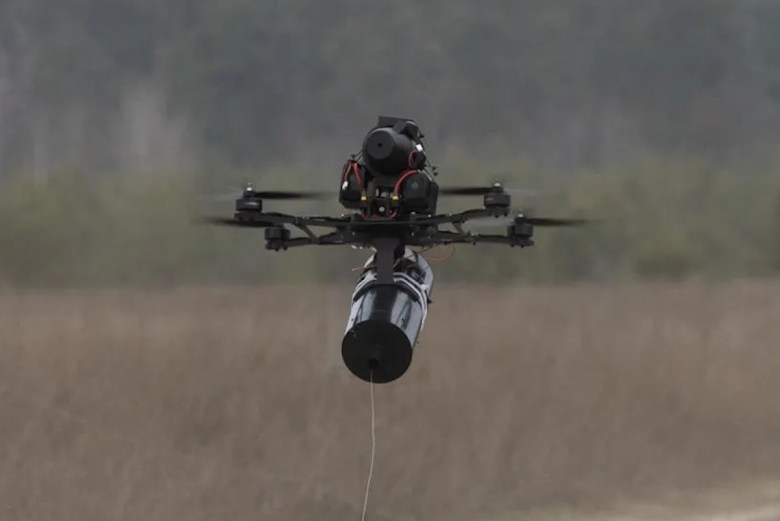
The landscape of warfare is undergoing a profound transformation, driven largely by advancements in drone technology. As of 2025, reports indicate that drone warfare has become the dominant force on the battlefield, particularly in Ukraine. This shift challenges traditional military strategies and forces nations to rethink their defense capabilities.
In a revealing analysis, military technology commentator Noah Smith highlighted the dramatic rise of drones in modern combat. Initially met with skepticism in 2013, Smith’s predictions have since been validated. As military reports indicate, drones are now viewed as essential tools for infantry, with the United States Army ordering over a million units to equip its soldiers. This transition illustrates a significant departure from conventional artillery, as drones increasingly take on roles previously reserved for larger, more expensive weaponry.
From Human Operators to Autonomous Systems
Despite their current reliance on human operators, drone technology is progressing towards autonomy. This evolution could lead to the development of fully autonomous “killer robots,” capable of operating without direct human control. Ukraine has already initiated experiments with autonomous drone swarms, which could redefine engagement strategies across various military domains.
The implications of this shift are substantial. Drones possess the capability to target infantry, tanks, and artillery at extended ranges. They are supplementing traditional bombers and long-range missiles, allowing countries like Ukraine to conduct strikes on vital infrastructure, such as Russia’s oil industry, from thousands of kilometers away. Yet, the technology remains in its infancy, as current drones are susceptible to electronic warfare that can disrupt communication links.
Advancements in artificial intelligence (AI) are set to further change the dynamics of drone warfare. As AI technology improves, drones will likely become more efficient and capable, redefining military tactics and strategies. The cost-effectiveness of drones compared to traditional military resources will also be a crucial factor in their adoption.
The Historical Context of Military Technology
The evolution of warfare has historically correlated with advancements in military technology. Looking back over the last millennium, there have been three significant waves of warfare, each characterized by new technological paradigms. The Mongols dominated with stirrup-equipped horses and recurved bows, while the 1600s marked the peak of gunpowder warfare. The 20th century brought about industrial warfare, featuring planes, tanks, and metal ships.
Interestingly, these major conflicts did not occur immediately following the introduction of new technologies. Instead, societal adaptations to these innovations played a crucial role. For instance, the Mongol Empire’s success stemmed from reforms that promoted meritocracy and improved communication among commanders. Similarly, the rise of gunpowder armies in the 1600s was facilitated by advanced tax collection and financial systems, which enabled states to support larger military forces.
With the advent of drones, a new wave of military technology is emerging. Countries that adapt to this change will likely have a strategic advantage. China, for instance, has demonstrated a comprehensive mastery of the drone supply chain, positioning itself to potentially outpace other nations in drone production capacity.
As warfare increasingly relies on advanced technologies, societal structures must also evolve. The United States and other developed nations face the challenge of modernizing their military strategies and technologies to remain competitive. The societal implications of this shift are substantial, as the systems that supported military success in previous eras may no longer suffice.
In summary, the rise of drones signifies more than just a technological advancement; it represents a fundamental change in the nature of warfare. As nations grapple with these changes, the need for innovative strategies to support military effectiveness becomes paramount. The future of war could reshape societies, economies, and international relations in ways not yet fully understood.

Takaichi’s Leadership: A New Era for Japan’s Indo-Pacific Strategy

Singapore Commits S$37 Billion to Boost Research and Innovation

Bayern’s Luis Diaz Sees Champions League Ban Cut to Two Matches

Vaccine Makers Alarmed by US Advisory Panel’s Hepatitis B Shift

Favorites Shine in 2026 World Cup Draw; Trump Receives Honor

Taiwan and US Experts Advocate Energy Resilience Strategies

Vaccine Makers Alarmed by US Panel’s Shift on Hepatitis B for Newborns

Draw Unveils Groups for 2026 World Cup in North America

Taiwan and US Collaborate to Enhance Energy Resilience

Kenvue Dismisses CEO Thibaut Mongon as Strategic Review Advances

Humanism Camp Engages 250 Youths in Summer Fest 2025

De Minaur Triumphs at Washington Open After Thrilling Comeback

Tupou and Daugunu Join First Nations Squad for Lions Clash

Colombian Senator Miguel Uribe Shows Signs of Recovery After Attack

ASEAN Gears Up for Historic Joint Meeting of Foreign and Economic Ministers

New Study Challenges Assumptions About Aging and Inflammation

Oil Prices Surge Following New EU Sanctions on Russia

Detaşe-Sabah Violin Ensemble Captivates at Gabala Music Festival
-
 Business5 months ago
Kenvue Dismisses CEO Thibaut Mongon as Strategic Review Advances
-
 Lifestyle4 months ago
Humanism Camp Engages 250 Youths in Summer Fest 2025
-
 Sports4 months ago
De Minaur Triumphs at Washington Open After Thrilling Comeback
-
 Sports5 months ago
Tupou and Daugunu Join First Nations Squad for Lions Clash
-
 Top Stories5 months ago
Colombian Senator Miguel Uribe Shows Signs of Recovery After Attack
-
 World5 months ago
ASEAN Gears Up for Historic Joint Meeting of Foreign and Economic Ministers
-
 Health4 months ago
New Study Challenges Assumptions About Aging and Inflammation
-
 Business5 months ago
Oil Prices Surge Following New EU Sanctions on Russia
-
 Entertainment4 months ago
Detaşe-Sabah Violin Ensemble Captivates at Gabala Music Festival
-

 Entertainment4 months ago
Baku Metro Extends Hours for Justin Timberlake Concert
-

 Top Stories5 months ago
Rethinking Singapore’s F&B Regulations Amid Business Closures
-

 Business5 months ago
U.S. House Approves Stablecoin Bill, Sends to Trump for Signature