
Politics
EU Faces Trade Dilemma as Tensions with China Escalate

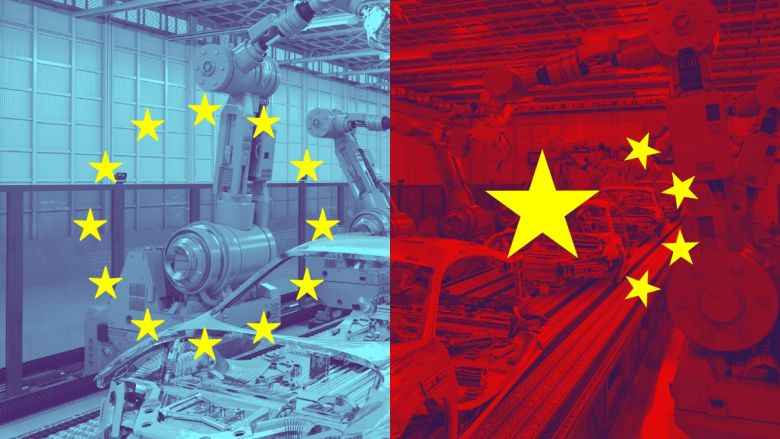
The European Union is grappling with significant challenges in its trade relationship with China, as internal divisions and economic vulnerabilities hinder its position against Beijing’s expanding influence. Despite presenting a unified front on international commerce, the reality remains that the EU’s 27 member states can negotiate separate trade agreements. This fragmentation has allowed nations like Hungary to bypass stringent tariffs on Chinese electric vehicles by welcoming Chinese investment in local manufacturing.
Tensions between the EU and China have intensified, especially as economic pressures mount. Beijing is increasingly viewing Europe as a prime market for its exports, particularly as the United States, embroiled in its own trade disputes with China, shifts its focus. Last year, the EU recorded a staggering €305 billion trade deficit with China, underscoring the economic imbalance that has drawn the attention of policymakers and analysts alike.
Internal Divisions and External Pressures
The EU’s inability to adopt a coherent strategy toward China has led to mixed signals within its ranks. While some politicians advocate for a more confrontational stance, others fear the repercussions of engaging in a trade war similar to that experienced by the United States. European companies with substantial business interests in China are particularly resistant to confrontational measures, fearing potential retaliatory tariffs or restrictions on their exports.
China’s approach includes a range of tactics aimed at influencing European public opinion and policy. This includes covert funding of opposition politicians and efforts to undermine criticism of its trade practices. Ivana Karaskova, Director of the China Observers in Central and Eastern Europe, recently emphasized the need for the EU to recognize China’s strategic interests in the region. During a parliamentary hearing, she stated, “China has a clear plan for Europe. It sees Europe as able to be influenced and tailors its influence accordingly.”
Chinese President Xi Jinping has outlined three key objectives regarding Europe: to maintain open trade, secure access to advanced technologies, and dissuade European nations from aligning with the United States. The EU is thus faced with the challenge of countering these influences while also managing its own internal divisions.
Strategic Responses and Future Outlook
The EU’s leadership remains cautious in its dealings with China, particularly in the context of the ongoing war in Ukraine. China’s support for Russia has further complicated relations, with EU officials viewing the situation as an existential threat to the continent. An EU official remarked, “If China doesn’t change on the economic imbalances, and they don’t change on their embrace of Russia, it might be to their advantage. But it’s not to ours.”
As the EU prepares for upcoming negotiations, the prospect of a trade war looms large. In September 2023, Ursula von der Leyen, President of the European Commission, briefly met with Xi Jinping, raising concerns about China’s dumping practices. She warned that “it would be difficult for the EU to maintain its current level of openness.”
Economists, such as Jacob Gunter from the Mercator Institute for China Studies, caution against underestimating China’s leverage over European exporters. Companies reliant on Chinese markets may lobby against EU retaliatory measures, emphasizing the potential job losses that could result from escalating trade tensions. Gunter stated, “Exports are good for jobs. Lost exports mean lost jobs,” highlighting the delicate balance the EU must navigate.
Analysts suggest several strategies for enhancing the EU’s negotiating position. Identifying areas where Europe can supply essential goods to China—such as sophisticated machinery—could serve as leverage in discussions. Additionally, relocating certain industries to the Global South may provide a viable alternative to reliance on Chinese production.
To counteract China’s punitive economic measures, the EU possesses an anti-coercion instrument, designed to respond to economic pressures aimed at influencing internal politics. This regulatory framework has yet to be enforced, despite being established in response to China’s ban on Lithuanian imports following Taiwan’s diplomatic outreach.
As Europe faces mounting pressures from both China and ongoing geopolitical tensions, decisive action is required. The forthcoming EU security doctrine, expected to be presented by von der Leyen by the end of the year, may provide clarity on how the bloc intends to navigate its complex relationship with China while safeguarding its economic interests.

Japan’s Missile Sale to Boost Philippines’ Defense Strategy

Singapore Commits S$37 Billion to Research and Innovation Over 5 Years

Australia Extends Lead to 116 Runs in Second Ashes Test

Takaichi’s Leadership: A New Era for Japan’s Indo-Pacific Strategy

Singapore Commits S$37 Billion to Boost Research and Innovation

Bayern’s Luis Diaz Sees Champions League Ban Cut to Two Matches

Vaccine Makers Alarmed by US Advisory Panel’s Hepatitis B Shift

Favorites Shine in 2026 World Cup Draw; Trump Receives Honor

Taiwan and US Experts Advocate Energy Resilience Strategies

Humanism Camp Engages 250 Youths in Summer Fest 2025

Kenvue Dismisses CEO Thibaut Mongon as Strategic Review Advances

De Minaur Triumphs at Washington Open After Thrilling Comeback

Tupou and Daugunu Join First Nations Squad for Lions Clash

Colombian Senator Miguel Uribe Shows Signs of Recovery After Attack

ASEAN Gears Up for Historic Joint Meeting of Foreign and Economic Ministers

New Study Challenges Assumptions About Aging and Inflammation

Oil Prices Surge Following New EU Sanctions on Russia

Detaşe-Sabah Violin Ensemble Captivates at Gabala Music Festival
-
 Lifestyle4 months ago
Humanism Camp Engages 250 Youths in Summer Fest 2025
-
 Business5 months ago
Kenvue Dismisses CEO Thibaut Mongon as Strategic Review Advances
-
 Sports4 months ago
De Minaur Triumphs at Washington Open After Thrilling Comeback
-
 Sports5 months ago
Tupou and Daugunu Join First Nations Squad for Lions Clash
-
 Top Stories5 months ago
Colombian Senator Miguel Uribe Shows Signs of Recovery After Attack
-
 World5 months ago
ASEAN Gears Up for Historic Joint Meeting of Foreign and Economic Ministers
-
 Health4 months ago
New Study Challenges Assumptions About Aging and Inflammation
-
 Business5 months ago
Oil Prices Surge Following New EU Sanctions on Russia
-
 Entertainment4 months ago
Detaşe-Sabah Violin Ensemble Captivates at Gabala Music Festival
-

 Entertainment4 months ago
Baku Metro Extends Hours for Justin Timberlake Concert
-

 Top Stories5 months ago
Rethinking Singapore’s F&B Regulations Amid Business Closures
-
 Business5 months ago
U.S. House Approves Stablecoin Bill, Sends to Trump for Signature