
World
Turkish C-130 Hercules Crashes in Georgia, Multiple Fatalities Confirmed

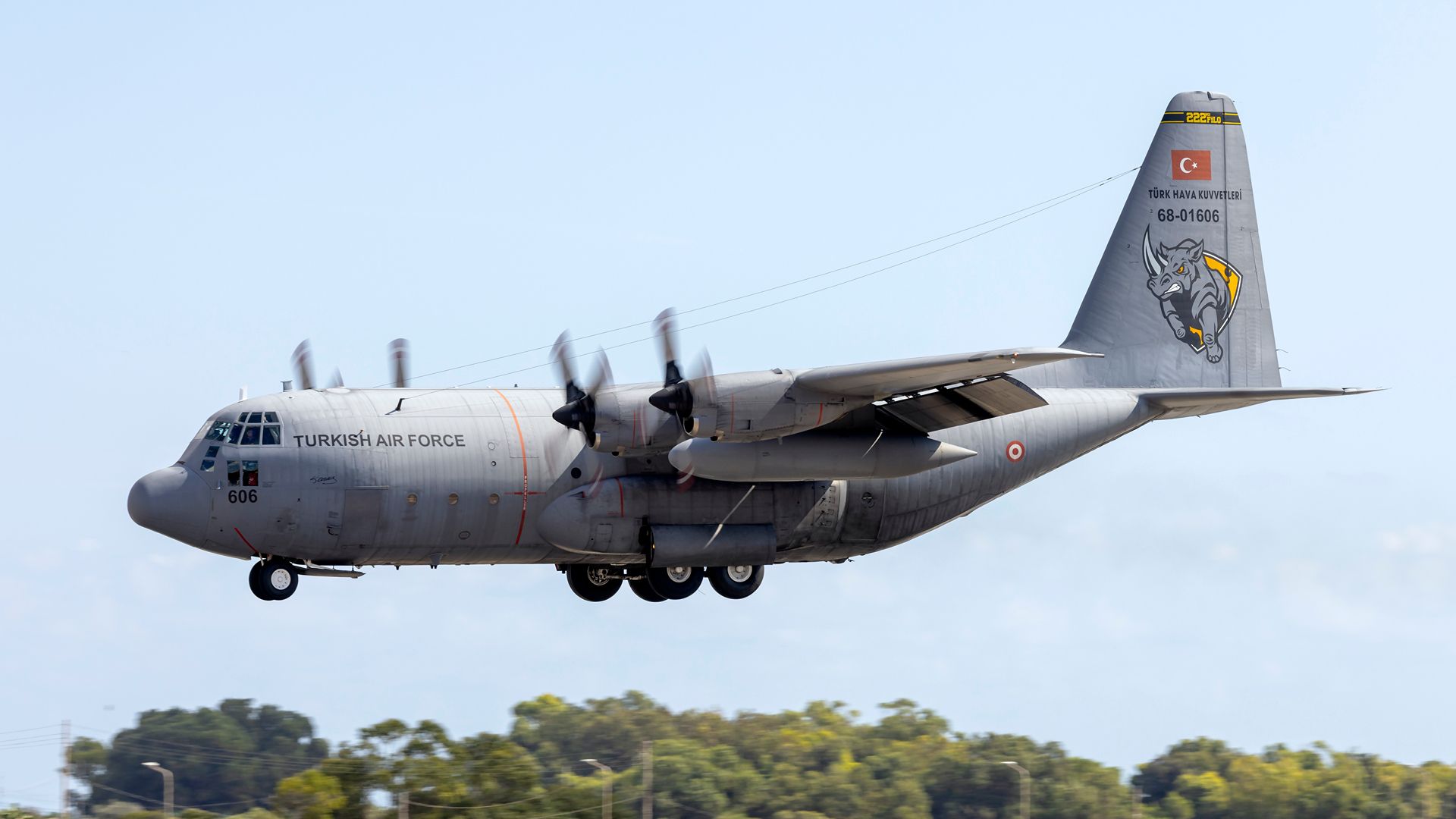
A Turkish Air Force Lockheed C-130 Hercules transport aircraft crashed in Georgia on November 11, 2025, near the Azerbaijani border. The incident involved at least 20 individuals, with authorities confirming multiple fatalities. Video footage captured the aircraft spiraling towards the ground after reportedly breaking apart midair. Emergency response teams are currently investigating the cause of this tragic accident.
Shortly after entering Georgian airspace, the C-130 disappeared from radar while en route from Ganja International Airport in Azerbaijan to Erkilet International Airport in Turkey. The aircraft, designated as C-130E, did not issue a distress signal before crashing in the Sighnaghi area of the Kakheti region, approximately three miles from Georgia’s eastern border with Azerbaijan.
The Turkish Defence Ministry confirmed that there were 20 Turkish personnel onboard the aircraft. However, local Azerbaijani media have reported the presence of Azerbaijani personnel as well. Search and rescue operations successfully located the crash site at 17:00 local time on Tuesday, prompting a Turkish investigation team to arrive.
Turkish President Recep Tayyip Erdogan expressed profound sorrow, stating, “We are deeply saddened to learn that one of our C-130 military aircraft, en route from Azerbaijan to our country, has crashed near the Georgia-Azerbaijan border.”
Details of the Crash
The aircraft was seen in distress, caught in a flat spin after losing significant structural integrity during flight, which resulted in thick black smoke billowing from the wreckage upon impact. Reports indicate that the aircraft lost its forward fuselage and other components during its descent.
According to data from Flightradar24, the C-130 departed Ganja International Airport at 10:19 UTC, entering Georgian airspace shortly thereafter. It maintained a cruising altitude of FL240 until its last ADS-B signal was recorded at 10:49 UTC. The precise circumstances surrounding the crash remain unclear, as investigators work to determine the cause.
This incident shares similarities with a previous tragedy involving a US Marine Corps KC-130 crash in 2017, where a blade failure led to catastrophic loss of control and resulted in the deaths of all 16 individuals on board.
Aircraft Background and Operations
The aircraft involved in the accident was a Lockheed C-130E Hercules, registered as 68-1609, with a service history of over 57 years. It had been part of the Turkish Air Force for around 15 years, having been delivered in 2010 and previously serving with the Royal Saudi Air Force. Flightradar24 indicates that the aircraft had been operating regularly in the weeks leading up to the crash, with its last flight from Kayseri to Ganja occurring on the morning of the incident.
Turkey operates a total of 18 C-130 aircraft, including both the C-130B and C-130E models. The crashed aircraft was a C-130E, which had recently undergone modernization, incorporating new avionics and navigation systems. Turkey has been utilizing the C-130 since the 1960s, making it one of the earliest international operators. The nation is currently transitioning to the C-130J Super Hercules, having secured a deal to acquire 12 former Royal Air Force (RAF) airframes.
As authorities continue their investigation, the implications of this crash will likely resonate throughout Turkish military operations and air transport strategies.

India Unveils Long-Range Hypersonic Missile Amid Regional Tensions

SK bioscience Launches Global Trial for Universal Sarbecovirus Vaccine

Senegal Coach Pape Thiaw Suspended and Fined After Final Disruption

PAS Denies Abolishing Chairman Post, Contradicts Muhyiddin’s Claim

Mbappé Critiques Real Madrid’s Effort After Benfica Defeat

Thailand’s December Factory Output Surges 2.52% Year-on-Year

Ishita Dutta Reveals Her Parenting Secret: Strong Coffee

Older GPs Express Concerns Over New Digital Health Record Mandate

Urban Jurgensen: A 252-Year Legacy Enters a New Era

Regina Martinez Breaks New Ground for Mexico in Cross-Country Skiing

South Korea’s Foreign Minister Cho Hyun to Visit China This Week

Starling Bank Plans Secondary Share Sale, Targeting $5.4 Billion Valuation

Munsang College Celebrates 100 Years with Grand Ceremony

PAS Aims to Expand Parliamentary Influence in Upcoming Election

De Minaur Triumphs at Washington Open After Thrilling Comeback

Kenvue Dismisses CEO Thibaut Mongon as Strategic Review Advances

Humanism Camp Engages 250 Youths in Summer Fest 2025

Colombian Senator Miguel Uribe Shows Signs of Recovery After Attack
-
 Sports3 months ago
Regina Martinez Breaks New Ground for Mexico in Cross-Country Skiing
-
 World8 months ago
South Korea’s Foreign Minister Cho Hyun to Visit China This Week
-
 Business8 months ago
Starling Bank Plans Secondary Share Sale, Targeting $5.4 Billion Valuation
-
 Top Stories8 months ago
Munsang College Celebrates 100 Years with Grand Ceremony
-
 World8 months ago
PAS Aims to Expand Parliamentary Influence in Upcoming Election
-
 Sports9 months ago
De Minaur Triumphs at Washington Open After Thrilling Comeback
-
 Business10 months ago
Kenvue Dismisses CEO Thibaut Mongon as Strategic Review Advances
-
 Lifestyle9 months ago
Humanism Camp Engages 250 Youths in Summer Fest 2025
-
 Top Stories10 months ago
Colombian Senator Miguel Uribe Shows Signs of Recovery After Attack
-

 Sports10 months ago
Tupou and Daugunu Join First Nations Squad for Lions Clash
-

 World10 months ago
ASEAN Gears Up for Historic Joint Meeting of Foreign and Economic Ministers
-

 Health9 months ago
New Study Challenges Assumptions About Aging and Inflammation