
Lifestyle
Taiwan’s Formosat-8 Satellite Launch Marks New Era in Space Exploration

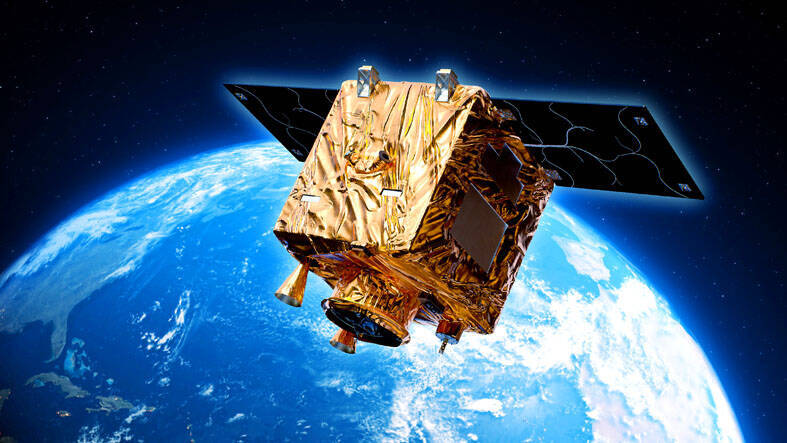
The first satellite of Taiwan’s Formosat-8 constellation successfully launched from the Vandenberg Space Force Base in California on March 15, 2024. The satellite, named the Chi Po-lin Satellite in honor of the late Taiwanese documentary director known for his aerial photography of Taiwan, took off at 02:44 after a brief delay to prevent potential collision with another satellite.
Carried by SpaceX’s Transporter-15 rocket, the satellite, designated FS-8A, is part of a constellation comprising eight satellites. It is designed to capture high-resolution ground imagery, initially at a resolution of 1 meter, which can sharpen to 0.7 meters post-processing. This capability aims to enhance Taiwan’s ability to monitor natural disasters and security risks more effectively.
During the launch countdown, Taiwan Space Agency (TASA) Director-General Wu Jong-shinn expressed his nervousness, likening the satellite to a personal project. Following the successful launch, Wu embraced high expectations for FS-8A, highlighting its potential to provide detailed observational data multiple times a day.
The launch faced multiple delays, with Cynthia Liu, the project leader, noting that it was postponed five times due to launch schedule conflicts, a government shutdown in the US, and additional preparatory requirements. According to TASA, the Formosat-8 constellation will not only deliver clearer imagery but will also operate in a sun-synchronous orbit approximately 561 kilometers above the Earth. This altitude will improve the revisit rate, allowing for more frequent imaging of specific locations.
Taiwan’s President William Lai commented on the historic significance of the launch, stating it marks a milestone in Taiwan’s space industry development. In a recorded video, Lai reiterated the government’s commitment to collaborate with industry and academia to advance the next generation of medium and low-orbit communications satellites, thereby elevating Taiwan’s space and aerospace sectors on the international stage.
The efforts of the local space industry were acknowledged by Lai, who expressed gratitude for their role in making the launch a reality. He emphasized that the Chi Po-lin Satellite would not only safeguard Taiwan but also showcase its ambitions and achievements globally.
Minister of the National Science and Technology Council Wu Cheng-wen highlighted that the launch exemplifies Taiwan’s capabilities in the space sector. He indicated that the satellite’s deployment is expected to open new avenues for diversified applications and value-added services in aerial imagery, potentially generating significant business opportunities for Taiwanese technology firms.
Chi Po-lin’s son, Chi Yen-huan, remarked that the satellite’s launch represents a new form of protection for Taiwan, following in his father’s footsteps but from a higher vantage point. He noted that his father’s work in aerial photography unveiled both Taiwan’s natural beauty and the environmental degradation caused by exploitation of the land and resources.
The complete deployment of the Formosat-8 constellation is anticipated by 2031, with the goal of supporting disaster management, national security, and global collaboration, as outlined in a TASA promotional video released last month. This launch paves the way for a promising future in satellite technology and environmental monitoring for Taiwan.

Takaichi’s Leadership: A New Era for Japan’s Indo-Pacific Strategy

Singapore Commits S$37 Billion to Boost Research and Innovation

Bayern’s Luis Diaz Sees Champions League Ban Cut to Two Matches

Vaccine Makers Alarmed by US Advisory Panel’s Hepatitis B Shift

Favorites Shine in 2026 World Cup Draw; Trump Receives Honor

Taiwan and US Experts Advocate Energy Resilience Strategies

Vaccine Makers Alarmed by US Panel’s Shift on Hepatitis B for Newborns

Draw Unveils Groups for 2026 World Cup in North America

Taiwan and US Collaborate to Enhance Energy Resilience

Kenvue Dismisses CEO Thibaut Mongon as Strategic Review Advances

Humanism Camp Engages 250 Youths in Summer Fest 2025

De Minaur Triumphs at Washington Open After Thrilling Comeback

Tupou and Daugunu Join First Nations Squad for Lions Clash

Colombian Senator Miguel Uribe Shows Signs of Recovery After Attack

ASEAN Gears Up for Historic Joint Meeting of Foreign and Economic Ministers

New Study Challenges Assumptions About Aging and Inflammation

Oil Prices Surge Following New EU Sanctions on Russia

Detaşe-Sabah Violin Ensemble Captivates at Gabala Music Festival
-
 Business5 months ago
Kenvue Dismisses CEO Thibaut Mongon as Strategic Review Advances
-
 Lifestyle4 months ago
Humanism Camp Engages 250 Youths in Summer Fest 2025
-
 Sports4 months ago
De Minaur Triumphs at Washington Open After Thrilling Comeback
-
 Sports5 months ago
Tupou and Daugunu Join First Nations Squad for Lions Clash
-
 Top Stories5 months ago
Colombian Senator Miguel Uribe Shows Signs of Recovery After Attack
-
 World5 months ago
ASEAN Gears Up for Historic Joint Meeting of Foreign and Economic Ministers
-
 Health4 months ago
New Study Challenges Assumptions About Aging and Inflammation
-
 Business5 months ago
Oil Prices Surge Following New EU Sanctions on Russia
-
 Entertainment4 months ago
Detaşe-Sabah Violin Ensemble Captivates at Gabala Music Festival
-

 Entertainment4 months ago
Baku Metro Extends Hours for Justin Timberlake Concert
-
 Top Stories5 months ago
Rethinking Singapore’s F&B Regulations Amid Business Closures
-

 Business5 months ago
U.S. House Approves Stablecoin Bill, Sends to Trump for Signature