
Politics
Sabah’s Crucial Election: Voters Prepare for High-Stakes Polls

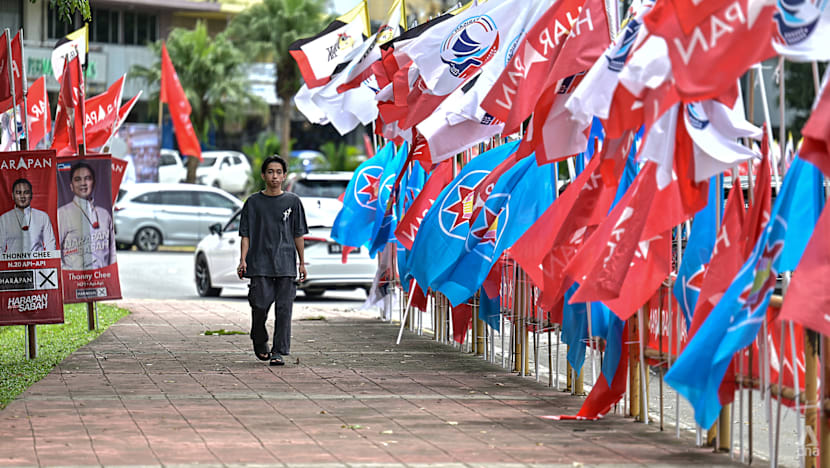
More than 1.7 million voters in Sabah are set to cast their ballots on November 29, 2023, in what analysts deem one of the most fiercely contested state elections in the region’s history. Observers indicate that no single party or coalition is likely to secure an outright majority, making post-election negotiations between parties crucial. The campaign has been heavily influenced by longstanding issues, including inadequate water and electricity supply, poor road infrastructure, and a growing sentiment for local representation under the banner of “Sabah for Sabahans.”
The elections come after a period of heightened political activity, with early voting already taking place on November 25 for over 24,000 military and police personnel and their spouses, achieving a participation rate of 92.5 percent despite adverse weather conditions. Most Sabahans will vote on Saturday, with polling centres open from 07:30 to 17:30. The Election Commission has allocated approximately RM116.8 million (about US$28.3 million) to facilitate the election, deploying 33,002 election workers across 940 polling centres.
Key Issues and Candidate Landscape
A record 596 candidates are vying for 73 seats, resulting in multi-cornered contests in each constituency. The rural seat of Tulid in Keningau will witness a remarkable 14-way battle. Major contenders include the opposition party Warisan, which is contesting all seats, and the incumbent coalition, Gabungan Rakyat Sabah (GRS), fielding 55 candidates. Other parties include the Parti Kesejahteraan Demokratik Malaysia (KDM) and the United Progressive Kinabalu Organisation (UPKO), which previously aligned with the Pakatan Harapan (PH) coalition.
Analysts have highlighted the competitive nature of the election, with both GRS and Warisan appearing to be frontrunners. Political expert James Chin from the University of Tasmania noted that these parties have deployed significant resources and influential figures to support their candidates. Despite this, other local parties and independent candidates could secure a few seats, complicating the likelihood of a simple-majority victory for either GRS or Warisan.
Impact of Key Campaign Issues
Longstanding issues such as water supply, electricity, and road infrastructure have dominated the campaign discourse. Arvin Tajari, a senior lecturer at Universiti Teknologi MARA (UiTM) Sabah, pointed out that the government’s failure to address these concerns has become a focal point for opposition parties, particularly targeting the GRS administration led by Hajiji Noor. The “Sabah for Sabahans” sentiment has gained traction, advocating for local governance in response to decades of perceived federal neglect.
This sentiment has been bolstered by a recent High Court ruling affirming Sabah’s right to 40 percent of federal revenue derived from the state, a decision that has intensified calls for autonomy and better representation. The ruling mandates negotiation on revenue sharing between the state and federal government, with a deadline of 180 days for resolution.
Compounding these issues, corruption allegations have surfaced against the GRS administration, prompting scrutiny from Malaysia’s anti-graft agency. Allegations involve a businessman claiming he provided bribes to a senior aide of Prime Minister Anwar Ibrahim. These claims have led to significant political fallout, potentially affecting the election outcomes, particularly for PH.
The youth vote is anticipated to play a crucial role in the election, with nearly 54 percent of voters aged between 18 and 39. The implementation of the Undi18 initiative in 2021 expanded the electorate, making this election a key indicator of youth voting trends in Sabah. Political parties have been actively engaging with younger voters through social media, emphasizing issues that resonate with this demographic.
Post-Election Scenarios
Given the fragmented political landscape, analysts predict a hung state assembly is likely, necessitating coalition negotiations among key parties. Possible alliances could include a coalition between Warisan, UPKO, and STAR, or a partnership involving GRS with PH and BN. The Ilham Centre anticipates GRS could secure at least 26 seats, with Warisan likely to win around 14 seats.
The political dynamics are further complicated by the role of the state’s governor, Musa Aman, who has the discretion to appoint a chief minister based on majority support, regardless of party affiliation. This newfound authority stems from a constitutional amendment in 2023, providing the governor with significant influence over the formation of the next state government.
As Sabah approaches this pivotal election, the outcome will not only shape the immediate governance of the state but may also impact the broader political landscape in Malaysia. With issues of local governance, corruption, and youth engagement at the forefront, the results on November 29 will be closely monitored both within and beyond Sabah’s borders.

Takaichi’s Leadership: A New Era for Japan’s Indo-Pacific Strategy

Singapore Commits S$37 Billion to Boost Research and Innovation

Bayern’s Luis Diaz Sees Champions League Ban Cut to Two Matches

Vaccine Makers Alarmed by US Advisory Panel’s Hepatitis B Shift

Favorites Shine in 2026 World Cup Draw; Trump Receives Honor

Taiwan and US Experts Advocate Energy Resilience Strategies

Vaccine Makers Alarmed by US Panel’s Shift on Hepatitis B for Newborns

Draw Unveils Groups for 2026 World Cup in North America

Taiwan and US Collaborate to Enhance Energy Resilience

Kenvue Dismisses CEO Thibaut Mongon as Strategic Review Advances

Humanism Camp Engages 250 Youths in Summer Fest 2025

De Minaur Triumphs at Washington Open After Thrilling Comeback

Tupou and Daugunu Join First Nations Squad for Lions Clash

Colombian Senator Miguel Uribe Shows Signs of Recovery After Attack

ASEAN Gears Up for Historic Joint Meeting of Foreign and Economic Ministers

New Study Challenges Assumptions About Aging and Inflammation

Oil Prices Surge Following New EU Sanctions on Russia

Detaşe-Sabah Violin Ensemble Captivates at Gabala Music Festival
-
 Business5 months ago
Kenvue Dismisses CEO Thibaut Mongon as Strategic Review Advances
-
 Lifestyle4 months ago
Humanism Camp Engages 250 Youths in Summer Fest 2025
-
 Sports4 months ago
De Minaur Triumphs at Washington Open After Thrilling Comeback
-
 Sports5 months ago
Tupou and Daugunu Join First Nations Squad for Lions Clash
-
 Top Stories5 months ago
Colombian Senator Miguel Uribe Shows Signs of Recovery After Attack
-
 World5 months ago
ASEAN Gears Up for Historic Joint Meeting of Foreign and Economic Ministers
-
 Health4 months ago
New Study Challenges Assumptions About Aging and Inflammation
-
 Business5 months ago
Oil Prices Surge Following New EU Sanctions on Russia
-
 Entertainment4 months ago
Detaşe-Sabah Violin Ensemble Captivates at Gabala Music Festival
-

 Entertainment4 months ago
Baku Metro Extends Hours for Justin Timberlake Concert
-
 Top Stories5 months ago
Rethinking Singapore’s F&B Regulations Amid Business Closures
-
 Business5 months ago
U.S. House Approves Stablecoin Bill, Sends to Trump for Signature