
Politics
Taiwan Proposes NT$1.25 Trillion Defense Budget Amid CCP Threats

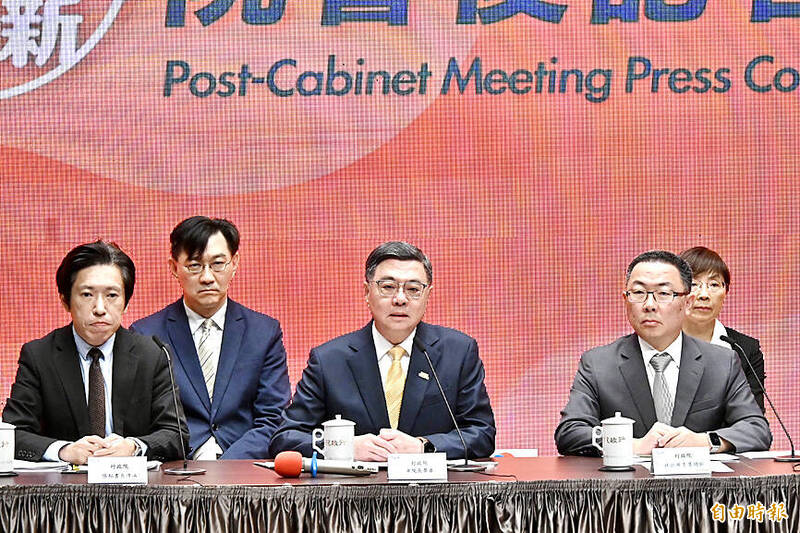
Taiwan’s Executive Yuan has moved forward with a significant defense budget proposal, amounting to NT$1.25 trillion (approximately US$39.89 billion), emphasizing the perceived military threats posed by the Chinese Communist Party (CCP). This marks the first occasion that Taiwan’s government has explicitly linked the budget to the CCP’s military actions, highlighting a decisive shift in the nation’s defense strategy.
The proposed budget, announced by President William Lai, aims to strengthen Taiwan’s military capabilities in response to ongoing pressures from Beijing. Article 1 of the bill outlines plans to enhance defensive resilience and develop asymmetric capabilities, which include the creation of a “Taiwan dome” air-defense system. This system is intended to employ advanced detection and interception technologies, incorporating artificial intelligence to improve response times in critical situations.
Premier Cho Jung-tai has urged opposition parties to support the bill, underscoring the necessity for bolstering self-defense amid escalating threats from China. “Given the military coercion of Beijing, the government has a responsibility to show its determination to safeguard Taiwan’s sovereignty,” Cho stated. The bill will now be reviewed by the opposition-controlled Legislative Yuan, where it faces scrutiny from parties like the Chinese Nationalist Party (KMT) and the Taiwan People’s Party.
Critics of the budget raise concerns about its potential reliance on debt financing, suggesting it could lead to cuts in social welfare and education programs. Both the KMT and the Taiwan People’s Party have vowed to examine the proposal closely to ensure responsible use of taxpayer funds.
The budget outlines seven major categories for procurement, including:
– Precision artillery
– Long-range precision-strike missiles
– Uncrewed vehicles and anti-drone systems
– Air-defense, anti-ballistic missile, and anti-armor missile systems
– Artificial intelligence-assisted systems
– Equipment to enhance sustained combat endurance
– Systems developed or procured in collaboration with the United States
Funding for this initiative will come from special budgets and will not be subject to the usual restrictions outlined in Article 23 of the Budget Act, which governs the use of capital for recurrent expenditures. This approach allows for flexibility in funding, which can be drawn from prior-year budget surpluses or raised through borrowing, with annual borrowing limits exempt from certain restrictions set by the Public Debt Act.
Minister of National Defense Wellington Koo indicated that Taiwan has commenced preliminary discussions with the United States regarding potential arms purchases under this budget. He noted that these acquisitions would constitute a significant aspect of the overall spending plans. Koo confirmed that Taiwan has received detailed procurement information from the US Department of Defense, including item quantities, pricing, and timelines, indicating US readiness to support Taiwan’s defense needs.
The budget proposal is projected to create approximately 90,000 jobs, generating an estimated direct economic benefit of NT$400 billion for Taiwan. As the situation continues to evolve, the implications of this defense strategy will be closely monitored, both within Taiwan and by international observers.

Takaichi’s Leadership: A New Era for Japan’s Indo-Pacific Strategy

Singapore Commits S$37 Billion to Boost Research and Innovation

Bayern’s Luis Diaz Sees Champions League Ban Cut to Two Matches

Vaccine Makers Alarmed by US Advisory Panel’s Hepatitis B Shift

Favorites Shine in 2026 World Cup Draw; Trump Receives Honor

Taiwan and US Experts Advocate Energy Resilience Strategies

Vaccine Makers Alarmed by US Panel’s Shift on Hepatitis B for Newborns

Draw Unveils Groups for 2026 World Cup in North America

Taiwan and US Collaborate to Enhance Energy Resilience

Kenvue Dismisses CEO Thibaut Mongon as Strategic Review Advances

Humanism Camp Engages 250 Youths in Summer Fest 2025

De Minaur Triumphs at Washington Open After Thrilling Comeback

Tupou and Daugunu Join First Nations Squad for Lions Clash

Colombian Senator Miguel Uribe Shows Signs of Recovery After Attack

ASEAN Gears Up for Historic Joint Meeting of Foreign and Economic Ministers

New Study Challenges Assumptions About Aging and Inflammation

Oil Prices Surge Following New EU Sanctions on Russia

Detaşe-Sabah Violin Ensemble Captivates at Gabala Music Festival
-
 Business5 months ago
Kenvue Dismisses CEO Thibaut Mongon as Strategic Review Advances
-
 Lifestyle4 months ago
Humanism Camp Engages 250 Youths in Summer Fest 2025
-
 Sports4 months ago
De Minaur Triumphs at Washington Open After Thrilling Comeback
-
 Sports5 months ago
Tupou and Daugunu Join First Nations Squad for Lions Clash
-
 Top Stories5 months ago
Colombian Senator Miguel Uribe Shows Signs of Recovery After Attack
-
 World5 months ago
ASEAN Gears Up for Historic Joint Meeting of Foreign and Economic Ministers
-
 Health4 months ago
New Study Challenges Assumptions About Aging and Inflammation
-
 Business5 months ago
Oil Prices Surge Following New EU Sanctions on Russia
-
 Entertainment4 months ago
Detaşe-Sabah Violin Ensemble Captivates at Gabala Music Festival
-

 Entertainment4 months ago
Baku Metro Extends Hours for Justin Timberlake Concert
-

 Top Stories5 months ago
Rethinking Singapore’s F&B Regulations Amid Business Closures
-
 Business5 months ago
U.S. House Approves Stablecoin Bill, Sends to Trump for Signature