
World
China Quietly Transforms Urban Noise Levels with EV Revolution

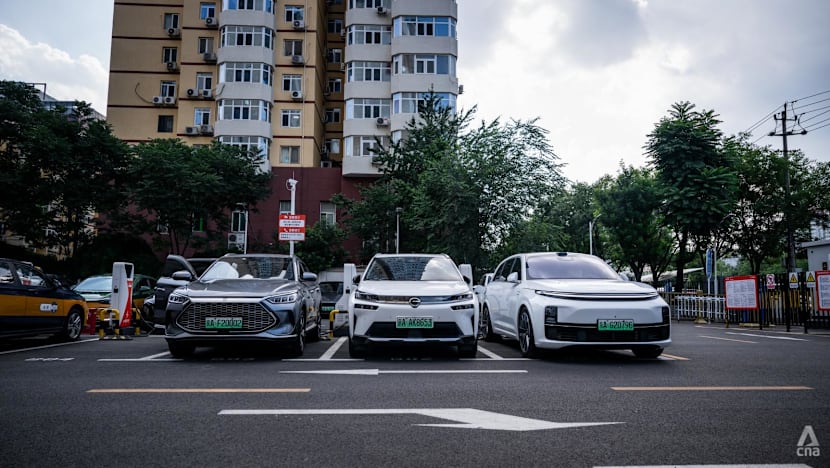
Beijing is experiencing a significant reduction in urban noise levels, attributed largely to the rise of electric vehicles (EVs) and changes in urban planning. Among many cities, Beijing stands out as residents report improved sleep quality and a quieter living environment. This transformation, observed since 2016, highlights a broader trend across Chinese cities in addressing noise pollution.
Electric Vehicles Lead the Charge
The most notable shift in noise levels comes from the increasing presence of electric vehicles. As the country embraces this quieter alternative to traditional petrol and diesel engines, the impact on urban noise is palpable. EVs generate less sound at lower speeds, which is particularly beneficial in densely populated areas. The sound advantage of electric vehicles diminishes only when speeds exceed 50 km/h, where tire noise becomes more pronounced. Research indicates that EV drivers often exhibit smoother acceleration and braking, contributing to a quieter atmosphere while driving.
According to China’s environment ministry, the compliance rate for noise pollution saw a marked improvement in 2024. During the day, the compliance rate for all noise sources reached an impressive 95.8 percent, with a nighttime rate of 88.2 percent. Specifically for road noise, the compliance rate jumped from 92.6 percent in 2016 to 99.4 percent during the day and from 50.5 percent to 76.3 percent at night. Notably, cities with the highest EV penetration, such as Shenzhen and Shanghai, also report the best compliance rates.
Beyond Vehicles: Urban Planning and Social Noise
The decline in urban noise is not solely due to the increased use of electric vehicles. The pace of urban development has also shifted dramatically. Following the property crisis in 2021, which resulted in halted construction projects, the once-noisy construction sites have quieted considerably. The rapid transformation of skylines that once characterized cities like Beijing and Shanghai has slowed, contributing to a less chaotic environment.
City planners have also implemented strategies to further reduce noise. In 2022, China installed 32 million sq m of noise-reducing road surfaces and erected 833,000 m of sound barriers. Additionally, local governments have established no-honking zones, restricted heavy-duty trucks from city centers, and installed noise-monitoring devices in parks to help manage excessive noise levels.
Despite these advancements, social noise remains a challenge. In 2023, China recorded nearly six million noise complaints, with a significant 71 percent linked to social activities such as loud music and shouting neighbors. In response, authorities have taken action against noisy establishments, closing or relocating bars and clubs that disturb local residents. The Jiangxi government notably launched a “Joint Law Enforcement Campaign to Control Noise Pollution from KTV Venues,” imposing fines on venues that allow noise to escape into the streets.
The changes in urban noise levels in China reflect a concerted effort to improve the quality of life in its cities. As vehicles become quieter and city planning adapts to reduce noise, residents find themselves enjoying a more peaceful environment. For many, including those who once relied on earplugs to sleep, these developments signal a welcome shift towards tranquility in urban living.

Takaichi’s Leadership: A New Era for Japan’s Indo-Pacific Strategy

Singapore Commits S$37 Billion to Boost Research and Innovation

Bayern’s Luis Diaz Sees Champions League Ban Cut to Two Matches

Vaccine Makers Alarmed by US Advisory Panel’s Hepatitis B Shift

Favorites Shine in 2026 World Cup Draw; Trump Receives Honor

Taiwan and US Experts Advocate Energy Resilience Strategies

Vaccine Makers Alarmed by US Panel’s Shift on Hepatitis B for Newborns

Draw Unveils Groups for 2026 World Cup in North America

Taiwan and US Collaborate to Enhance Energy Resilience

Kenvue Dismisses CEO Thibaut Mongon as Strategic Review Advances

Humanism Camp Engages 250 Youths in Summer Fest 2025

De Minaur Triumphs at Washington Open After Thrilling Comeback

Tupou and Daugunu Join First Nations Squad for Lions Clash

Colombian Senator Miguel Uribe Shows Signs of Recovery After Attack

ASEAN Gears Up for Historic Joint Meeting of Foreign and Economic Ministers

New Study Challenges Assumptions About Aging and Inflammation

Oil Prices Surge Following New EU Sanctions on Russia

Detaşe-Sabah Violin Ensemble Captivates at Gabala Music Festival
-
 Business5 months ago
Kenvue Dismisses CEO Thibaut Mongon as Strategic Review Advances
-
 Lifestyle4 months ago
Humanism Camp Engages 250 Youths in Summer Fest 2025
-
 Sports4 months ago
De Minaur Triumphs at Washington Open After Thrilling Comeback
-
 Sports5 months ago
Tupou and Daugunu Join First Nations Squad for Lions Clash
-
 Top Stories5 months ago
Colombian Senator Miguel Uribe Shows Signs of Recovery After Attack
-
 World5 months ago
ASEAN Gears Up for Historic Joint Meeting of Foreign and Economic Ministers
-
 Health4 months ago
New Study Challenges Assumptions About Aging and Inflammation
-
 Business5 months ago
Oil Prices Surge Following New EU Sanctions on Russia
-
 Entertainment4 months ago
Detaşe-Sabah Violin Ensemble Captivates at Gabala Music Festival
-

 Entertainment4 months ago
Baku Metro Extends Hours for Justin Timberlake Concert
-

 Top Stories5 months ago
Rethinking Singapore’s F&B Regulations Amid Business Closures
-

 Business5 months ago
U.S. House Approves Stablecoin Bill, Sends to Trump for Signature