
Politics
Trump Proposes Diplomacy-Driven Ukraine Peace Plan Amid Outcry

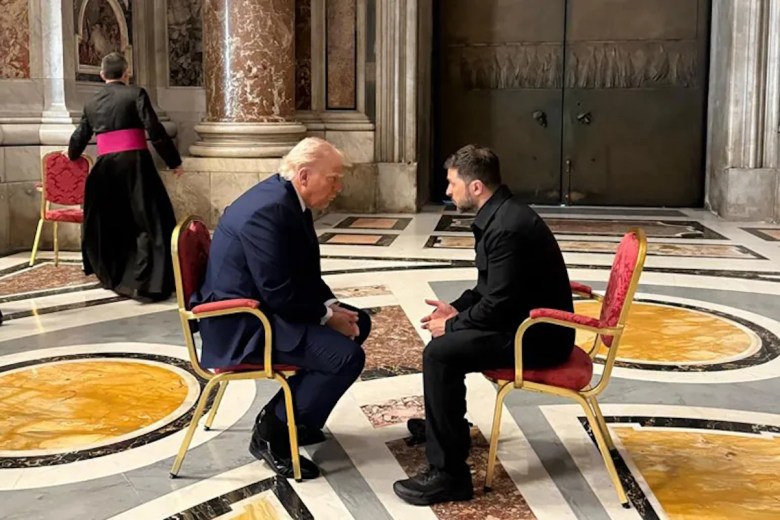
In a significant shift in diplomatic strategy, former President Donald Trump has unveiled a comprehensive 28-point peace plan aimed at resolving the ongoing conflict in Ukraine. The proposal, developed by Trump’s envoy Steve Witkoff, has sparked immediate backlash from the foreign policy establishment in Washington, which views the initiative as a departure from conventional military support and a return to a more pragmatic approach to international relations.
The urgency of this plan stems from the protracted nature of the war, which has resulted in hundreds of thousands of casualties and the expenditure of hundreds of billions of dollars from American taxpayers. Critics of the plan argue that it compromises Ukraine’s territorial integrity by recognizing Russian control over Crimea, Donetsk, and Luhansk. Yet, this perspective overlooks the stark realities on the ground where Russia has maintained control over Crimea since 2014 and where Ukraine now governs only approximately 15% of the contested eastern regions.
Contextualizing the Conflict
The debate surrounding Trump’s plan highlights the divide between idealism and realism in foreign policy. The administration’s critics, often labeled as neo-Wilsonian, express outrage at the prospect of Ukraine relinquishing aspirations for NATO membership. This demand, however, reflects a recognition of the geopolitical landscape that has persisted since the conflict began. The reluctance of Germany and France to endorse Ukraine’s NATO membership at the 2008 Bucharest summit demonstrated an understanding of Russia’s legitimate security concerns.
The reality is that NATO expansion into Ukraine has been a contentious issue, contributing to rising tensions that prompted the current conflict. Just as the United States would resist a hostile military presence on its borders, Russia’s opposition to NATO bases in Ukraine stems from similar security considerations.
Evaluating American Interests
A pivotal question arises: what are the actual American interests in Ukraine? While supporting democracy and self-determination are commendable values, they do not necessarily translate into concrete national interests. Ukraine is not a NATO ally, does not maintain a formal security relationship with the United States, and is not a significant trading partner. The only American interest at stake appears to be a commitment to global hegemony, which has historically led to costly military engagements.
The lack of a serious diplomatic effort over the years has compounded the situation. The foreign policy establishment has repeatedly promised that military support would lead to a Ukrainian victory, only to face mounting casualties and humanitarian crises as a result. The conflict has devastated Ukraine’s infrastructure and led to significant population displacement, while Russia has adapted to sanctions and strengthened its ties with China.
Trump’s peace plan, though imperfect, offers a potential pathway to de-escalation. It aims to freeze the conflict while providing some security guarantees, contrasting sharply with the current trajectory of ongoing warfare.
While the plan’s security guarantees may appear vague and its enforcement mechanisms unclear, it acknowledges the complexities of real-world diplomacy. The inherent messiness of peace agreements often leaves parties dissatisfied, but the alternative—a prolonged conflict with increasing casualties and economic ruin—poses a far greater risk.
The plan’s critics, who once assured a swift military resolution was achievable, now find themselves facing the harsh reality of a drawn-out conflict. Their failure to acknowledge the limitations of military solutions has come at the expense of the Ukrainian people, who have endured immense suffering.
Trump’s proposal reflects a willingness to prioritize American interests and a broader understanding of the geopolitical landscape. It suggests that effective leadership sometimes requires pursuing difficult compromises rather than adhering to unattainable ideals. While the foreign policy establishment may resist this shift, the potential to end the violence and pave the way for a more stable future should take precedence over rigid ideological commitments.
In the end, the question is not about the perfection of the agreement but about the necessity of ending the killing and fostering a pragmatic solution to a devastating conflict.

Takaichi’s Leadership: A New Era for Japan’s Indo-Pacific Strategy

Singapore Commits S$37 Billion to Boost Research and Innovation

Bayern’s Luis Diaz Sees Champions League Ban Cut to Two Matches

Vaccine Makers Alarmed by US Advisory Panel’s Hepatitis B Shift

Favorites Shine in 2026 World Cup Draw; Trump Receives Honor

Taiwan and US Experts Advocate Energy Resilience Strategies

Vaccine Makers Alarmed by US Panel’s Shift on Hepatitis B for Newborns

Draw Unveils Groups for 2026 World Cup in North America

Taiwan and US Collaborate to Enhance Energy Resilience

Kenvue Dismisses CEO Thibaut Mongon as Strategic Review Advances

Humanism Camp Engages 250 Youths in Summer Fest 2025

De Minaur Triumphs at Washington Open After Thrilling Comeback

Tupou and Daugunu Join First Nations Squad for Lions Clash

Colombian Senator Miguel Uribe Shows Signs of Recovery After Attack

ASEAN Gears Up for Historic Joint Meeting of Foreign and Economic Ministers

New Study Challenges Assumptions About Aging and Inflammation

Oil Prices Surge Following New EU Sanctions on Russia

Detaşe-Sabah Violin Ensemble Captivates at Gabala Music Festival
-
 Business5 months ago
Kenvue Dismisses CEO Thibaut Mongon as Strategic Review Advances
-
 Lifestyle4 months ago
Humanism Camp Engages 250 Youths in Summer Fest 2025
-
 Sports4 months ago
De Minaur Triumphs at Washington Open After Thrilling Comeback
-
 Sports5 months ago
Tupou and Daugunu Join First Nations Squad for Lions Clash
-
 Top Stories5 months ago
Colombian Senator Miguel Uribe Shows Signs of Recovery After Attack
-
 World5 months ago
ASEAN Gears Up for Historic Joint Meeting of Foreign and Economic Ministers
-
 Health4 months ago
New Study Challenges Assumptions About Aging and Inflammation
-
 Business5 months ago
Oil Prices Surge Following New EU Sanctions on Russia
-
 Entertainment4 months ago
Detaşe-Sabah Violin Ensemble Captivates at Gabala Music Festival
-

 Entertainment4 months ago
Baku Metro Extends Hours for Justin Timberlake Concert
-

 Top Stories5 months ago
Rethinking Singapore’s F&B Regulations Amid Business Closures
-

 Business5 months ago
U.S. House Approves Stablecoin Bill, Sends to Trump for Signature