
World
Thai Airways Welcomes First Airbus A321neo to Modern Fleet

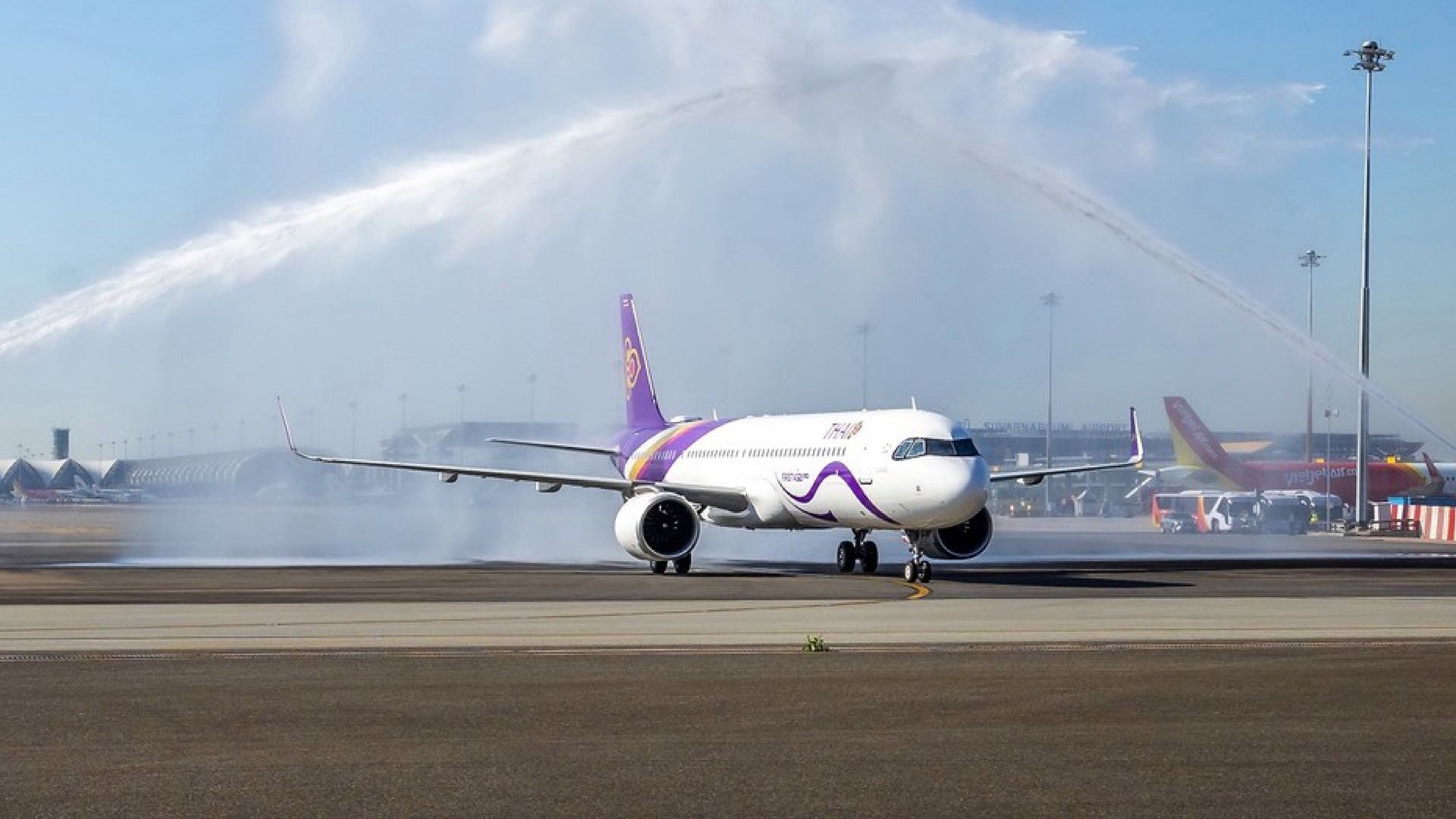
Thai Airways has officially added its first Airbus A321neo to its fleet, marking a significant milestone in the airline’s ongoing modernization efforts. The aircraft, registered as HS-TOA (serial number 12942), arrived in Bangkok on December 24, 2023, following a delivery flight from Airbus’ Hamburg Finkenwerder Airport with a stopover in Dubai. This addition is part of a larger plan to enhance the airline’s operational efficiency and competitiveness in the regional market.
Fleet Modernization Strategy
The introduction of the A321neo is a crucial step for Thai Airways, which aims to replace its aging fleet of A320-200 aircraft. The airline currently operates 20 of these older models, as reported by ch-aviation. Through a lease agreement with Irish aircraft lessor AerCap, Thai Airways will eventually operate a total of ten A321neo aircraft, with the remaining nine scheduled for delivery through 2028.
Chai Eamsiri, the Chief Executive Officer of Thai Airways, stated, “The arrival of Thai’s first Airbus A321neo marks a significant milestone in our efforts to modernise and enhance the efficiency of our fleet.” Eamsiri emphasized that this partnership with AerCap supports continual improvement in the airline’s global competitiveness.
The first A321neo was greeted with a traditional water salute upon arrival at Bangkok Suvarnabhumi Airport (BKK), highlighting the significance of this addition to the airline’s operations.
Planned Operations and Passenger Experience
Thai Airways plans to introduce the A321neo into commercial service by mid-January 2024, with initial flights expected to commence on January 22. The first route will connect Bangkok to Singapore’s Changi Airport, followed by services to Phuket International Airport and Indira Gandhi International Airport in Delhi.
The aircraft has been named ‘Boworrangsee’, translating to “Traditional Color” or “Royal Hue,” and features a two-class configuration designed to enhance passenger comfort. The Royal Silk Business Class comprises 16 lie-flat seats arranged in a staggered layout, providing privacy and additional space. In Economy Class, passengers will benefit from next-generation RECARO seating, improved ergonomics, personal in-flight entertainment screens, and adjustable headrests.
The A321neo promises to be not only economically advantageous by improving fuel efficiency—expected to reduce CO2 emissions by 20%—but also aims to enhance the overall travel experience for passengers on regional and short-haul international routes. With larger Airspace XL overhead storage bins and USB charging ports throughout the cabin, the new aircraft aligns with modern expectations for air travel.
Thai Airways, officially known as Thai Airways International plc, has a rich history dating back to its formation in 1961 through a joint venture with Scandinavian Airlines (SAS). As a founding member of the Star Alliance, the airline operates an extensive network of domestic and international flights from its Bangkok hub. Currently, Thai Airways operates around 80 aircraft and serves 51 international and 10 domestic destinations, with plans to expand its fleet to 143 aircraft by the end of the decade.
With the addition of the A321neo, Thai Airways is poised to strengthen its position in the competitive aviation market, focusing on modernization and customer satisfaction as it moves forward.

India Unveils Long-Range Hypersonic Missile Amid Regional Tensions

SK bioscience Launches Global Trial for Universal Sarbecovirus Vaccine

Senegal Coach Pape Thiaw Suspended and Fined After Final Disruption

PAS Denies Abolishing Chairman Post, Contradicts Muhyiddin’s Claim

Mbappé Critiques Real Madrid’s Effort After Benfica Defeat

Thailand’s December Factory Output Surges 2.52% Year-on-Year

Ishita Dutta Reveals Her Parenting Secret: Strong Coffee

Older GPs Express Concerns Over New Digital Health Record Mandate

Urban Jurgensen: A 252-Year Legacy Enters a New Era

Regina Martinez Breaks New Ground for Mexico in Cross-Country Skiing

South Korea’s Foreign Minister Cho Hyun to Visit China This Week

Starling Bank Plans Secondary Share Sale, Targeting $5.4 Billion Valuation

Munsang College Celebrates 100 Years with Grand Ceremony

PAS Aims to Expand Parliamentary Influence in Upcoming Election

De Minaur Triumphs at Washington Open After Thrilling Comeback

Kenvue Dismisses CEO Thibaut Mongon as Strategic Review Advances

Humanism Camp Engages 250 Youths in Summer Fest 2025

Colombian Senator Miguel Uribe Shows Signs of Recovery After Attack
-
 Sports3 months ago
Regina Martinez Breaks New Ground for Mexico in Cross-Country Skiing
-
 World8 months ago
South Korea’s Foreign Minister Cho Hyun to Visit China This Week
-
 Business8 months ago
Starling Bank Plans Secondary Share Sale, Targeting $5.4 Billion Valuation
-
 Top Stories8 months ago
Munsang College Celebrates 100 Years with Grand Ceremony
-
 World8 months ago
PAS Aims to Expand Parliamentary Influence in Upcoming Election
-
 Sports9 months ago
De Minaur Triumphs at Washington Open After Thrilling Comeback
-
 Business10 months ago
Kenvue Dismisses CEO Thibaut Mongon as Strategic Review Advances
-
 Lifestyle9 months ago
Humanism Camp Engages 250 Youths in Summer Fest 2025
-
 Top Stories10 months ago
Colombian Senator Miguel Uribe Shows Signs of Recovery After Attack
-

 Sports10 months ago
Tupou and Daugunu Join First Nations Squad for Lions Clash
-
 World10 months ago
ASEAN Gears Up for Historic Joint Meeting of Foreign and Economic Ministers
-

 Health9 months ago
New Study Challenges Assumptions About Aging and Inflammation