
World
China Balances Tech Self-Reliance and Consumer Growth Ahead of 2026

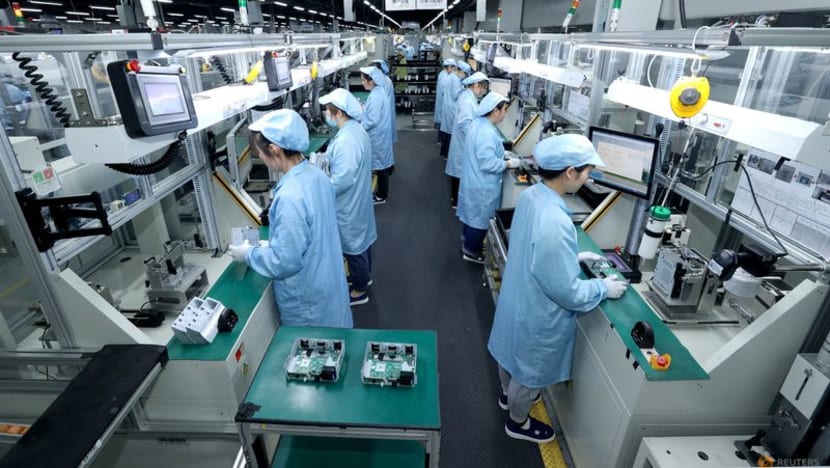
China is preparing for a significant economic shift as it approaches 2026, grappling with the complex challenge of achieving both technological self-reliance and stimulating consumer-driven growth. The Chinese government has acknowledged that boosting consumption must become a central pillar of its economic strategy. The recent communique from the Fourth Plenary Session, outlining the 15th Five-Year Plan (2026-2030), explicitly states: “New demand will lead new supply, and new supply will create new demand.” This represents a critical transition in which consumption is framed not merely as a result but as a key driver of economic growth.
During recent discussions with economists in Shanghai, many described this shift as a “long overdue rebalancing.” There is widespread agreement that the previous economic model has reached its limits. Yet, the challenge lies in the conflicting approaches required to meet both technological and consumer growth objectives. The allocation of China’s extensive national savings illustrates this tension.
Understanding the Economic Principles
To grasp the depth of this economic conundrum, two key principles must be considered. First, investment is inherently linked to demand. Companies invest in new facilities and equipment based on their expectations of future demand. If household spending or external demand remains weak, sustained investment growth becomes unattainable. Some argue that China’s investment boom has artificially generated demand through job creation and supplier spending. However, this perspective has significant shortcomings.
Debt-fueled investments face inevitable limits. As seen with China’s “ghost cities” and industrial overcapacity, constructing infrastructure that lacks real demand does not yield sustainable growth. The second principle is that incentives shape behavior, particularly within China’s state-controlled economy. For decades, local officials have been incentivized based on gross domestic product (GDP) growth and investment volumes, fostering an environment that prioritizes headline figures over sustainable development. This has resulted in a dual scenario of extensive infrastructure development and current issues of over-investment, hidden local government debt, and a declining property market.
Navigating Contradictory Goals
The contradiction at the heart of China’s economic strategy is stark: as economic conditions push Beijing towards a consumption-led growth model, escalating geopolitical competition drives the push for technological self-reliance. Achieving genuine consumption-led growth would require a significant policy shift, including a redistribution of wealth from state-owned enterprises and local governments to households.
This would necessitate a departure from state control over market dynamics and, crucially, an acceptance that households, rather than the state, should determine the flow of capital. Conversely, the push for technological self-reliance compels Beijing to support low interest rates, directing national savings towards advanced technologies, including artificial intelligence and space exploration. This strategy, while fostering innovation, simultaneously suppresses household income and consumption.
The Fourth Plenary Session has emphasized “high-level scientific and technological self-reliance” as a cornerstone of China’s modernization efforts. Initiatives seen at Shanghai’s Grand Neo Bay, such as the development of commercial carbon-monitoring satellites and reusable rockets, highlight China’s determination to innovate independently. These advancements underscore Beijing’s commitment to reducing reliance on foreign technology amid intensifying US-China competition.
The challenge lies in balancing these priorities. Substantial increases in household income are necessary to elevate consumption from approximately 41 percent of GDP to around 70 percent. Such a redistribution would inevitably impact government revenues and the profits of state enterprises that currently underpin technological initiatives. Local governments would need to pivot from infrastructure investment to social support, while state-owned firms would face pressure to distribute higher dividends to households instead of reinvesting in industrial capacity.
Despite the urgency of these changes, current measures to stimulate consumption often focus on absorbing excess supply rather than fundamentally enhancing household demand. Initiatives like trade-in subsidies may provide temporary boosts but lack the structural impact needed for lasting change.
The Road Ahead
As China looks towards the next five years, the critical question remains whether it can effectively pursue both technological advancement and consumption growth without undermining either goal. The most probable scenario involves a continued commitment to technological self-reliance framed as paramount, alongside incremental measures to boost consumption that fall short of transformative impact.
The implications for global markets are profound. A successful rebalancing of China’s economy could alter trade dynamics and investment patterns, moving away from a reliance on exports. Conversely, failure to harmonize these objectives may lead to policy fluctuations, fostering uncertainty regarding the future of the world’s second-largest economy.
The 15th Five-Year Plan clearly indicates that Beijing desires a consumption-driven growth model. The pressing question is whether it can achieve this while pursuing technological supremacy. The outcome of this balancing act will significantly influence global economic stability through 2030.
Diana Choyleva is the founder and chief economist of Enodo Economics and a senior fellow at the Asia Society Policy Institute’s Center for China Analysis.

Puripol Boonson Breaks 10s Barrier in Historic SEA Games Sprint

AC Milan Eyes Scudetto Momentum as Rivals Face Tough Away Matches

SpaceX Plans IPO Valued Over $1 Trillion, Investors Anticipate Surge

Shreya Ghoshal and Badshah Spark Fun with Samosa Challenge on Indian Idol 16

Indivumed and University of Rochester Expand Cancer Research Alliance

Chagee Unveils Cocoa Oolong Milk Tea with Hello Kitty Collaboration

Ken Chu Addresses Absence from F4 Reunion Tour Amid Controversy

Indivumed and University of Rochester Unite to Advance Cancer Research

Chagee Partners with Hello Kitty for Festive Cocoa Milk Tea Launch

Humanism Camp Engages 250 Youths in Summer Fest 2025

Kenvue Dismisses CEO Thibaut Mongon as Strategic Review Advances

De Minaur Triumphs at Washington Open After Thrilling Comeback

Tupou and Daugunu Join First Nations Squad for Lions Clash

Colombian Senator Miguel Uribe Shows Signs of Recovery After Attack

ASEAN Gears Up for Historic Joint Meeting of Foreign and Economic Ministers

New Study Challenges Assumptions About Aging and Inflammation

Oil Prices Surge Following New EU Sanctions on Russia

Detaşe-Sabah Violin Ensemble Captivates at Gabala Music Festival
-
 Lifestyle5 months ago
Humanism Camp Engages 250 Youths in Summer Fest 2025
-
 Business5 months ago
Kenvue Dismisses CEO Thibaut Mongon as Strategic Review Advances
-
 Sports5 months ago
De Minaur Triumphs at Washington Open After Thrilling Comeback
-
 Sports5 months ago
Tupou and Daugunu Join First Nations Squad for Lions Clash
-
 Top Stories5 months ago
Colombian Senator Miguel Uribe Shows Signs of Recovery After Attack
-
 World5 months ago
ASEAN Gears Up for Historic Joint Meeting of Foreign and Economic Ministers
-
 Health5 months ago
New Study Challenges Assumptions About Aging and Inflammation
-
 Business5 months ago
Oil Prices Surge Following New EU Sanctions on Russia
-
 Entertainment5 months ago
Detaşe-Sabah Violin Ensemble Captivates at Gabala Music Festival
-

 Entertainment5 months ago
Baku Metro Extends Hours for Justin Timberlake Concert
-

 Business3 months ago
Starling Bank Plans Secondary Share Sale, Targeting $5.4 Billion Valuation
-
 World3 months ago
South Korea’s Foreign Minister Cho Hyun to Visit China This Week