
Top Stories
Netanyahu Proposes Phased Troop Withdrawal If Hezbollah Disarmed


Israeli Prime Minister Benjamin Netanyahu announced on August 25, 2023, that Israel is willing to support Lebanon’s efforts to disarm the militant group Hezbollah. In a statement, he proposed a “phased” withdrawal of Israeli troops from southern Lebanon, contingent upon the Lebanese government’s commitment to seize Hezbollah’s weapons. This development follows the conflict between Israel and Hezbollah that erupted last year.
Lebanon’s Commitment to Disarmament
Since the end of the war, the Lebanese army has been actively deploying in the southern regions of the country and dismantling Hezbollah’s military infrastructure. The Lebanese Cabinet has recently instructed the army to formulate a disarmament plan by the end of this year. The challenge of disarming Hezbollah remains contentious, as the group was the only faction to retain its weapons following Lebanon’s 1975 to 1990 civil war.
Despite a ceasefire established in November 2022, which brought an end to hostilities, Israel has continued to conduct strikes against Lebanon, asserting that such actions will persist until Hezbollah is fully disarmed. Israeli forces currently occupy five strategic areas in southern Lebanon, which they deem essential for national security.
Netanyahu expressed Israel’s readiness to collaborate with Lebanon. “Israel stands ready to support Lebanon in its efforts to disarm Hezbollah and to work together towards a more secure and stable future for both nations,” he stated in a release from his office. He acknowledged the “significant step” taken by the Lebanese government and indicated that Israel would consider “reciprocal measures,” including a gradual reduction of the Israel Defense Forces (IDF) presence in collaboration with a United States-led security framework.
International and Local Reactions
Earlier in August, Hezbollah leader Naim Qassem responded defiantly to the disarmament initiative, pledging to resist the Lebanese government’s plans. Meanwhile, U.S. envoy Tom Barrack, during his discussions with Lebanese officials in Beirut, emphasized the need for Israel to adhere to its commitments under the ceasefire. “There’s always a step-by-step approach, but I think the Lebanese government has done their part. They’ve taken the first step. Now what we need is Israel to comply,” Barrack stated.
As these diplomatic discussions unfold, they coincide with an upcoming vote by the United Nations Security Council regarding the future of the UN Interim Force in Lebanon (UNIFIL). The force, established in 1978 to maintain peace between Israel and Lebanon, faces continued opposition from the U.S. and Israel. A French-drafted resolution, scheduled for a vote on the same day as Netanyahu’s announcement, seeks to extend UNIFIL’s mandate for an additional year, maintaining its presence until August 31, 2026, while preparations for withdrawal are finalized.
The situation remains fluid as both Israel and Lebanon navigate their respective security concerns, and the role of Hezbollah continues to be a significant factor in regional stability.

India Unveils Long-Range Hypersonic Missile Amid Regional Tensions

SK bioscience Launches Global Trial for Universal Sarbecovirus Vaccine

Senegal Coach Pape Thiaw Suspended and Fined After Final Disruption

PAS Denies Abolishing Chairman Post, Contradicts Muhyiddin’s Claim

Mbappé Critiques Real Madrid’s Effort After Benfica Defeat

Thailand’s December Factory Output Surges 2.52% Year-on-Year

Ishita Dutta Reveals Her Parenting Secret: Strong Coffee

Older GPs Express Concerns Over New Digital Health Record Mandate

Urban Jurgensen: A 252-Year Legacy Enters a New Era

Regina Martinez Breaks New Ground for Mexico in Cross-Country Skiing

South Korea’s Foreign Minister Cho Hyun to Visit China This Week

Starling Bank Plans Secondary Share Sale, Targeting $5.4 Billion Valuation

Munsang College Celebrates 100 Years with Grand Ceremony

PAS Aims to Expand Parliamentary Influence in Upcoming Election

De Minaur Triumphs at Washington Open After Thrilling Comeback

Kenvue Dismisses CEO Thibaut Mongon as Strategic Review Advances

Humanism Camp Engages 250 Youths in Summer Fest 2025

Colombian Senator Miguel Uribe Shows Signs of Recovery After Attack
-
 Sports2 months ago
Regina Martinez Breaks New Ground for Mexico in Cross-Country Skiing
-
 World6 months ago
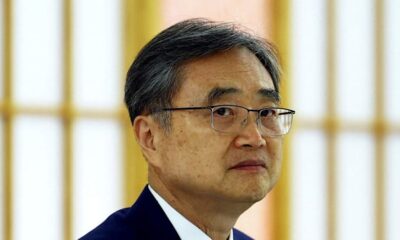
South Korea’s Foreign Minister Cho Hyun to Visit China This Week
-
 Business7 months ago
Starling Bank Plans Secondary Share Sale, Targeting $5.4 Billion Valuation
-
 Top Stories7 months ago
Munsang College Celebrates 100 Years with Grand Ceremony
-
 World6 months ago
PAS Aims to Expand Parliamentary Influence in Upcoming Election
-
 Sports8 months ago
De Minaur Triumphs at Washington Open After Thrilling Comeback
-
 Business8 months ago
Kenvue Dismisses CEO Thibaut Mongon as Strategic Review Advances
-
 Lifestyle8 months ago
Humanism Camp Engages 250 Youths in Summer Fest 2025
-
 Top Stories8 months ago
Colombian Senator Miguel Uribe Shows Signs of Recovery After Attack
-

 Sports8 months ago
Tupou and Daugunu Join First Nations Squad for Lions Clash
-

 World8 months ago
ASEAN Gears Up for Historic Joint Meeting of Foreign and Economic Ministers
-

 Health8 months ago
New Study Challenges Assumptions About Aging and Inflammation