
Science
Universities Innovate to End Animal Testing with New Technologies

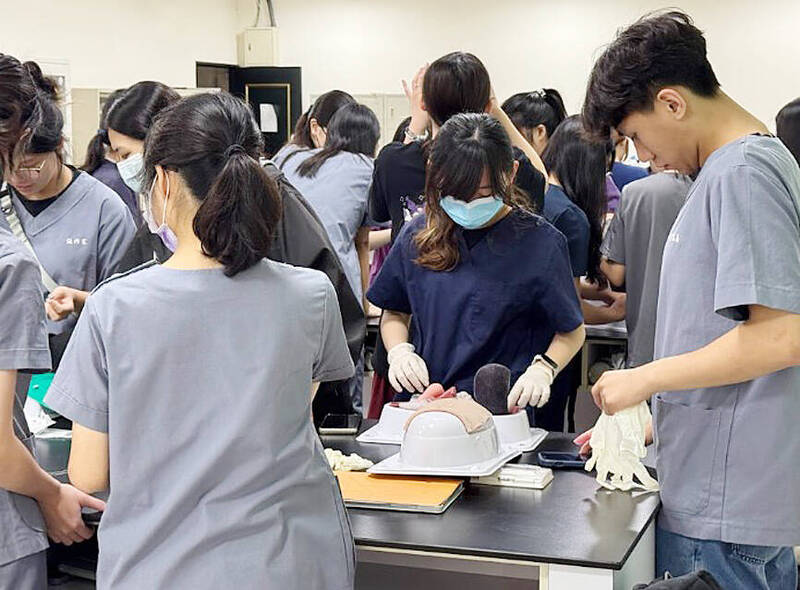
A significant initiative in Taiwan is underway to reduce reliance on animal testing in medical research. The Ministry of Education has launched a program that funds educational courses aimed at developing technologies that can replace the use of animals in testing. This program has successfully provided funding for 77 courses and trained approximately 2,600 students across six universities.
The initiative emphasizes the development of non-animal alternatives, such as 3D mapping, digital imaging, virtual and augmented reality, and organ-on-a-chip technologies. These advancements are crucial as many countries strive to address the ethical and scientific challenges posed by traditional animal testing methods. In 2023 alone, Taiwan reported the use of 17.95 million laboratory animals, according to a report from the Ministry of Agriculture released in October 2022. Excluding embryos, this number was over 1.12 million, marking a decrease of 3.45 percent from the previous year.
Collaboration Across Universities
The program, which runs until 2027, is headquartered at National Chung Hsing University and includes partnerships with National Taiwan University, National Central University, National Cheng Kung University, National Pingtung University of Science and Technology, and National Chiayi University. According to Chang Pao-li, Director of the Department of Information and Technology Education, the program focuses on the “Three Rs” of animal experimentation: replacement, reduction, and refinement.
The funding allows these universities to offer courses that teach alternative methods to animal testing and the ethical considerations surrounding it. Students are also supported in finding internships related to these fields. For instance, one course explores how virtual and augmented reality can effectively replicate surgical procedures without the necessity of live animals, while another trains students in culturing in vitro cell models.
Global Trends and Innovations
The growing emphasis on animal welfare has become a focal point worldwide. Wu Pei-hua, a team leader at the National Center for Biomodels, noted that regulations and measures to reduce animal testing are more prevalent in Europe and the United States compared to Taiwan. In 2022, the Executive Yuan established an inter-agency platform aimed at advancing technologies that can replace animal testing while implementing the Three Rs.
Testing new drugs traditionally requires substantial numbers of animals for control and experimentation, often involving around 72 animals per drug to determine safe dosages. Previously, safety tests for cosmetics and skincare products relied heavily on live animals like rabbits, but recent advancements now utilize skin tissue grown through cell cultures, paving the way for organ-on-a-chip technologies.
The National Center for Biomodels is currently utilizing liver organ chips from the United States, which employ human liver cells to provide a more accurate representation of human responses than traditional lab mice. Despite their advancements, these chips do not fully replicate the responses of an entire organism. Consequently, many alternative testing methods integrate additional technologies to enhance accuracy.
This initiative represents a pivotal shift in Taiwan’s approach to medical research, aligning with global trends towards more humane and scientifically valid testing methods. As the program continues to develop, it may pave the way for broader acceptance and implementation of alternative testing solutions, ultimately reducing the need for animal testing in the future.

Pritam Singh Issues Apology for Contemptuous Remarks on CNA

United Imaging Intelligence Unveils AI Innovations at RSNA 2025

Josh Hazlewood Aims for International Comeback After Injury Setback

US Stocks Decline as AI Sector Faces Investor Shift

Thailand and Cambodia Agree to Cease Fighting Following Turmoil

TSMC Investment Surge: Potential US$200 Billion and 30,000 Jobs

US Stocks Decline as AI Sector Faces Growing Pressure

Stocks Decline Sharply Amid Tech Concerns and Economic Signals

Stocks Plummet as Tech Concerns Persist; Dollar Rises Slightly

Kenvue Dismisses CEO Thibaut Mongon as Strategic Review Advances

Humanism Camp Engages 250 Youths in Summer Fest 2025

De Minaur Triumphs at Washington Open After Thrilling Comeback

Tupou and Daugunu Join First Nations Squad for Lions Clash

Colombian Senator Miguel Uribe Shows Signs of Recovery After Attack

New Study Challenges Assumptions About Aging and Inflammation

ASEAN Gears Up for Historic Joint Meeting of Foreign and Economic Ministers

Oil Prices Surge Following New EU Sanctions on Russia

Detaşe-Sabah Violin Ensemble Captivates at Gabala Music Festival
-
 Business5 months ago
Kenvue Dismisses CEO Thibaut Mongon as Strategic Review Advances
-
 Lifestyle5 months ago
Humanism Camp Engages 250 Youths in Summer Fest 2025
-
 Sports5 months ago
De Minaur Triumphs at Washington Open After Thrilling Comeback
-
 Sports5 months ago
Tupou and Daugunu Join First Nations Squad for Lions Clash
-
 Top Stories5 months ago
Colombian Senator Miguel Uribe Shows Signs of Recovery After Attack
-
 Health5 months ago
New Study Challenges Assumptions About Aging and Inflammation
-
 World5 months ago
ASEAN Gears Up for Historic Joint Meeting of Foreign and Economic Ministers
-
 Business5 months ago
Oil Prices Surge Following New EU Sanctions on Russia
-
 Entertainment5 months ago
Detaşe-Sabah Violin Ensemble Captivates at Gabala Music Festival
-
 World3 months ago
South Korea’s Foreign Minister Cho Hyun to Visit China This Week
-

 Business3 months ago
Starling Bank Plans Secondary Share Sale, Targeting $5.4 Billion Valuation
-

 Entertainment5 months ago
Baku Metro Extends Hours for Justin Timberlake Concert