
Politics
South Korea Moves Towards Nuclear Submarines Amid Geopolitical Tensions

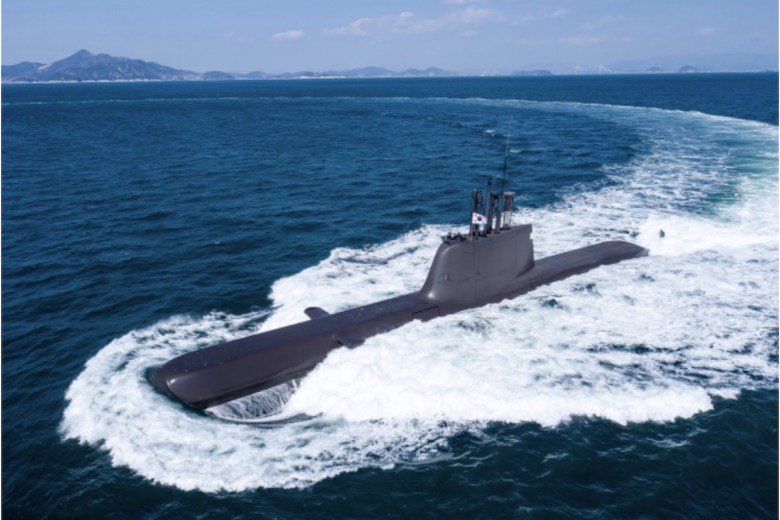
The recent decision by the United States to allow South Korea to acquire nuclear-powered submarines marks a significant shift in military strategy on the Korean Peninsula. This move could alter the regional balance of power and influence broader security dynamics across Asia. South Korean nuclear submarines are anticipated to intensify the arms race in the region and may challenge established norms under the Nuclear Nonproliferation Treaty (NPT).
During a meeting at the Asia-Pacific Economic Cooperation (APEC) summit in late October 2025, President Donald Trump confirmed his administration’s approval of South Korea’s request for nuclear-powered attack submarines. The White House stated that the United States would collaborate closely with South Korea on this initiative, which includes paths to secure nuclear fuel. In a post on his Truth Social platform, Trump highlighted that the submarines would be built in a former US shipyard in Philadelphia, now operated by the South Korean conglomerate Hanwa. He stated, “I have given them approval to build a nuclear-powered submarine, rather than the old-fashioned, and far less nimble, diesel-powered submarines that they have now.”
The motivations behind South Korea’s pursuit of nuclear submarines are influenced by ongoing threats from North Korea’s nuclear arsenal and missile capabilities. The South Korean government views enhanced naval strength as a necessary counterbalance, potentially reducing its reliance on the US “nuclear umbrella.” Currently, South Korea operates 21 conventional submarines, including three that are capable of launching ballistic missiles. Most of these submarines were purchased from Germany, and some have been constructed domestically since the early 1990s through partnerships with manufacturers such as Daewoo and Hyundai.
South Korea’s Navy has plans to expand its submarine fleet significantly. Since 2017, there have been discussions about equipping new attack submarines with cruise missiles similar to the Tomahawk. The proposed KSS-3 submarines would feature nuclear propulsion systems. Notably, joining the ranks of nations such as the United States, United Kingdom, France, Russia, India, and Australia would enhance South Korea’s military prestige. However, this ambition could provoke neighboring countries, including North Korea, Pakistan, Japan, and Iran, to accelerate their own nuclear submarine aspirations.
Despite the allure of nuclear submarines, experts suggest that non-nuclear options may be more advantageous for South Korea. An alternative could be pursuing an agreement similar to the AUKUS pact, which facilitates cooperation between Australia, the United Kingdom, and the United States. South Korea might also consider leasing arrangements as India has done with its nuclear submarines, which were rented from the Soviet Union and Russia. South Korea possesses the technological capability to develop naval propulsion reactors, and while technical support from the United States could be beneficial, it is not strictly necessary.
One key consideration is the type of nuclear fuel used. South Korea might explore using low enriched uranium (LEU), which has been employed by French and Chinese nuclear programs, rather than the highly enriched uranium (HEU) used by the US and UK. This choice could help mitigate some concerns regarding nuclear proliferation.
The potential construction of nuclear submarines raises significant geopolitical implications. North Korea is likely to perceive South Korea’s advancements as a direct challenge, which could lead to heightened tensions in the region. Additionally, China may view this development with alarm, potentially prompting a regional arms race that destabilizes the current balance of power.
As a non-nuclear weapons state under the NPT, South Korea is permitted to utilize certain fissile materials for military purposes, provided they remain under International Atomic Energy Agency (IAEA) safeguards. The IAEA has not yet established a framework suitable for monitoring military uses of materials in non-nuclear weapons states. Critics argue that US support for South Korean nuclear submarines could undermine the NPT, with geopolitical adversaries like China and Russia likely to leverage this situation to question the integrity of nonproliferation efforts.
The logistical challenges of constructing nuclear submarines in Philadelphia are considerable. The shipyard has never operated as a nuclear facility, and significant regulatory and technical hurdles would need to be addressed before it could support such construction. It is more probable that any future nuclear submarines for South Korea would be built within the country, utilizing existing shipyards that can be adapted for nuclear capabilities.
Another obstacle lies in the US-South Korea 123 Agreement, which governs civilian nuclear cooperation. Modifications to this agreement would be necessary to facilitate the transfer of nuclear fuel and technology for military purposes. Previous attempts to amend similar agreements, such as those with Saudi Arabia, have faced significant political opposition in the US Congress.
As discussions advance, it is clear that South Korea’s pursuit of nuclear submarines is fraught with both opportunities and challenges. The implications of this decision will reverberate across the region, affecting not only military strategy but also the broader framework of international security and nuclear nonproliferation.

Pritam Singh Issues Apology for Contemptuous Remarks on CNA

United Imaging Intelligence Unveils AI Innovations at RSNA 2025

Josh Hazlewood Aims for International Comeback After Injury Setback

US Stocks Decline as AI Sector Faces Investor Shift

Thailand and Cambodia Agree to Cease Fighting Following Turmoil

TSMC Investment Surge: Potential US$200 Billion and 30,000 Jobs

US Stocks Decline as AI Sector Faces Growing Pressure

Stocks Decline Sharply Amid Tech Concerns and Economic Signals

Stocks Plummet as Tech Concerns Persist; Dollar Rises Slightly

Kenvue Dismisses CEO Thibaut Mongon as Strategic Review Advances

Humanism Camp Engages 250 Youths in Summer Fest 2025

De Minaur Triumphs at Washington Open After Thrilling Comeback

Tupou and Daugunu Join First Nations Squad for Lions Clash

Colombian Senator Miguel Uribe Shows Signs of Recovery After Attack

New Study Challenges Assumptions About Aging and Inflammation

ASEAN Gears Up for Historic Joint Meeting of Foreign and Economic Ministers

Oil Prices Surge Following New EU Sanctions on Russia

Detaşe-Sabah Violin Ensemble Captivates at Gabala Music Festival
-
 Business5 months ago
Kenvue Dismisses CEO Thibaut Mongon as Strategic Review Advances
-
 Lifestyle5 months ago
Humanism Camp Engages 250 Youths in Summer Fest 2025
-
 Sports5 months ago
De Minaur Triumphs at Washington Open After Thrilling Comeback
-
 Sports5 months ago
Tupou and Daugunu Join First Nations Squad for Lions Clash
-
 Top Stories5 months ago
Colombian Senator Miguel Uribe Shows Signs of Recovery After Attack
-
 Health5 months ago
New Study Challenges Assumptions About Aging and Inflammation
-
 World5 months ago
ASEAN Gears Up for Historic Joint Meeting of Foreign and Economic Ministers
-
 Business5 months ago
Oil Prices Surge Following New EU Sanctions on Russia
-
 Entertainment5 months ago
Detaşe-Sabah Violin Ensemble Captivates at Gabala Music Festival
-
 World3 months ago
South Korea’s Foreign Minister Cho Hyun to Visit China This Week
-

 Business3 months ago
Starling Bank Plans Secondary Share Sale, Targeting $5.4 Billion Valuation
-

 Entertainment5 months ago
Baku Metro Extends Hours for Justin Timberlake Concert