
Politics
NATO States Create Minefields to Counter Russian Threat

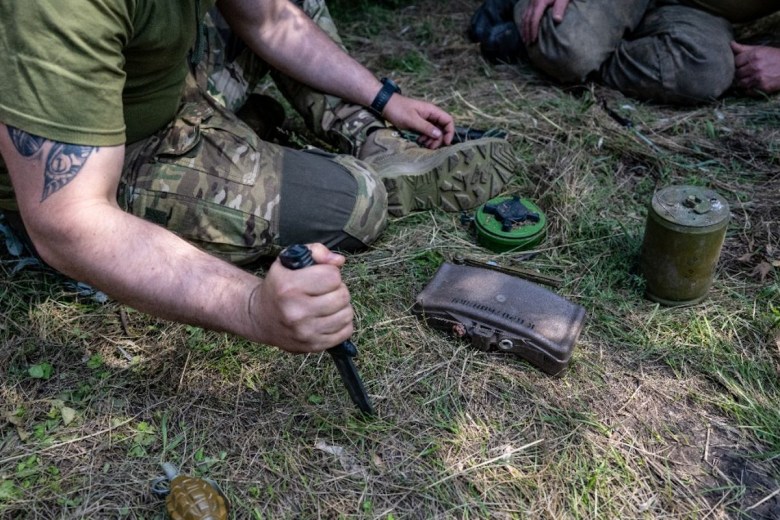
Five NATO countries bordering Russia and its ally, Belarus, have decided to withdraw from the Ottawa Treaty of 1997, which prohibits the use of anti-personnel landmines. These nations—Poland, Finland, Lithuania, Estonia, and Latvia—plan to establish a minefield extending approximately 2,000 miles as part of a defensive strategy against potential aggression from Russia.
This shift comes in response to what these states perceive as an escalating threat from Russia, as well as the demonstrated effectiveness of both anti-personnel (AP) and anti-tank (AT) landmines in the ongoing conflict in Ukraine. While AP mines are designed to detonate upon human contact, AT mines target vehicles and are not covered by the Ottawa Treaty, allowing for their continued use by member states.
Impact of Landmines in Modern Warfare
Landmines have proven to be effective defensive tools, particularly in the context of the Ukraine war. Shortly after Russia’s large-scale invasion in February 2022, Ukrainian forces utilized Soviet-era AT mines to halt the advance of Russian armored columns towards Kyiv. The use of these mines disrupted enemy movements, providing Ukrainian troops crucial time to fortify their defenses.
As the conflict progressed, the presence of extensive minefields forced both Ukrainian and Russian forces to adapt their strategies. The tactical emphasis shifted from rapid maneuvers to more attritional approaches, where artillery fire became a determining factor in success. Ukrainian forces have integrated minefields into their “fortress belt” strategy across the Donbas region.
Despite having signed the Ottawa Treaty in 2005, Ukraine officially withdrew from the agreement in June 2023. President Volodymyr Zelensky defended the decision, stating that “anti-personnel mines… very often have no alternative as a tool for defense.” This underscores the complex ethical considerations surrounding the use of landmines in contemporary warfare.
Regional Responses and Controversy
The decision by these five NATO states to abandon the Ottawa Treaty has drawn criticism from human rights organizations. They argue that the withdrawal undermines humanitarian efforts to eliminate weapons that pose a long-term threat to civilian populations. While the UK remains a signatory to the treaty, the United States, Russia, and China did not sign it initially.
Russia, possessing what is believed to be the world’s largest stockpile of AP mines—estimated at 26.5 million—has also employed these weapons in the conflict. Zelensky has accused Russia of using AP mines in a particularly sinister manner, including reports of booby-trapping deceased soldiers.
The evolution of mine warfare has also been influenced by technological advancements. Drones are now being utilized to lay mines more efficiently, changing the landscape of military engagement. The combination of traditional landmines with modern technology highlights their continuing relevance in current and future conflicts.
With the ongoing war in Ukraine characterized by static frontlines and a focus on defense, the recent decisions by these NATO countries reflect a significant shift in military strategy. The reintroduction of landmines is viewed as essential for enhancing their defensive capabilities, reinforcing the notion that even low-tech solutions can play a pivotal role in modern warfare.
As these nations move forward, they are not only seeking to procure AP mines domestically but are also looking to source them from the United States. The implications of these developments could reshape the dynamics of military engagement in Europe and beyond, as countries reassess their defense strategies in light of emerging threats.

Tisca Chopra Takes the Helm: Directs ‘Saali Mohabbat’ Debut

Dr. Richa Kumar Introduces Innovative Rhinoplasty Treatment in Delhi

Trump Awarded Inaugural FIFA Peace Prize for Global Mediation Efforts

Drashti Dhami Showcases Intense Workout Routine on Instagram

Experts Assess Risks of Occasional Binge Drinking During Holidays

Dr. Sandeep Marwah to Lead 18th Global Film Festival Noida 2025

Japan’s Missile Sale to Boost Philippines’ Defense Strategy

Singapore Commits S$37 Billion to Research and Innovation Over 5 Years

Australia Extends Lead to 116 Runs in Second Ashes Test

Kenvue Dismisses CEO Thibaut Mongon as Strategic Review Advances

Humanism Camp Engages 250 Youths in Summer Fest 2025

De Minaur Triumphs at Washington Open After Thrilling Comeback

Tupou and Daugunu Join First Nations Squad for Lions Clash

Colombian Senator Miguel Uribe Shows Signs of Recovery After Attack

ASEAN Gears Up for Historic Joint Meeting of Foreign and Economic Ministers

New Study Challenges Assumptions About Aging and Inflammation

Oil Prices Surge Following New EU Sanctions on Russia

Detaşe-Sabah Violin Ensemble Captivates at Gabala Music Festival
-
 Business5 months ago
Kenvue Dismisses CEO Thibaut Mongon as Strategic Review Advances
-
 Lifestyle4 months ago
Humanism Camp Engages 250 Youths in Summer Fest 2025
-
 Sports4 months ago
De Minaur Triumphs at Washington Open After Thrilling Comeback
-
 Sports5 months ago
Tupou and Daugunu Join First Nations Squad for Lions Clash
-
 Top Stories5 months ago
Colombian Senator Miguel Uribe Shows Signs of Recovery After Attack
-
 World5 months ago
ASEAN Gears Up for Historic Joint Meeting of Foreign and Economic Ministers
-
 Health4 months ago
New Study Challenges Assumptions About Aging and Inflammation
-
 Business5 months ago
Oil Prices Surge Following New EU Sanctions on Russia
-
 Entertainment4 months ago
Detaşe-Sabah Violin Ensemble Captivates at Gabala Music Festival
-

 Entertainment4 months ago
Baku Metro Extends Hours for Justin Timberlake Concert
-

 Top Stories5 months ago
Rethinking Singapore’s F&B Regulations Amid Business Closures
-

 Business5 months ago
U.S. House Approves Stablecoin Bill, Sends to Trump for Signature