
World
Bangladesh Officials Link Foreign Arms to Deadly Clashes in Hills

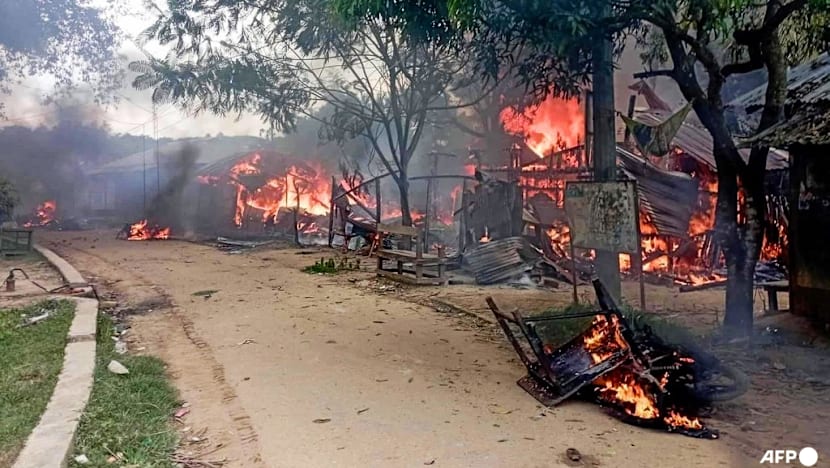
Violence in Bangladesh’s southeastern border region has claimed the lives of three individuals, prompting officials to suggest that foreign weapons are exacerbating tensions. Clashes erupted in the Chittagong Hill Tracts on September 29, 2023, following a protest against the alleged gang rape of an Indigenous woman on September 23.
According to Jahangir Alam Chowdhury, the chief of Bangladesh’s interior ministry, the unrest stems from arms supplied by “outside the country.” He stated that these weapons are falling into the hands of “miscreants firing from the hilltops.” Chowdhury did not elaborate on the sources of these arms.
Protests and Military Responses
On Sunday, protesters gathered in Khagrachari district, expressing anger over the alleged sexual assault. A student protester described the scene to AFP, stating, “We had been demonstrating peacefully, restricted to rallies and road blockades.” The situation escalated when security forces intervened, leading to gunfire that resulted in at least three deaths and numerous injuries.
In contrast, the military has denied any wrongdoing. The Inter-Services Public Relations (ISPR), the army’s publicity wing, accused the United People’s Democratic Front (UPDF), a rebel faction that rejected a 1997 peace agreement, of instigating the violence. The UPDF continues to demand greater autonomy for Indigenous communities in the region.
The Chittagong Hill Tracts has historically been a contentious area, with ongoing disputes between Indigenous groups and Bengali settlers over land and resources. This latest incident adds to the region’s legacy of conflict and raises concerns over the potential for further unrest.
Political Context and Future Challenges
This resurgence of violence complicates the political landscape for interim leader Muhammad Yunus, who is tasked with guiding the nation toward elections scheduled for February 2024. This electoral process marks the first since a significant uprising forced former Prime Minister Sheikh Hasina to seek refuge in India last year, resulting in strained relations between Dhaka and New Delhi.
As the situation develops, the government faces the challenge of addressing not only the immediate violence but also the underlying issues that have long fueled tensions in the region. The international community is closely monitoring developments in Bangladesh, where stability is crucial for the country’s future.

Tisca Chopra Takes the Helm: Directs ‘Saali Mohabbat’ Debut

Dr. Richa Kumar Introduces Innovative Rhinoplasty Treatment in Delhi

Trump Awarded Inaugural FIFA Peace Prize for Global Mediation Efforts

Drashti Dhami Showcases Intense Workout Routine on Instagram

Experts Assess Risks of Occasional Binge Drinking During Holidays

Dr. Sandeep Marwah to Lead 18th Global Film Festival Noida 2025

Japan’s Missile Sale to Boost Philippines’ Defense Strategy

Singapore Commits S$37 Billion to Research and Innovation Over 5 Years

Australia Extends Lead to 116 Runs in Second Ashes Test

Kenvue Dismisses CEO Thibaut Mongon as Strategic Review Advances

Humanism Camp Engages 250 Youths in Summer Fest 2025

De Minaur Triumphs at Washington Open After Thrilling Comeback

Tupou and Daugunu Join First Nations Squad for Lions Clash

Colombian Senator Miguel Uribe Shows Signs of Recovery After Attack

ASEAN Gears Up for Historic Joint Meeting of Foreign and Economic Ministers

New Study Challenges Assumptions About Aging and Inflammation

Oil Prices Surge Following New EU Sanctions on Russia

Detaşe-Sabah Violin Ensemble Captivates at Gabala Music Festival
-
 Business5 months ago
Kenvue Dismisses CEO Thibaut Mongon as Strategic Review Advances
-
 Lifestyle4 months ago
Humanism Camp Engages 250 Youths in Summer Fest 2025
-
 Sports4 months ago
De Minaur Triumphs at Washington Open After Thrilling Comeback
-
 Sports5 months ago
Tupou and Daugunu Join First Nations Squad for Lions Clash
-
 Top Stories5 months ago
Colombian Senator Miguel Uribe Shows Signs of Recovery After Attack
-
 World5 months ago
ASEAN Gears Up for Historic Joint Meeting of Foreign and Economic Ministers
-
 Health4 months ago
New Study Challenges Assumptions About Aging and Inflammation
-
 Business5 months ago
Oil Prices Surge Following New EU Sanctions on Russia
-
 Entertainment4 months ago
Detaşe-Sabah Violin Ensemble Captivates at Gabala Music Festival
-

 Entertainment4 months ago
Baku Metro Extends Hours for Justin Timberlake Concert
-

 Top Stories5 months ago
Rethinking Singapore’s F&B Regulations Amid Business Closures
-

 Business5 months ago
U.S. House Approves Stablecoin Bill, Sends to Trump for Signature