
World
Trump Raises Tariffs on South Korean Imports to 25 Percent

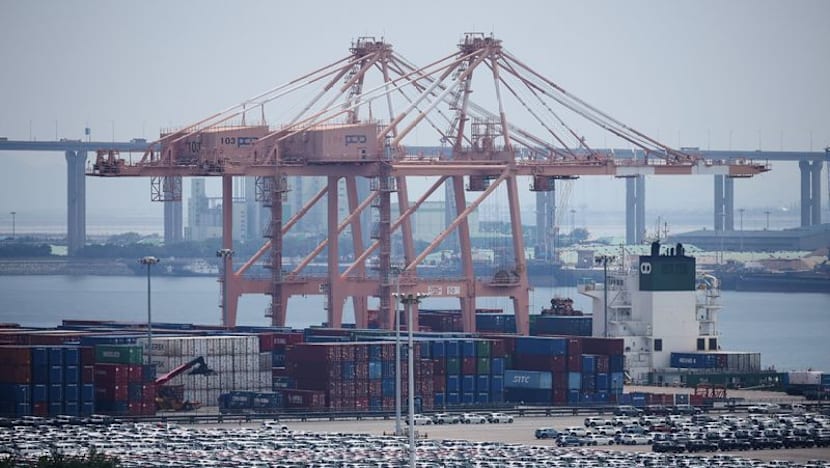
US President Donald Trump announced on January 26, 2024, that he will increase tariffs on certain imports from South Korea to 25 percent. The decision affects products in sectors such as automobiles, lumber, and pharmaceuticals. Trump accused South Korea’s legislature of failing to uphold the terms of their trade agreement with the United States.
In a post on social media, Trump stated, “South Korea’s Legislature is not living up to its deal with the United States.” He emphasized that due to what he termed a lack of action from the Korean government, he is raising tariffs on various goods from 15 percent to 25 percent. This escalation has raised eyebrows and concerns regarding the impact on trade relations between the two allies.
The Blue House, South Korea’s presidential office, did not provide an immediate response to Trump’s announcement. South Korea has been actively working to implement a trade deal finalized in November 2023, which aimed to reduce tariffs imposed by the United States on South Korean exports.
Recently, South Korea has also been in discussions with Washington regarding a probe into the US-based e-commerce company Coupang, following a significant data leak incident. This investigation adds another layer of complexity to the diplomatic and trade relations between the two nations.
Trump’s administration has frequently leveraged tariffs as a tool in its foreign policy, particularly during his second term in office. Economists have expressed concerns about the potential repercussions of this approach on both economies, citing the risks of trade wars and increased costs for consumers.
As this situation unfolds, the policy may face scrutiny in light of an ongoing case at the US Supreme Court. The court is expected to address various aspects of trade policy that have been contentious under the current administration, further complicating the landscape of US-South Korea trade relations.
The ramifications of this tariff increase could extend beyond the immediate trade impact, potentially affecting broader geopolitical dynamics in the region. Observers will be closely monitoring how the South Korean government responds to this significant shift in trade policy.

India Unveils Long-Range Hypersonic Missile Amid Regional Tensions

SK bioscience Launches Global Trial for Universal Sarbecovirus Vaccine

Senegal Coach Pape Thiaw Suspended and Fined After Final Disruption

PAS Denies Abolishing Chairman Post, Contradicts Muhyiddin’s Claim

Mbappé Critiques Real Madrid’s Effort After Benfica Defeat

Thailand’s December Factory Output Surges 2.52% Year-on-Year

Ishita Dutta Reveals Her Parenting Secret: Strong Coffee

Older GPs Express Concerns Over New Digital Health Record Mandate

Urban Jurgensen: A 252-Year Legacy Enters a New Era

South Korea’s Foreign Minister Cho Hyun to Visit China This Week

Starling Bank Plans Secondary Share Sale, Targeting $5.4 Billion Valuation

Munsang College Celebrates 100 Years with Grand Ceremony

PAS Aims to Expand Parliamentary Influence in Upcoming Election

Kenvue Dismisses CEO Thibaut Mongon as Strategic Review Advances

Humanism Camp Engages 250 Youths in Summer Fest 2025

De Minaur Triumphs at Washington Open After Thrilling Comeback

Tupou and Daugunu Join First Nations Squad for Lions Clash

Colombian Senator Miguel Uribe Shows Signs of Recovery After Attack
-
 World5 months ago
South Korea’s Foreign Minister Cho Hyun to Visit China This Week
-
 Business5 months ago
Starling Bank Plans Secondary Share Sale, Targeting $5.4 Billion Valuation
-
 Top Stories5 months ago
Munsang College Celebrates 100 Years with Grand Ceremony
-
 World5 months ago
PAS Aims to Expand Parliamentary Influence in Upcoming Election
-
 Business7 months ago
Kenvue Dismisses CEO Thibaut Mongon as Strategic Review Advances
-
 Lifestyle6 months ago
Humanism Camp Engages 250 Youths in Summer Fest 2025
-
 Sports6 months ago
De Minaur Triumphs at Washington Open After Thrilling Comeback
-
 Sports7 months ago
Tupou and Daugunu Join First Nations Squad for Lions Clash
-
 Top Stories7 months ago
Colombian Senator Miguel Uribe Shows Signs of Recovery After Attack
-
 World7 months ago
ASEAN Gears Up for Historic Joint Meeting of Foreign and Economic Ministers
-

 Health6 months ago
New Study Challenges Assumptions About Aging and Inflammation
-
 Business6 months ago
Oil Prices Surge Following New EU Sanctions on Russia