
World
Pakistan’s Secondhand Clothing Boom Raises Environmental Concerns

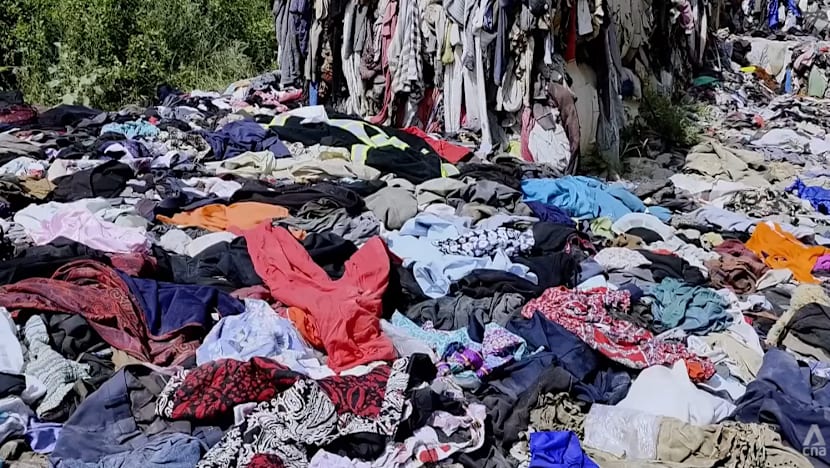
Pakistan’s used clothing industry has rapidly transformed into a billion-dollar sector, driven by rising poverty and soaring inflation. Millions of Pakistanis now rely on secondhand garments, which arrives in truckloads from the European Union, the United Kingdom, the United States, and other Western countries. These garments are sorted and processed in Karachi’s export processing zones, including at factories such as Silver Denim, before being re-exported to African markets or distributed locally.
Shifting Attitudes and Economic Impact
Once stigmatized, the wearing of pre-owned clothing is becoming increasingly mainstream in Pakistan. “The mindset has changed. It’s changing. Gen Z has become very aware of saving a lot of things on earth; saving the environment,” said Umair Yousaf, director of Silver Denim. He noted that the business has never been better, partly due to online access to various brands and styles.
Despite this cultural shift, economic necessity remains a primary driver. Approximately 45 percent of Pakistan’s population lives below the poverty line, making affordable clothing crucial. According to the Pakistan Business Council, the country imported nearly $511 million worth of used clothing between July 2024 and June 2025, marking an 18 percent increase from the previous fiscal period. While much of this volume is re-exported, it is estimated that 10 to 20 percent ends up in local markets, where prices for secondhand garments can range from $2 to $4, significantly cheaper than locally produced new garments priced between $18 and $25.
Environmental Challenges and Calls for Regulation
The import and reuse of secondhand textiles in Pakistan is closely linked to global consumption patterns. A report published in 2023 by the All Pakistan Textile Mills Association highlighted that the EU exported around 1.4 million tonnes of used textiles worldwide in 2021, with Pakistan identified as a key destination. That year, the EU alone shipped secondhand clothing worth $46 million to Pakistan.
Not all imported items, however, reach store shelves. Many garments arrive in poor condition and are often discarded, dumped, or burned, exacerbating Pakistan’s waste management issues and contributing to global climate change. The country lacks adequate infrastructure to manage its growing waste, with an estimated 270,000 metric tonnes of discarded textiles produced each year. Karachi, home to over 20 million people, has only three sanitary landfill sites and lacks dedicated textile waste processing facilities.
Environmental experts are calling on the government to implement stricter regulations regarding used clothing imports. “The third world should not be used as a dumping ground by the first world,” stated Sohail Yousaf, a professor of environmental sciences at Quaid-i-Azam University. He emphasized the need for legislation to protect public health and the environment, arguing that the benefits of the secondhand clothing business accrue to only a few individuals while adversely affecting many.
In response to these concerns, the government has encouraged companies to adopt sustainable practices, such as recycling and promoting locally made eco-friendly clothing. Yet, without comprehensive global reforms and stronger safeguards, experts warn that Pakistan will continue to bear the environmental burden of the world’s discarded clothing.

India Unveils Long-Range Hypersonic Missile Amid Regional Tensions

SK bioscience Launches Global Trial for Universal Sarbecovirus Vaccine

Senegal Coach Pape Thiaw Suspended and Fined After Final Disruption

PAS Denies Abolishing Chairman Post, Contradicts Muhyiddin’s Claim

Mbappé Critiques Real Madrid’s Effort After Benfica Defeat

Thailand’s December Factory Output Surges 2.52% Year-on-Year

Ishita Dutta Reveals Her Parenting Secret: Strong Coffee

Older GPs Express Concerns Over New Digital Health Record Mandate

Urban Jurgensen: A 252-Year Legacy Enters a New Era

Regina Martinez Breaks New Ground for Mexico in Cross-Country Skiing

South Korea’s Foreign Minister Cho Hyun to Visit China This Week

Starling Bank Plans Secondary Share Sale, Targeting $5.4 Billion Valuation

Munsang College Celebrates 100 Years with Grand Ceremony

PAS Aims to Expand Parliamentary Influence in Upcoming Election

De Minaur Triumphs at Washington Open After Thrilling Comeback

Kenvue Dismisses CEO Thibaut Mongon as Strategic Review Advances

Humanism Camp Engages 250 Youths in Summer Fest 2025

Colombian Senator Miguel Uribe Shows Signs of Recovery After Attack
-
 Sports2 months ago
Regina Martinez Breaks New Ground for Mexico in Cross-Country Skiing
-
 World6 months ago
South Korea’s Foreign Minister Cho Hyun to Visit China This Week
-
 Business6 months ago
Starling Bank Plans Secondary Share Sale, Targeting $5.4 Billion Valuation
-
 Top Stories6 months ago
Munsang College Celebrates 100 Years with Grand Ceremony
-
 World6 months ago
PAS Aims to Expand Parliamentary Influence in Upcoming Election
-
 Sports8 months ago
De Minaur Triumphs at Washington Open After Thrilling Comeback
-
 Business8 months ago
Kenvue Dismisses CEO Thibaut Mongon as Strategic Review Advances
-
 Lifestyle8 months ago
Humanism Camp Engages 250 Youths in Summer Fest 2025
-
 Top Stories8 months ago
Colombian Senator Miguel Uribe Shows Signs of Recovery After Attack
-

 Sports8 months ago
Tupou and Daugunu Join First Nations Squad for Lions Clash
-

 World8 months ago
ASEAN Gears Up for Historic Joint Meeting of Foreign and Economic Ministers
-

 Health8 months ago
New Study Challenges Assumptions About Aging and Inflammation